There are exactly three ways to change how your kitchen cabinets look: paint them, reface them, or replace them. The honest answer for your kitchen is decided by two things — the condition of the cabinet boxes and whether you want to change the layout — not by which option sounds cheapest. Painting is the lowest-cost path when the boxes are solid and the doors are serviceable. Refacing wins when the boxes are fine but every door, drawer front, and visible surface is tired. Replacement is the only honest answer when the boxes are failing or the layout itself has to move. Here is the cost math for all three in Bay Area dollars, and the tests that tell you which one you actually need.
Key Takeaways
- The cabinet boxes — not the doors — decide the path; probe them before you price any option.
- Painting runs roughly a third to half of refacing, but it cannot fix a failing box or a bad layout.
- Refacing runs about $9,000 to $18,000 in the Bay Area and only pays off when the boxes are sound and the layout stays put.
- Replacement is the answer when boxes are failing or you want to move walls, plumbing, or the work triangle.
- A sprayed factory-grade finish outlasts most site painting, but a pro spray job with honest prep runs close in durability.
- Verify the license at CSLB, confirm lead-safe handling for pre-1978 cabinets, and get the comparison in writing before you commit.
What This Guide Covers
What Each Path Actually Changes
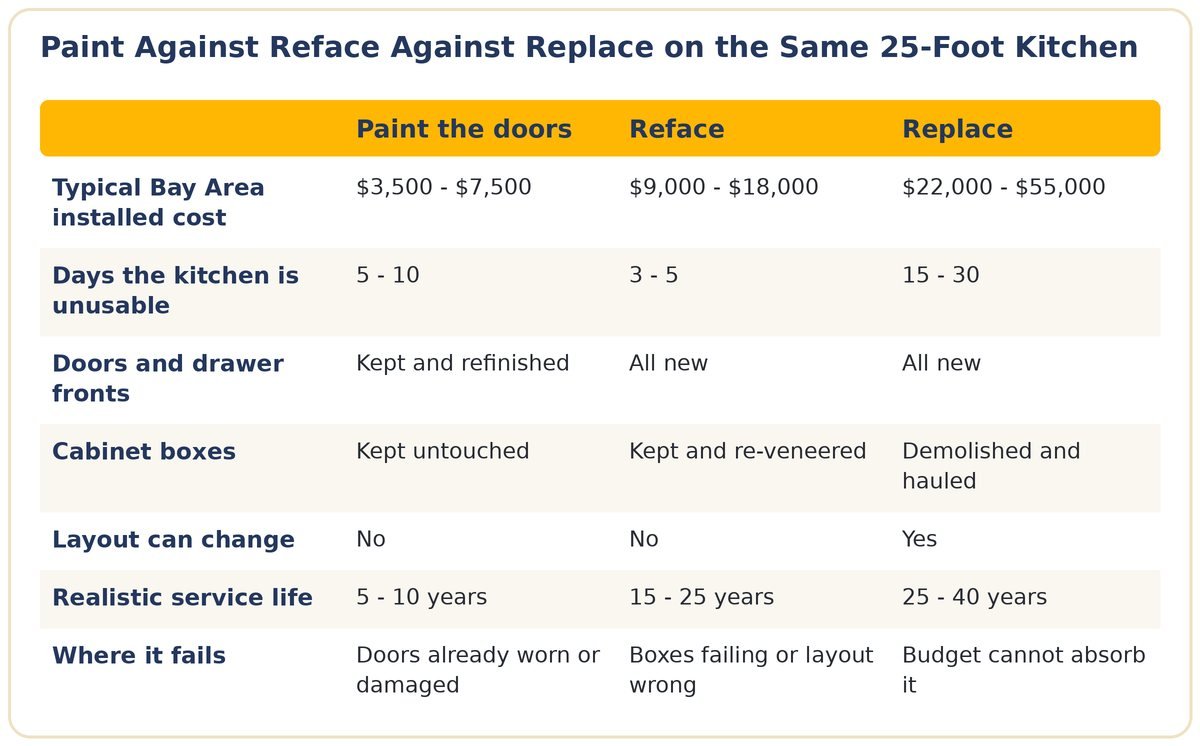
The three options touch different layers of the kitchen, and the price difference is really a difference in how many layers get replaced.
The Box Test That Decides Most Kitchens
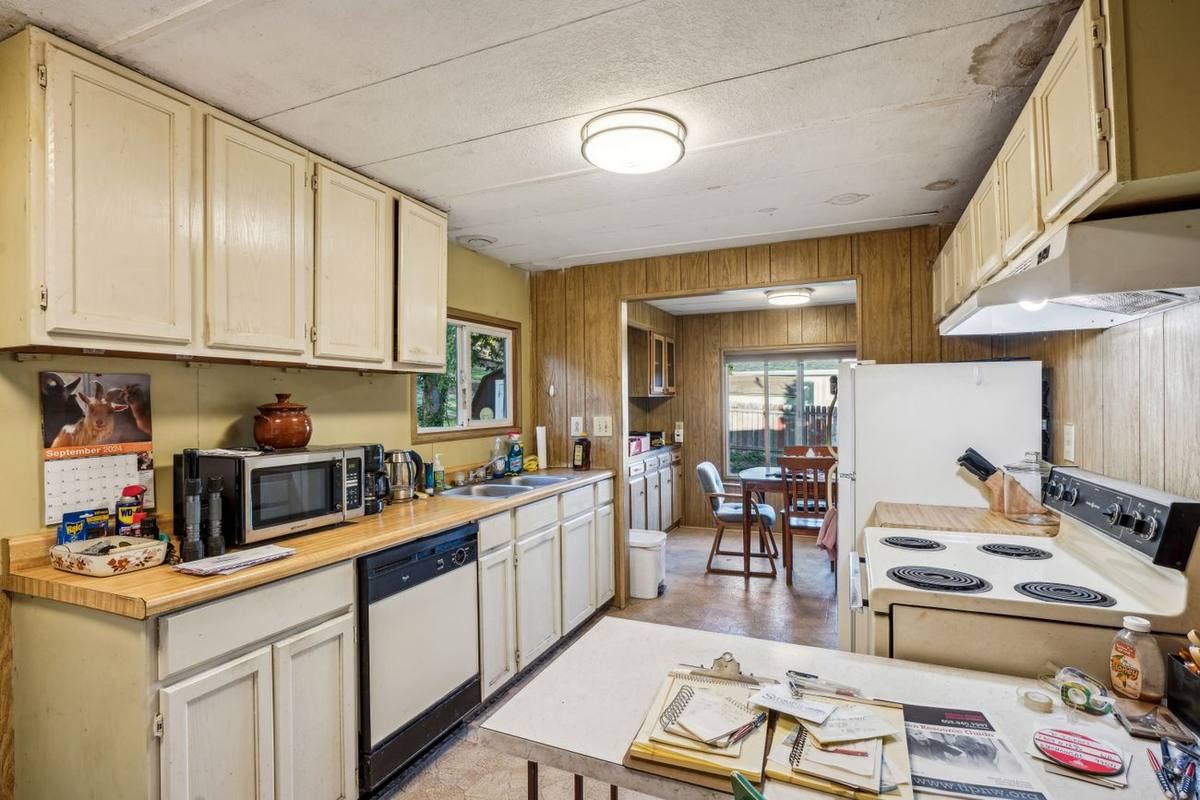
Before any pricing conversation, spend ten minutes on the boxes themselves. The doors are replaceable in every scenario; the boxes are the load-bearing decision.
Solid Boxes With Tired Doors
What to Check
Open every cabinet and look at the box joints — where the sides meet the top, bottom, and back. Push on the sides near the hinges. Look for gaps, water staining, swollen particleboard, and hinges that have pulled out of the frame and been re-screwed into fresh holes.
What It Means
Solid boxes with tired doors are the textbook refacing case — new doors and drawer fronts on the existing boxes give the kitchen a completely different look for roughly half of replacement, and the result can last fifteen years or more.
Sound Boxes With a Finish That Dated Itself
What to Check
Close the doors and stand back. Is the complaint about the color, the sheen, the door style, or the hardware? Open a door and check whether the interior is clean and functional.
What It Means
If the boxes are sound and the door style still works for you, painting is the honest minimum — a full spray refinish changes the color and sheen of what is already there at the lowest cost. If the door style itself reads dated, painting it still leaves the dated shape; that is the moment refacing earns its extra cost.
Boxes That Have Already Failed
What to Check
Look for swollen particleboard at the sink base, delaminated laminate, drawers that rack when opened, and doors that no longer align no matter how the hinges are adjusted. Push on any soft or bubbled area.
What It Means
Refacing and painting both leave the failing structure in place, which means the new finish is only as good as the box behind it. Once particleboard has swollen or delaminated, the honest answer is replacement — anything else is a cosmetic loan repaid with interest.
A Layout You Already Want to Change
What to Check
Ask whether the plan moves the sink, the range, or the refrigerator, opens a wall, or relocates plumbing or gas. If the answer is yes, the layout change — not the cabinets — is the project.
What It Means
Painting and refacing freeze the layout by definition; they only change surfaces. The moment a kitchen plan moves appliances or walls, replacement is the path, and the cabinet cost becomes one line in a bigger remodel.
The Real Bay Area Cost Ladder
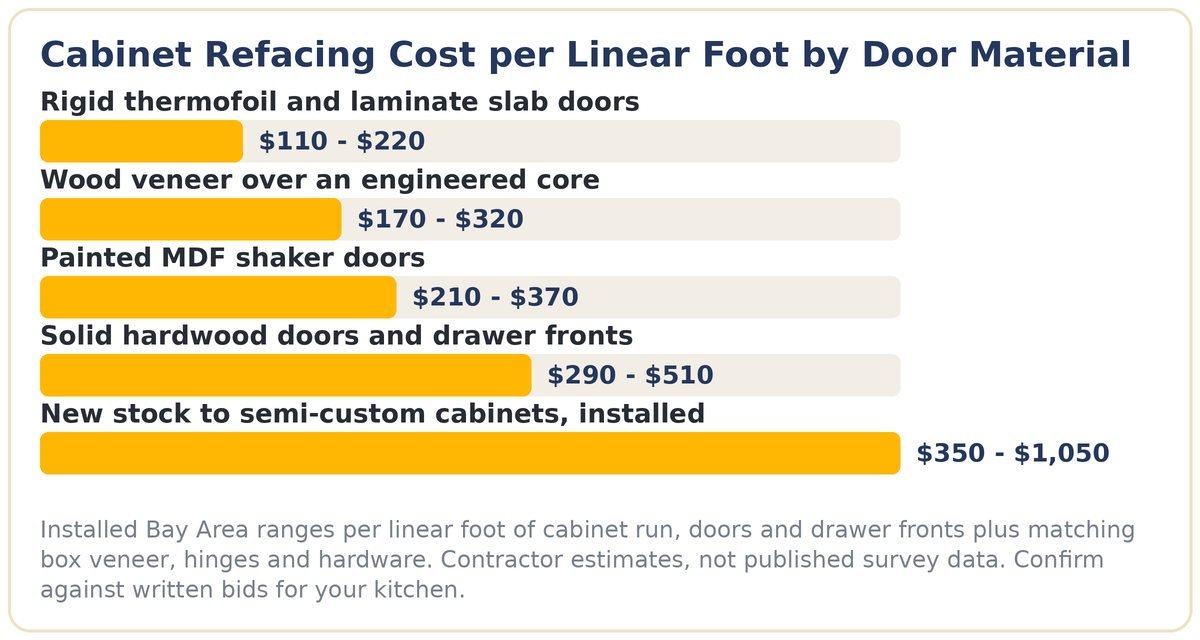
Labor-heavy Bay Area pricing tilts the comparison harder than anywhere else, because every path is mostly skilled labor with materials layered on top.
Spray, Brush, or Factory Finish Quality
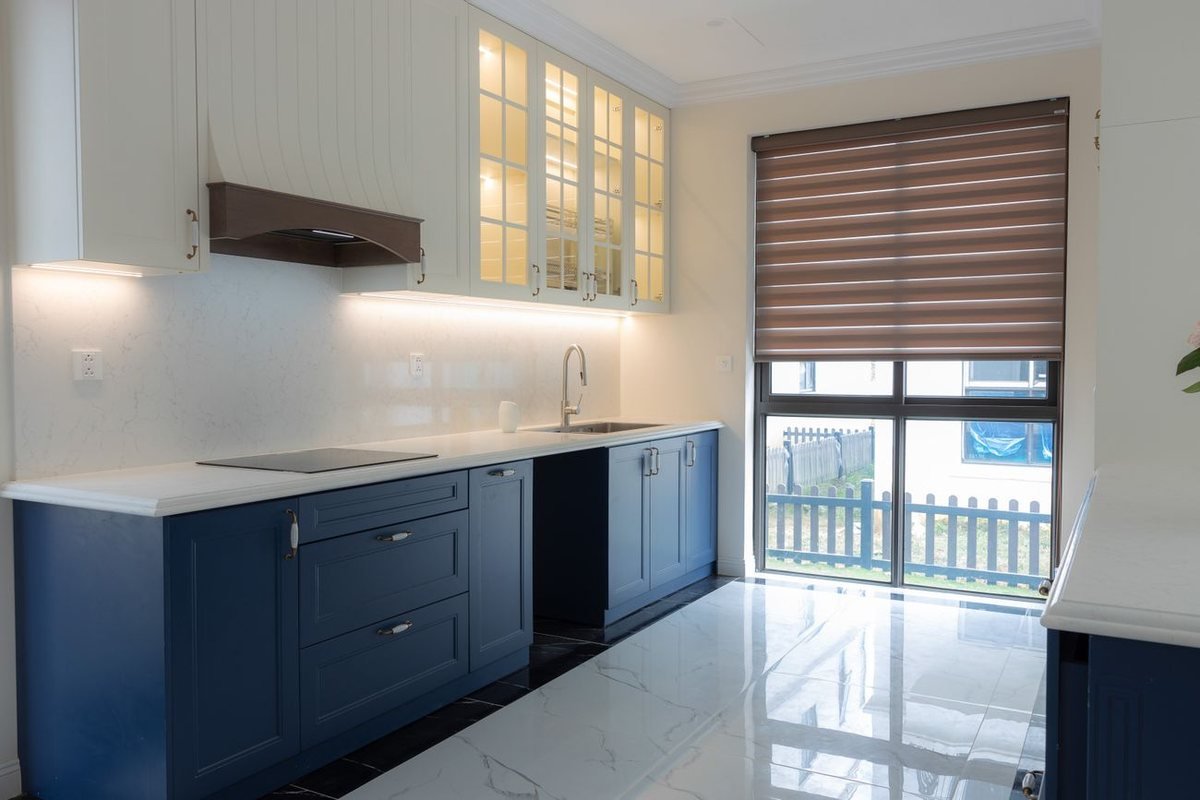
The finish is the part of a cabinet project you touch every day, and the three application methods deliver visibly different results.
Sprayed Paint
Why It Wins
A sprayed finish lays down evenly with no brush strokes, which is why nearly every professional cabinet painter sprays. It is also the reason a $5,000 paint job can photograph like new cabinets — the even film catches light the same way a factory finish does, without the streak-and-roller texture a brush leaves behind.
What to Ask
Whether the spray happens in place with the kitchen masked off or in a controlled shop setting, how many coats are included, and what the drying time is between them. In-place spraying means dust control and masking are the difference between a clean result and a gritty one.
Brushed and Rolled Paint
Why It Wins
Brushed work costs less and disturbs the house less, and on shaker or flat-panel doors a careful hand job can look genuinely good from standing height — which is why it remains the default for budget-conscious kitchens where the doors are simple and the light is forgiving.
What to Ask
Whether the finish is self-leveling, how many coats are included, and whether the visible faces are sanded between coats. The honest limitation is that brush marks show on light, glossy finishes under direct light — fine for most kitchens, wrong for a showroom look.
Factory Thermofoil and Veneer
Why It Wins
Factory-applied thermofoil and wood veneers are cured in controlled heat and pressure, which is why refaced kitchens with factory door finishes outlast many site-painted ones — the coating bonds to the substrate instead of sitting on top of it, so it resists chipping at the edges and peeling at the seams.
What to Ask
Whether the replacement doors are factory-finished or site-finished, and what the warranty is on the finish itself. A refacing company that sells you site-painted doors is selling you a paint job with extra steps.
The Ten-Year Durability Math
Run the three paths over a decade and the ordering changes in interesting ways. A well-prepped sprayed paint job on sound boxes typically lasts 8 to 12 years before it needs redoing. Factory-finished refacing doors routinely last 15 to 20 years, and the veneer on the boxes is essentially permanent. Replacement boxes carry the same durability as the refacing doors — the difference is that replacement also bought you a new layout, new internals, and new hardware throughout.
The honest framing: painting is a 10-year solution at 5-year money, refacing is a 20-year solution at 10-year money, and replacement is a 20-year solution at 20-year money with the option to change the floor plan. None of them is wrong; they are answers to different questions.
When Painting Beats Refacing, and Vice Versa
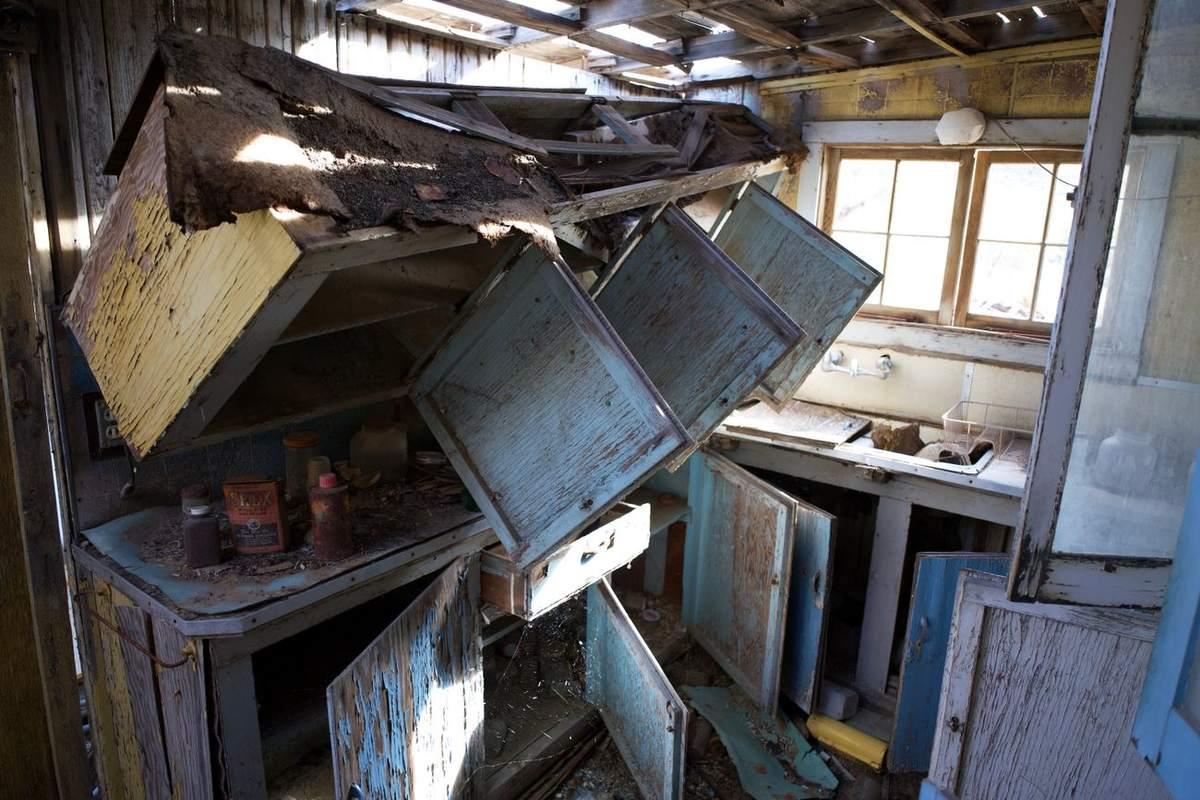
Paint wins when the boxes are sound, the door style still works, and the goal is a color and sheen change at minimum cost. It also wins on budget-tight kitchens where $9,000 for doors is not in the picture and the boxes genuinely have years left.
Refacing wins when the boxes are sound but the doors and drawer fronts are the problem — the style is dated, the thermofoil is peeling, the wood veneer is worn — and the layout stays. It also wins when you want upgraded hardware and a factory-grade finish without paying for new boxes you do not need.
How to Get Honest Numbers
Ask every bidder the same three questions: what exactly is included, what exactly is excluded, and what could change the price. Then verify the license at the California Contractors State License Board — a real CSLB number, not a promise of one. For kitchens in pre-1978 homes, confirm the crew follows EPA lead-safe renovation practices, because sanding old finishes on older cabinets can disturb lead paint. And since refacing installs new doors and veneers, ask whether the materials meet California’s composite wood product emissions rules — a real compliance signal that the supplier is legitimate.
The comparison pages on this site give you the same math in more detail: what painting kitchen cabinets costs on its own, what refacing runs and when it pays, and what a full cabinet install adds. Read the Before You Paint or Reface Your Cabinets checklist page and bring the printed list to your first walkthrough.
Ready to Compare Real Numbers for Your Kitchen?
Every kitchen is a different box test, and the honest path is the one that starts with your actual cabinets. Top Tier Building Services Inc. — CA General Contractor License #1146790 — handles cabinet painting, refacing, and full kitchen replacement for Bay Area homeowners. Tell us about your kitchen and get a written scope with the included, the excluded, and the variables that could move the number.
FAQs
Is it cheaper to reface or replace kitchen cabinets?
Refacing is typically about half the cost of replacement — roughly $9,000 to $18,000 versus $20,000 to $40,000 in the Bay Area — because the existing boxes stay in place. It only makes sense when the boxes are structurally sound and the layout is staying.
How long does cabinet refacing last?
Factory-finished refacing doors typically last 15 to 20 years, with the veneered boxes lasting longer. The weak point is almost always the finish quality and the hardware, not the structure.
Can you paint laminate or thermofoil cabinets?
Yes, with the right prep — thorough degreasing, scuff-sanding, and a bonding primer. The honest caveat is that peeling thermofoil cannot be painted back flat; if the film is lifting, replacement or refacing beats painting.
Does cabinet refacing include new hardware?
Typically yes — hinges, drawer slides, and pulls are part of most refacing packages, and upgraded hardware is usually where the extras get sold. Get the hardware line in writing.
Do I need a permit to paint or reface cabinets?
Cabinet painting and refacing are surface work and generally do not require a permit. The moment the project moves plumbing, gas, or electrical — which a full replacement often does — permit requirements kick in and the scope changes.
What is the difference between refacing and refinishing?
Refacing replaces the doors, drawer fronts, and box veneers with new material. Refinishing strips and refinishes the existing doors and boxes in place. Refacing changes the style; refinishing restores the finish.