Choosing the right flooring for each room of a Bay Area home is mostly an exercise in matching material to function. A material that works beautifully in a living room may fail in a bathroom; a floor that’s perfect in a kitchen may feel wrong in a bedroom. The smartest whole-house flooring plans typically use two or three materials, deployed where each performs best. This guide walks through how to think about flooring room by room, with the considerations Bay Area homes specifically tend to surface. For the broader picture of flooring planning, see the complete Bay Area flooring installation guide.
The Short Answer
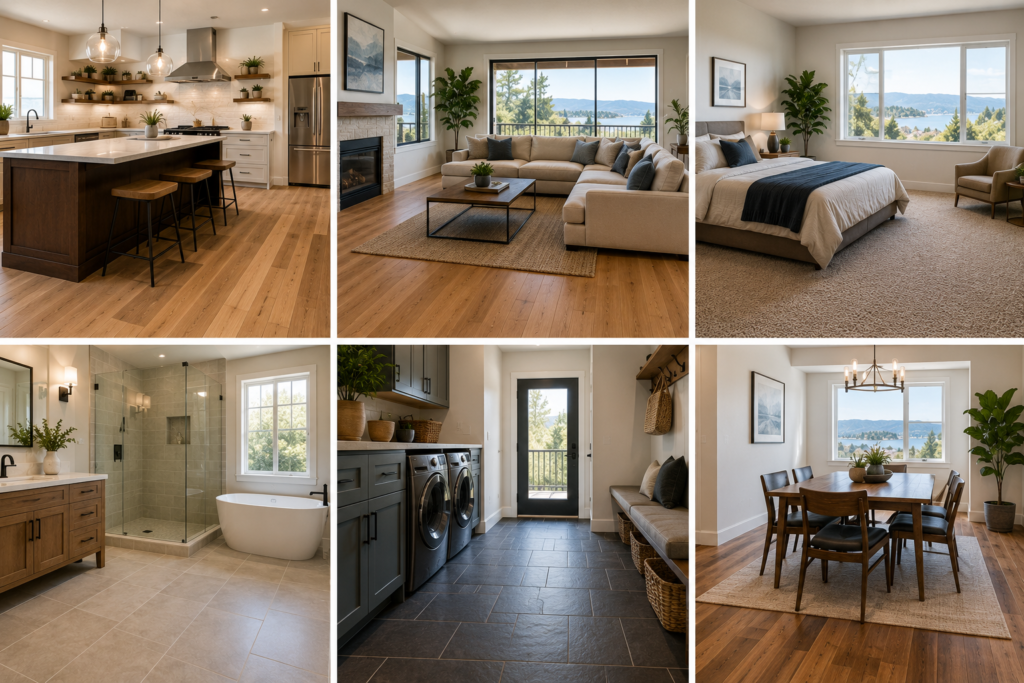
A common Bay Area whole-house pattern that works:
- Main living areas, dining, hallways: engineered hardwood
- Kitchen: engineered hardwood (with care) or LVP or tile
- Bathrooms: porcelain tile or LVP
- Bedrooms: engineered hardwood or quality carpet
- Stairs: hardwood or carpet (depending on the rest of the home)
- Entry / mudroom: porcelain tile or LVP
- Laundry: LVP or tile
- Basement (if applicable): LVP (waterproof) or tile
This isn’t the only valid pattern — many Bay Area homes run one flooring material throughout (engineered hardwood or LVP everywhere except wet areas). The single-material approach reads visually unified; the multi-material approach matches each room’s function more precisely.
Living Rooms, Dining Rooms, Hallways
Main living areas have moderate traffic, occasional spills, and high visibility. The flooring sets the tone for the whole house.
Best choices: solid or engineered hardwood. Engineered is the smarter choice for most Bay Area homes — more stable, suitable over slabs and crawl spaces, and indistinguishable from solid at the surface. Wide-plank (5 to 8 inches) in white oak, red oak, hickory, or walnut handles family use well and ages gracefully.
Considerations: In high-traffic homes with pets and kids, choose a hardwood with a Janka hardness rating over 1300 (white oak is 1360, hickory is 1820, oak is around 1290). Softer woods (cherry, walnut) are beautiful but show more wear. Site-finished gives a tighter, more continuous floor; pre-finished gives a harder, more scratch-resistant surface.
Alternative: Premium LVP is increasingly common in main living areas, particularly for families with very active children or large dogs, or for homeowners who don’t want to think about scratches. Modern LVP with thick wear layers (20-mil+) looks excellent and lasts well.
Kitchens
The kitchen flooring debate has shifted over the past decade. The old rule — tile only in kitchens — has loosened.
Best choices:
- Engineered hardwood is increasingly common in Bay Area kitchens. With good prefinish and quick spill response, it holds up well. The biggest risk is a sustained leak (refrigerator water line, dishwasher gasket) that goes unnoticed.
- LVP is the safest waterproof option that visually integrates with adjacent hardwood living areas. Modern LVP that mimics hardwood is convincing.
- Porcelain tile is the traditional kitchen choice — bulletproof, easy to clean, cold underfoot. Heated floor mat warms it up but adds cost.
Considerations: If the kitchen flows visually into a living room with hardwood, matching materials reads better than abrupt transitions. Tile in a kitchen, hardwood in an adjacent living room, with a threshold between, looks dated to most contemporary buyers. The current preference is continuous flooring across kitchen and living areas in either hardwood or LVP.
Cabinet-height transitions matter — if the new floor is thicker than the old, dishwashers may not slide back in. Plan the height before ordering.
Bathrooms
Wet areas require waterproof flooring. Period.
Best choices: porcelain tile or LVP. Porcelain is the premium choice — fully waterproof, durable, heatable, available in nearly any look. LVP is the practical choice — waterproof, warmer underfoot, less expensive.
Considerations: COF (coefficient of friction) over 0.42 wet for any tile in a bathroom. Heated floor mat under tile is one of the highest-leverage upgrades in a Bay Area bathroom — $1,200 to $3,500 installed, transformative for daily use.
Avoid wood floors in bathrooms unless they’re a powder room with no shower. Even waterproofed-coated hardwood will fail at seams over years of bathroom humidity.
Bedrooms
Bedrooms have low traffic, no spills, and value soft underfoot.
Best choices:
- Engineered hardwood if you want continuity with the rest of the house. Add area rugs for warmth and sound.
- Wall-to-wall carpet is making a quiet comeback for bedrooms in 2026. Modern stain-resistant, anti-allergen carpet is genuinely comfortable for sleeping spaces and warmer underfoot. Choose dense, low-pile constructions for durability.
- LVP works in kids’ bedrooms and guest rooms — durable, easy to clean, low-maintenance.
Considerations: Bedrooms over unheated spaces (some Bay Area homes have bedrooms over garages or porches) benefit from carpet or thick area rugs for thermal comfort. For allergy-sensitive households, hardwood or LVP with washable area rugs beats carpet.
Stairs
Stairs deserve their own consideration. They’re high-wear, visible, and require slip resistance.
Best choices:
- Solid hardwood treads with painted risers is the classic look and the durable choice. Janka hardness matters — softer woods show stair wear quickly.
- Wood treads with carpet runners combine durability with softer footfall and a more traditional aesthetic.
- Fully carpeted stairs in dense, low-pile carpet are quieter and softer, good for households with young kids or older family members. Modern stair carpet holds up well.
Considerations: Hardwood stairs read more premium and clean more easily. Carpeted stairs are quieter and safer-feeling for kids and dogs. Some Bay Area homes combine — carpeted stairs going up to bedrooms, hardwood stairs in formal entries.
Stair installation is significantly more labor-intensive than flat-floor installation — $90 to $180 per step for hardwood treads in the Bay Area, $40 to $80 per step for carpeted stairs.
Entry, Mudroom, Laundry
High-traffic, high-mess areas need waterproof, scratch-resistant flooring.
Best choices: porcelain tile or LVP. Both clean easily, handle wet boots and pet paws, and resist scratching from grit tracked in.
Considerations: A textured tile (slate-look porcelain, or a tile with visible texture) hides scuffs better than a smooth high-polish surface. Dark or mid-tone colors disguise daily dirt better than light colors in entries that see real traffic.
Basements and Below-Grade Spaces
Few Bay Area homes have full basements, but some have semi-basement bonus rooms, in-law units, or partial basement spaces. These are below-grade or partially below-grade, with the moisture considerations that come with that.
Best choices: waterproof LVP, tile, or sealed concrete with rugs. Hardwood in a basement is asking for trouble.
Considerations: Moisture testing before any flooring install in a basement. A dehumidifier may be needed in some Bay Area basements year-round.
ADUs and in-Law Units
The flooring choice for an ADU depends on its use case. Long-term rentals favor durable, low-maintenance materials — LVP throughout, tile in the bathroom. Family-use ADUs (parents, adult kids) can match the main house’s materials. Short-term-rental ADUs benefit from luxury-feeling materials (hardwood or premium LVP) that photograph well for listings.
How Top Tier Approaches Whole-House Flooring Planning
Top Tier starts whole-house flooring projects with a room-by-room walk-through, discussing how each room is actually used, who’s in the household, and what the design priorities are. The team often recommends a two- or three-material plan rather than a single material everywhere — and the proposal includes a clear visual transition plan for each material change. For projects involving design-forward selections, the team coordinates with interior design and architectural planning when warranted, and integrates flooring with broader full house renovation scopes when the project is larger than just floors.
Common Questions About Choosing Flooring Room by Room
Should the Same Flooring Run Through the Whole House?
It can, and it often looks great — a single hardwood or LVP throughout produces visual flow. But it requires accepting compromises in wet areas (engineered hardwood in a kitchen, with careful spill management). The mixed-material approach matches function more precisely; the single-material approach reads more contemporary and spacious.
What’s the Best Flooring for a Bay Area Home With Pets and Kids?
Engineered hardwood (white oak, hickory, or a high-Janka species) for main areas, porcelain tile or premium LVP in wet areas and entries. Avoid soft woods, light colors that show every scuff, and high-polish surfaces.
How Do I Handle Transitions Between Different Flooring Materials?
A flush transition (no threshold, materials meet at the same height) reads best but requires careful subfloor leveling and tile substrate planning. A T-molding or threshold accommodates height differences cleanly. The transition material should usually match the lower-traffic surface.
Is It Worth Doing Heated Floors in Other Rooms Besides Bathrooms?
Yes, in some cases. A heated floor in a kitchen or entry tile makes the room dramatically more comfortable in Bay Area winter mornings. The cost is mostly in the install, not the ongoing electric use (modest if a thermostat schedule is set).
Bottom Line
The best flooring plan for a Bay Area home isn’t usually one material everywhere — it’s the right material in each room, with thoughtful transitions in between. The goal is a home that’s comfortable to live in, easy to maintain, and visually coherent.
If you’re planning a Bay Area whole-house flooring project and want to talk through the room-by-room plan, Top Tier is happy to walk through it with you. A 30-minute conversation usually clarifies the right approach for your home.
By Top Tier Building Services Inc.
Licensed Bay Area General Contractor License #1146790 serving homeowners, HOAs, and property managers from Castro Valley. Top Tier delivers design-build, renovation, and maintenance services across 14 specialty trades.