You found the floor you love online, saw a tempting per-square-foot price, and did the quick math in your head. Then a contractor walked your home, looked at the subfloor, and quoted nearly double. Suddenly the dream floor feels like a bait-and-switch, and you are left wondering what the real number is and who to trust.
Here is the honest answer most articles bury: the cost to install hardwood floors is rarely the sticker price on the box. The plank itself is only one line on the bill. Labor, subfloor prep, removal of old flooring, the installation method your floor demands, trim, transitions, and finishing all stack on top, and in higher-cost markets like the San Francisco Bay Area, each of those lines runs above the national average. The good news is that once you understand how the price is actually built, you can budget accurately, compare quotes fairly, and avoid the two mistakes that wreck hardwood projects: under-budgeting for prep and choosing the wrong product for your space.
This guide gives you the real 2026 numbers, broken down per square foot, by product type, by install method, and by room size, with honest Bay Area context layered in. By the end you will know what your project should cost and where your money is actually going.
The Quick Numbers on Hardwood Floor Installation
For 2026, the all-in cost to install hardwood floors per square foot typically runs $8 to $25 once you combine materials and labor, with most real-world homes landing in the $10 to $16 range. Budget projects with simple layouts and basic domestic species can come in around $8 to $10 per square foot, while premium work, wide planks, exotic species, custom patterns, and heavy prep, pushes toward $16 to $25 and beyond. Those numbers are national. In the Bay Area, where skilled labor and disposal fees are higher than the U.S. average, expect to sit in the upper half of every range, and frequently above it for older homes that need subfloor repair.
It helps to separate two figures that homeowners constantly confuse. The hardwood flooring cost for the material alone is one thing; the hardwood floor installation cost for the labor and prep to get it on your floor is another. A $6 plank can easily become a $14 installed floor. Below is how those pieces break down.
Where the Money Goes Between Material and Labor
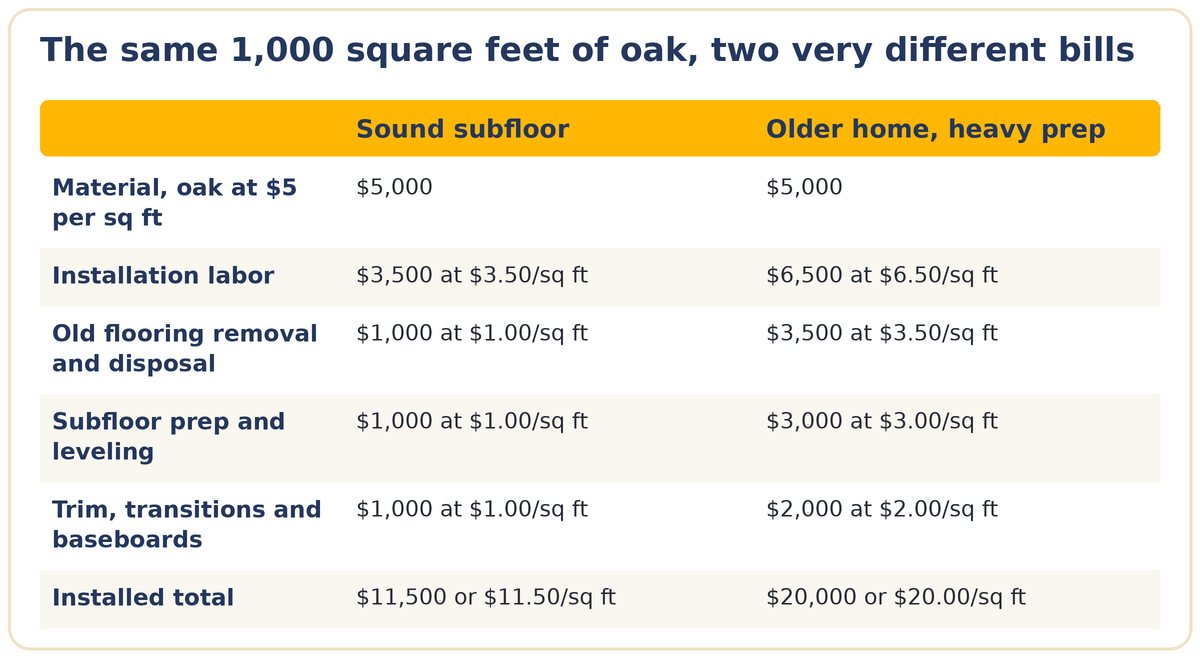
On a typical job, materials and labor split close to evenly, but the balance shifts with your choices. Splurge on a rare species and your material line dominates; pick a simple oak but live in an old home with a wavy subfloor, and labor and prep take over. Understanding the split is what lets you control the total.
- Materials ($3–$15+ per sq ft): Species, grade, and plank width drive this number. Common domestic red oak sits at the low end, while walnut, hickory, white oak in wide planks, and imported exotics climb fast. Wider and longer boards cost more per square foot because they waste more in milling and require more careful selection. Always buy 5 to 10 percent extra for cutting waste and future repairs.
- Labor ($3–$8 per sq ft): This covers acclimation, layout, fastening, sanding where needed, and finishing. The install method matters enormously here, nail-down solid costs more in labor than a floating engineered floor. Crews also price for site conditions: a wide-open great room installs faster per foot than a maze of small closets and hallways.
- Prep and removal ($2–$7 per sq ft combined): The line homeowners forget. Tearing out old tile, scraping adhesive, repairing a squeaky or uneven subfloor, and hauling debris to the dump all carry real cost. In a 1920s home in Oakland or a hillside house in Marin, prep alone can rival the material bill.
This is also why suspiciously low quotes are a warning sign rather than a win. A bid that ignores prep or assumes a perfect subfloor will balloon mid-project once the old flooring comes up. Ask for the subfloor to be inspected before the quote is written, and for prep to appear as a line item in the estimate rather than arriving later as a change order.
Solid and Engineered Hardwood Cost and Trade-Offs
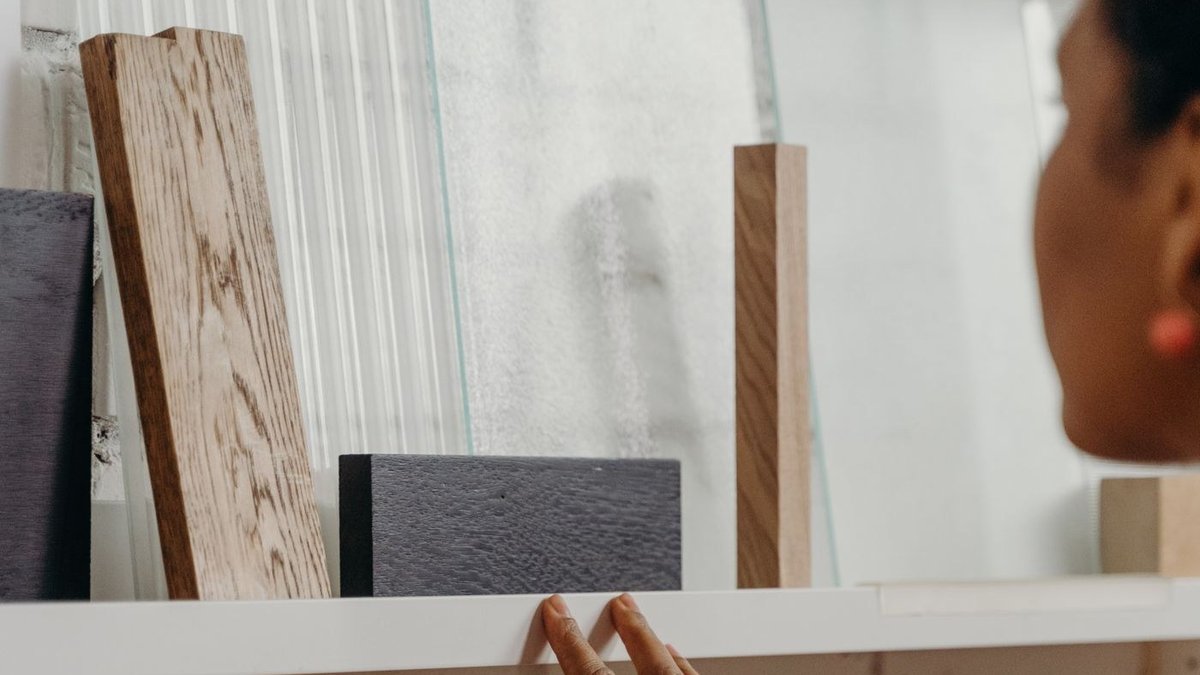
The single biggest decision affecting your budget, and your floor’s lifespan, is solid versus engineered. Both are real wood on the surface; the difference is what is underneath and how that changes price, installation, and durability.
Solid hardwood is a single piece of wood through and through. Installed, it generally runs $11 to $25 per square foot. Its advantage is longevity: a solid floor can last 50 to 100 years and be sanded and refinished four to six times, which makes it the better long-term value in a home you intend to keep. Its weakness is moisture and movement, solid wood expands and contracts with humidity, so it is not ideal over concrete slabs or in below-grade rooms.
Engineered hardwood is a real-wood veneer bonded to a stable plywood or composite core. Most engineered floors cost $7 to $20 per square foot installed, and the engineered hardwood installation cost is usually lower because the planks can often be floated or glued rather than nailed. Engineered’s strength is dimensional stability: it handles humidity swings, slab subfloors, and radiant heat far better than solid. The trade-off is refinishing, depending on veneer thickness, an engineered floor can be refinished zero to two times and typically lasts 25 to 40 years.
For many Bay Area homes the answer is mixed. A classic Victorian or Craftsman with wood subfloors is a natural fit for solid oak that can be refinished for generations. A modern condo in San Jose or a remodel over a concrete slab in Fremont is usually better served, and cheaper to install, with quality engineered planks.
Nail, Glue, or Float Installation Methods
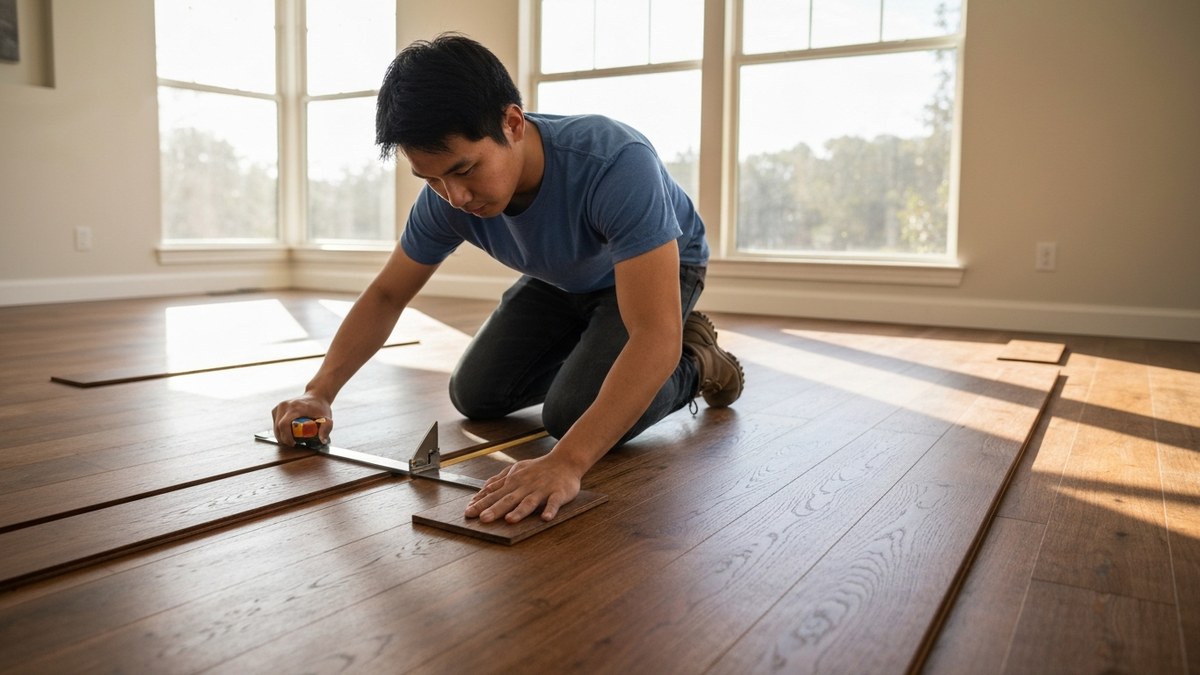
The way your floor attaches to the subfloor is one of the quietest but most important cost drivers. Each method suits different products and subfloors, and each carries a different labor price.
- Nail-down ($3–$6 per sq ft labor): The traditional method for solid hardwood over a wood subfloor. Planks are fastened with cleats or staples. It produces the most authentic, solid feel underfoot, but it requires a suitable wood subfloor and skilled labor, which is why it tends to cost more than floating.
- Glue-down ($4–$8 per sq ft labor): Standard for engineered planks over concrete and for many solid installations over slab. Adhesive bonds each board directly to the subfloor for a stable, quiet floor. It is labor-intensive and the adhesive itself adds material cost, but it is often the only correct choice over concrete.
- Floating ($3–$5 per sq ft labor): Engineered-only. Planks click or lock together and rest on an underlayment without being fastened to the subfloor. It is the fastest and usually cheapest method, ideal over slab or radiant heat, though some homeowners notice a slightly hollower sound than nailed or glued floors.
You do not always get to pick freely. Solid wood over a concrete slab rules out nailing, and a floating floor is not an option for traditional solid planks. A good installer matches the method to your product, subfloor, and climate, in coastal microclimates around the Bay, where fog-driven humidity is a real factor, that match matters more than most homeowners realize.
When Refinishing Beats Replacing
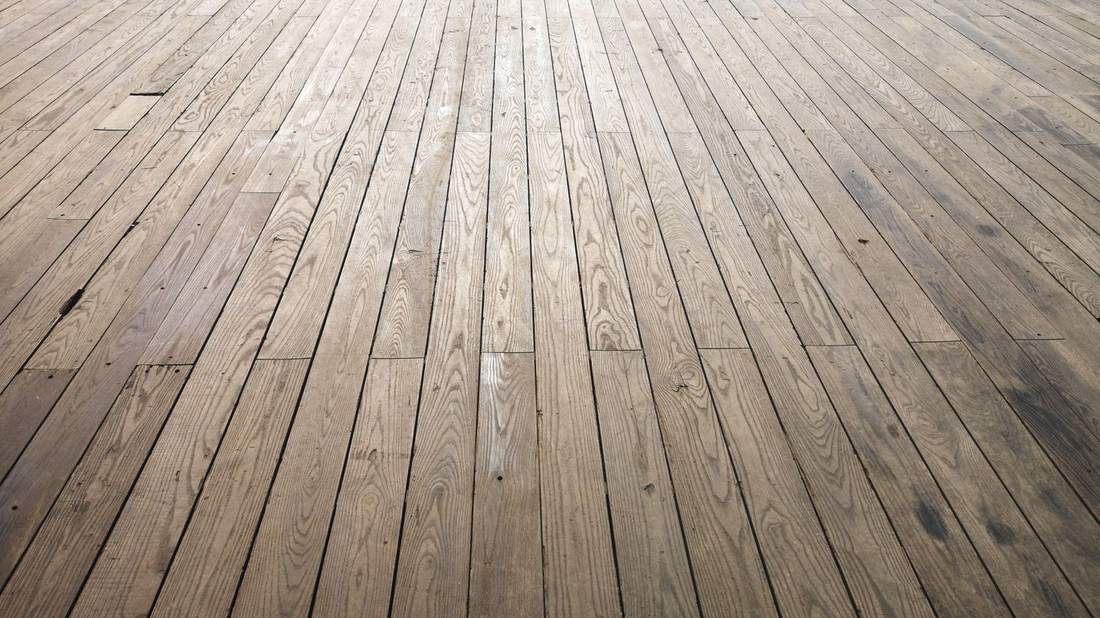
Before you budget for a full tear-out, ask whether your existing floors can simply be brought back to life. If you have solid hardwood or engineered planks with enough veneer left, refinishing is dramatically cheaper than replacing. The cost to refinish hardwood floors typically runs about $4.50 to $8 per square foot for a full sand-and-refinish, and as little as $1.50 to $3 for a screen-and-recoat when the old finish is worn but not broken through. Either way it is a fraction of the $8 to $25 you would spend on new installation.
Refinishing means sanding off the old finish, repairing minor damage, and applying fresh stain and a protective coat. It can erase decades of scratches, pet damage, and sun fading, and it lets you change the color entirely, a worn honey oak can become a modern matte gray or rich walnut tone without buying a single new board. The catch is that a floor can only be refinished a limited number of times before the wear layer runs out, so it is not infinitely renewable, especially with thin-veneer engineered products.
Replacing makes sense when the existing floor is too thin to sand again, has water damage or buckling, or sits over a failing subfloor. If you are already opening up the space, pairing new floors with other updates, fresh interior painting and surface finishes, new baseboards, or even folding the work into a larger whole-house renovation, often delivers a better result per dollar than doing each piece in isolation.
Hardwood Cost by Room Size
Per-square-foot pricing is useful, but homeowners think in rooms and budgets. The table below estimates total installed cost for common project sizes at three quality tiers. These assume professional installation including basic prep; heavy subfloor repair, stairs, or premium materials push totals higher. Treat the high column as realistic for many Bay Area homes.
Two notes on these figures. First, larger jobs often earn a slightly better per-foot rate because crews work more efficiently across continuous space. Second, the budget column is genuinely hard to hit in expensive markets, in Santa Clara County or San Francisco proper, even a straightforward 1,000-square-foot install commonly lands in the mid-range column once local labor, disposal, and prep are priced honestly. Our Bay Area flooring cost guide sets those numbers beside tile, LVP and carpet if you are still weighing materials.
The Hidden Costs That Blow Up Budgets
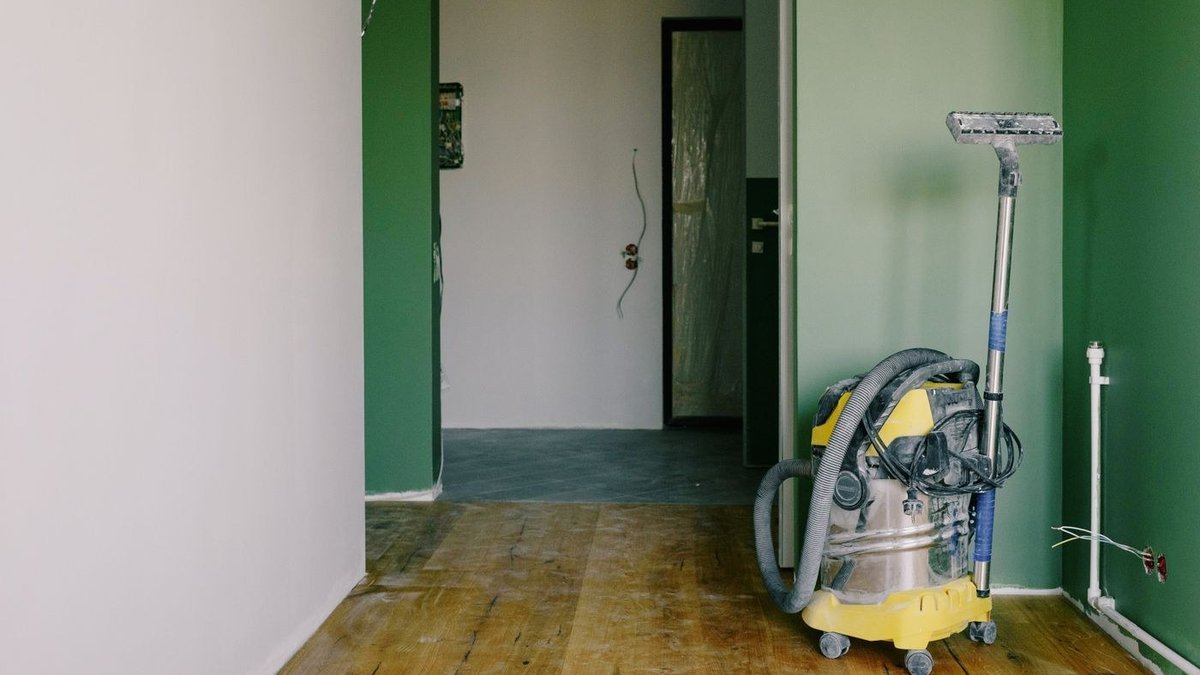
The gap between a lowball quote and the final invoice is almost always made of the items below. Knowing them upfront is the difference between a project that finishes on budget and one that drifts thousands over.
- Subfloor repair and leveling: The biggest wildcard. Older homes settle, joists sag, and slabs crack. Until the old flooring is up, no one can see what is underneath. Ask for a prep allowance written into the quote, with a stated method for how any overage gets priced.
- Old flooring removal and disposal: Pulling up glued vinyl, mortared tile, or multiple layers of old material is slow, messy work, and Bay Area dump fees are not cheap. Carpet is easy; tile and adhesive are not.
- Moisture mitigation: Concrete slabs and coastal humidity can require vapor barriers or moisture testing before any wood goes down. Skipping this is how floors cup and buckle a year later.
- Trim, transitions, and stairs: Baseboards, thresholds between rooms, and especially staircases are priced separately and add up quickly. Stairs in particular are labor-intensive and can cost far more per step than open floor per square foot.
The National Wood Flooring Association publishes the industry-accepted installation guidelines professional installers work to. Acclimation, moisture testing and proper subfloor preparation are the steps a thin bid quietly leaves out, and they are the ones that decide whether a floor is still flat in five years. Paying for them is not padding; it is what protects your investment.
DIY vs. Professional Installation
It is tempting to save the labor cost to install hardwood floors by doing it yourself, and for a confident DIYer installing a floating engineered floor in a single rectangular room, it can work. You will save roughly $3 to $8 per square foot in labor. But the savings shrink fast against the risks.
Nail-down solid hardwood requires a flooring nailer, a miter saw, and the experience to read a subfloor, set the right expansion gaps, and rack boards so seams and color stagger naturally. Mistakes are expensive: gaps that open with the seasons, squeaks, lippage between planks, and finish issues that only show under raking light. Worse, improper acclimation or a missed moisture problem can ruin the entire floor months later, turning a few hundred dollars of saved labor into a full replacement. For most homeowners, professional installation is cheaper once the cost of mistakes, tool rental, and time are honestly counted, particularly on solid hardwood, stairs, or anything over a slab.
How to Lower Your Hardwood Flooring Cost Without Cutting Corners
You can trim a hardwood budget intelligently without buying a floor you will regret. The key is to cut where it does not show and never on the parts that determine whether the floor lasts.
- Choose a smart species and width. Domestic red or white oak in a standard 3 to 5 inch width gives you classic looks and proven durability for far less than exotics or extra-wide planks. The visual difference in a finished room is smaller than the price difference.
- Pick engineered where it belongs. Over slabs, in basements, or with radiant heat, a quality engineered floor is both cheaper to install and more reliable than forcing solid wood into a space it was not made for.
- Phase the work, not the prep. If budget is tight, do the floors in stages by area rather than skipping subfloor prep or moisture protection. Prep is the one place where saving money costs you the most later.
- Refinish before you replace. If your existing floors have life left, refinishing delivers a near-new look for a fraction of replacement cost and keeps original character intact.
FAQs
How much does it cost to install 1,000 square feet of hardwood floors?
Installing 1,000 square feet of hardwood typically costs $8,000 to $22,000 in 2026, with most homes landing around $14,000 for a mid-range solid or quality engineered floor including basic prep. Budget projects with simple layouts can approach $8,000, while premium species, wide planks, or heavy subfloor repair push toward $22,000 or more. In high-cost markets like the San Francisco Bay Area, plan for the upper half of that range once local labor and disposal fees are included.
Is engineered hardwood cheaper to install than solid?
Yes, engineered hardwood is usually cheaper to install than solid. Engineered floors run about $7 to $20 per square foot installed versus $11 to $25 for solid, and the engineered hardwood installation cost is lower largely because the planks can often be floated or glued rather than nailed, which is faster labor. Engineered is also the better, and sometimes only correct, choice over concrete slabs or with radiant heat.
What is the labor cost to install hardwood floors per square foot?
The labor cost to install hardwood floors generally runs $3 to $8 per square foot, depending on the install method and site conditions. Nail-down installation costs roughly $3 to $6 per square foot in labor, glue-down $4 to $8, and floating engineered $3 to $5. Old flooring removal, disposal, and subfloor prep are usually billed on top of the base installation labor.
Is it cheaper to refinish or replace hardwood floors?
Refinishing is far cheaper than replacing when your existing floor has enough wear layer left. The cost to refinish hardwood floors is about $4.50 to $8 per square foot for a full sand-and-refinish, or $1.50 to $3 for a screen-and-recoat, compared with $8 to $25 per square foot to install new flooring. Replacement only makes sense when the floor is too thin to sand again, has water damage or buckling, or sits over a failing subfloor.
Why are hardwood flooring costs higher in the Bay Area?
Hardwood flooring cost runs above the national average in the San Francisco Bay Area mainly because of higher skilled-labor rates, higher disposal and dump fees, and the prevalence of older homes that need extra subfloor repair and leveling. Coastal humidity can also require moisture testing or vapor barriers before installation. For these reasons, most local projects land in the upper half of national price ranges.
How long does hardwood floor installation take?
A typical single-room hardwood installation takes one to three days, while a full main level of 1,000 square feet usually runs three to five working days, plus acclimation time before installation begins. Solid hardwood that is sanded and finished on site, and any project requiring subfloor repair or moisture mitigation, takes longer. Floating engineered floors are generally the fastest to install.
Get a Real Number for Your Floors
Every figure in this guide is a range, because the only quote that matters is the one built around your actual home, your subfloor, and the floor you want. At Top Tier Building Services, we install and refinish hardwood across the Bay Area, from solid oak in older Oakland and Berkeley homes to engineered planks over slabs in newer Fremont and San Jose builds, and we inspect the subfloor and write prep, moisture protection, and honest cost ranges into the estimate from the start, with no mid-project surprises.
If you are ready to find out what your hardwood floor installation will actually cost, contact Top Tier Building Services for a consultation and a transparent, detailed quote.