
The cost to refinish hardwood floors is usually determined less by square footage than by what the floor needs before the first finish coat goes down. A clear Bay Area bid should separate repairs, sanding, stain, finish system, stairs, furniture handling, dust containment, and cure time. If those items are compressed into one price, you cannot compare contractors—or tell whether the cheaper bid simply removed the work that makes the finish last.
Key Takeaways
- Typical Bay Area planning ranges run roughly $4.50 to $8 per square foot for a full sand and refinish, before major repairs, stairs, or specialty finishes.
- A screen-and-recoat is cheaper but only works when the wear is in the finish, not through the stain or into bare wood.
- Dust containment, sanding sequence, edge work, stain sampling, finish chemistry, and cure time belong in writing.
- Engineered hardwood must have enough wear layer left to sand safely.
- Stairs, closets, furniture moves, damaged boards, and occupied-home logistics are commonly priced separately.
- Verify the contractor at the California Contractors State License Board before signing.
What This Guide Covers
The Price Range Is Only the Starting Point
For a straightforward empty room with sound solid hardwood, professional sanding and refinishing commonly falls around $4.50 to $8 per square foot in the Bay Area. A 1,000-square-foot project therefore starts around $4,500 to $8,000. Stairs, repairs, dark stain, premium waterborne finishes, furniture moving, difficult access, and phased occupancy can raise the total.
Repair, Recoat, or Refinish Comes First
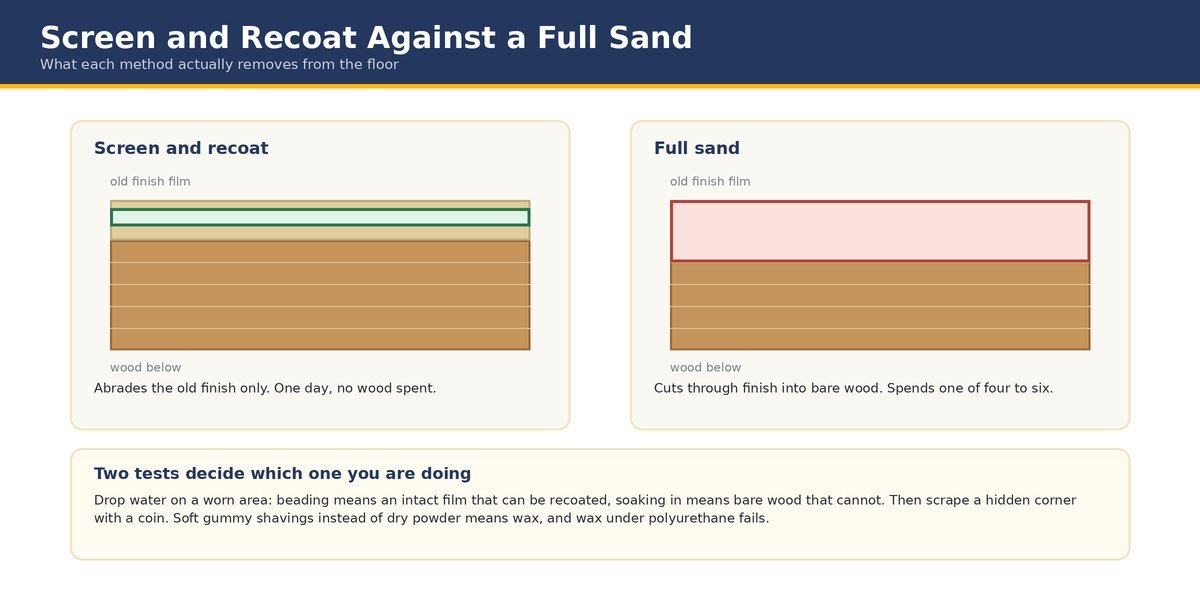
The right scope is decided by the depth of the damage. A finish-only problem does not need the same work as gray bare wood, deep pet staining, loose boards, or a floor that has already been sanded several times.
Finish Wear Without Bare Wood
What It Means
A screen-and-recoat can refresh a dull but intact finish without removing wood. The contractor lightly abrades the existing coating so a compatible new coat bonds. It is faster, cheaper, and preserves the floor’s wear layer, but it will not remove deep scratches, stain-color problems, or damage that has reached bare wood.
Bare Wood and Uneven Color
What It Means
When traffic lanes have worn through the finish, a full sand is usually required to make the color and sheen consistent. Spot coating a bare path beside intact finish often telegraphs the repair. The bid should explain how the field, edges, corners, and transitions will be sanded to the same scratch pattern.
Damaged or Moving Boards
What It Means
Cupping, loose boards, pet stains, water damage, and deep gouges need diagnosis before sanding. Some boards can be replaced and blended; widespread moisture movement may require correcting the source and allowing the floor to stabilize. Refinishing a moving or damp floor only makes a cleaner-looking failure.
Engineered Hardwood With a Thin Wear Layer
What It Means
Engineered flooring can sometimes be refinished, but only if enough real-wood veneer remains above the tongue. A contractor should identify the product or inspect an exposed edge before promising a full sand. Guessing risks sanding through the veneer and forcing replacement.
Ten Questions That Make Bids Comparable
1. Is This a Recoat or Full Refinish?
Why It Matters
Ask the contractor to point out whether damage sits in the coating, stain, or wood. The answer controls the entire price. A low recoat quote is not competing with a full-refinish quote if traffic lanes are already bare or the color must change.
2. What Repairs Are Included Before Sanding?
Why It Matters
Loose boards, damaged planks, protruding fasteners, gaps, and moisture issues should be listed separately. A complete scope names quantities or allowances and states what happens if hidden damage appears after the first sanding pass.
3. How Will You Confirm the Floor Can Be Sanded?
Why It Matters
Solid hardwood has more sanding life than most engineered flooring. Ask how the crew will check remaining thickness and prior sanding. This prevents an attractive price from becoming a replacement project after the sander exposes the substrate.
4. What Sanding Sequence Will You Use?
Why It Matters
The grit progression should remove the previous scratch pattern without leaving drum lines or edger swirls. The exact grits vary with the floor, but the contractor should describe a deliberate sequence and how edges will be blended into the field.
5. Is Dust Containment Included?
Why It Matters
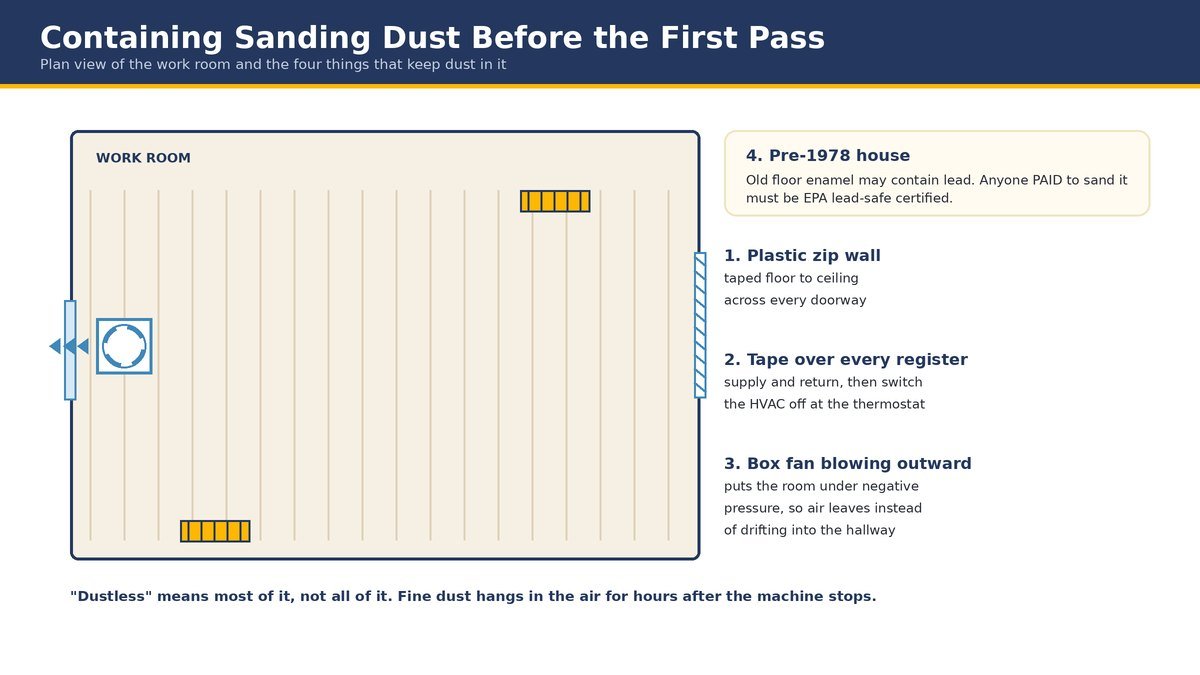
Modern sanding can capture most airborne dust at the tool, but it is not the same as zero dust. Ask what equipment, door isolation, vent protection, and final cleaning are included—especially when the home remains occupied.
6. How Will Stain Color Be Approved?
Why It Matters
Stain looks different on the actual species and under the room’s light. Require sample patches on the prepared floor and written approval before the full application. A catalog chip cannot predict how old oak, maple, or mixed repairs will absorb color.
7. Which Finish System and How Many Coats?
Why It Matters
Oil-modified and waterborne finishes differ in odor, ambering, cure speed, and durability. The scope should name the manufacturer, product line, sheen, sealer if used, and coat count—not simply say “polyurethane.”
8. What Are the Walk-On and Full-Cure Times?
Why It Matters
Dry-to-touch, sock traffic, furniture return, rug placement, pet access, and full cure are different milestones. Ask for each one. Moving rugs or heavy furniture too soon can imprint a finish that felt dry hours earlier.
9. How Are Stairs, Closets, and Transitions Priced?
Why It Matters
Stairs and tight spaces are labor-heavy and often excluded from square-foot pricing. Doorways also need a plan where hardwood meets tile, carpet, or rooms that are not being refinished. The bid should identify these boundaries.
10. What Warranty Covers the Finished Floor?
Why It Matters
Get workmanship coverage in writing and separate it from the finish manufacturer’s warranty. Ask what counts as a defect, what normal wear excludes, and how a claim is documented. A promise without a duration or remedy is not a warranty.
Finish Choice Changes the Schedule
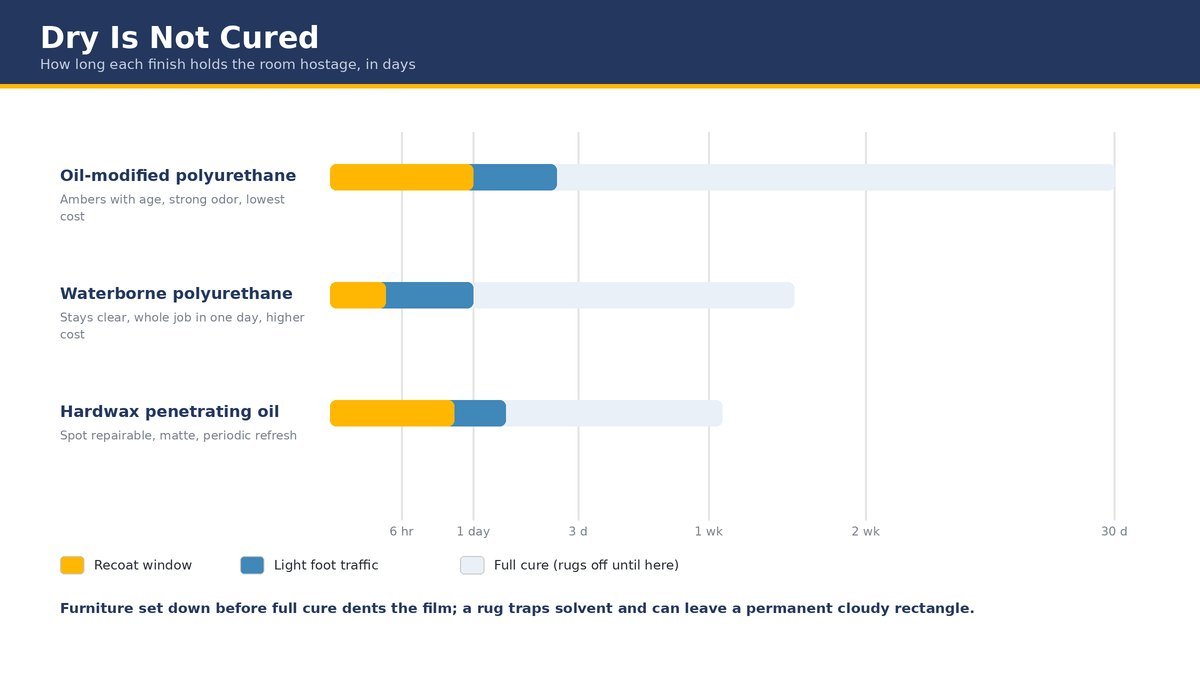
Waterborne systems usually allow faster re-entry and less odor, while oil-modified finishes typically deepen amber tones and require longer ventilation and cure time. Neither chemistry rescues poor sanding or contamination. The better choice is the named system that fits the color, occupancy, and downtime you can accept.
The National Wood Flooring Association publishes professional standards and consumer guidance for wood-floor installation and finishing. For pre-1978 homes where painted trim or other coated surfaces may be disturbed, confirm whether EPA lead-safe renovation requirements apply to the surrounding work.
Get the Floor Assessed Before You Choose a Price
Top Tier Building Services Inc., CA General Contractor License #1146790, handles hardwood repair, refinishing, and flooring work across Castro Valley and the Bay Area. Use the Before You Refinish Your Floors checklist, then send photos and project details for a written scope that separates repairs, sanding, finish, logistics, and cure time.
FAQs
How much does it cost to refinish 1,000 square feet of hardwood?
A practical Bay Area planning range is about $4,500 to $8,000 for a straightforward full sand and refinish. Repairs, stairs, furniture handling, dark stain, specialty finish systems, and occupied-home phasing can increase the total.
Is it cheaper to refinish or replace hardwood floors?
Refinishing is usually substantially cheaper when the existing floor is structurally sound and thick enough to sand. Replacement makes more sense when damage is widespread, the veneer is exhausted, or the owner wants a different material or layout.
Can engineered hardwood be refinished?
Sometimes. It depends on the thickness of the real-wood wear layer and how much has already been removed. The contractor should inspect an exposed edge or identify the product before promising a full sand.
How long must you leave the house?
That depends on the finish system and whether the work is phased. Sanding and coating may take several days; furniture, rugs, pets, and normal traffic return on different schedules. Get the product-specific milestones in writing.
Is dustless sanding actually dust free?
No. Tool-connected extraction captures most sanding dust, but edges, transitions, and airborne residue still require isolation and cleanup. “Dust-contained” is a more honest description than “dust free.”
Do hardwood floors need a permit to be refinished?
Surface refinishing usually does not require a building permit. Structural subfloor repair, changes involving stairs or guards, and related electrical or construction work may trigger local requirements, so confirm the actual scope with the city.