
Typing driveway gate installers near me into a search bar produces a list. It does not tell you which company will design a gate that clears the slope, survives the wind, protects people at the opening, and still works when the power is out.
That difference matters in the Bay Area. A driveway entrance is a small construction system: moving steel or wood, concrete footings, electrical power, access control, drainage, vehicle paths, and safety devices all have to agree. The strongest proposal starts with the property, not a gate catalog.
Key Takeaways
- A credible installer measures the opening, grade, setbacks, vehicle path, wind exposure, power route, drainage, and entrapment zones before recommending a gate.
- Compare bids by scope, not bottom-line price. A low quote may simply omit concrete, trenching, electrical work, safety devices, access controls, or finish repair.
- California licensing, contract, down-payment, and permit rules should be settled before work begins.
- Automatic gates need a documented safety design, not safety hardware added after the gate is fabricated.
- The handoff should include testing, manual-release training, warranty documents, and a maintenance plan.
What This Guide Covers
- The Best Installer Starts With the Site
- Compare the Scope Before the Price
- Eight Measurements That Change the Design
- Safety Belongs in the First Drawing
- California Paperwork Should Be Settled Early
- A Complete Proposal Connects Every Trade
- Red Flags Predict Change Orders
- Plan the Handoff Before Installation Starts
- Make the Site Visit Do Real Work
- FAQs
The Best Installer Starts With the Site
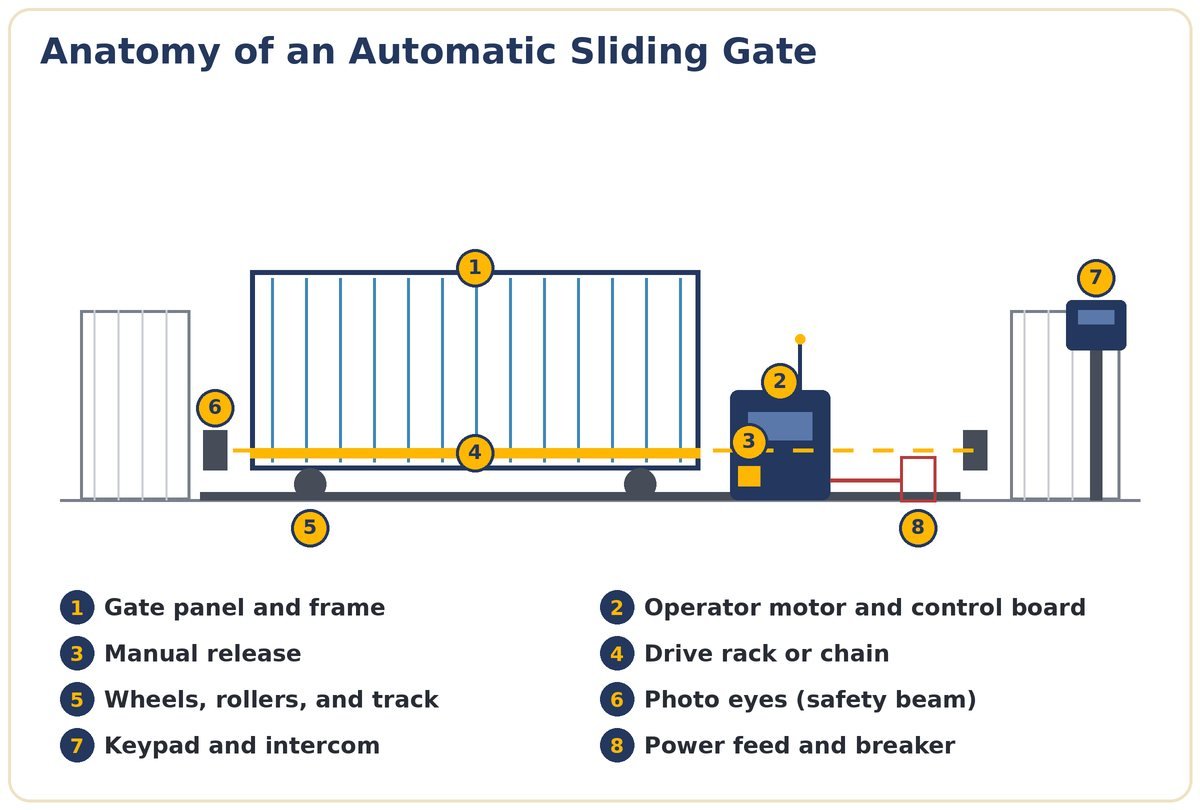
The gate style is the visible decision, but site geometry controls whether that style can work. A swing gate needs a clear arc and must account for the driveway grade. A sliding gate needs enough runback beside the opening, a stable support strategy, and a protected travel path. Either system may need new posts, footings, conduit, drainage work, and vehicle-detection loops.
An installer who prices from a phone photo is pricing assumptions. Those assumptions usually reappear later as exclusions, change orders, or compromises. A site visit converts the project from “install a gate” into a defined scope with known interfaces.
Compare the Scope Before the Price
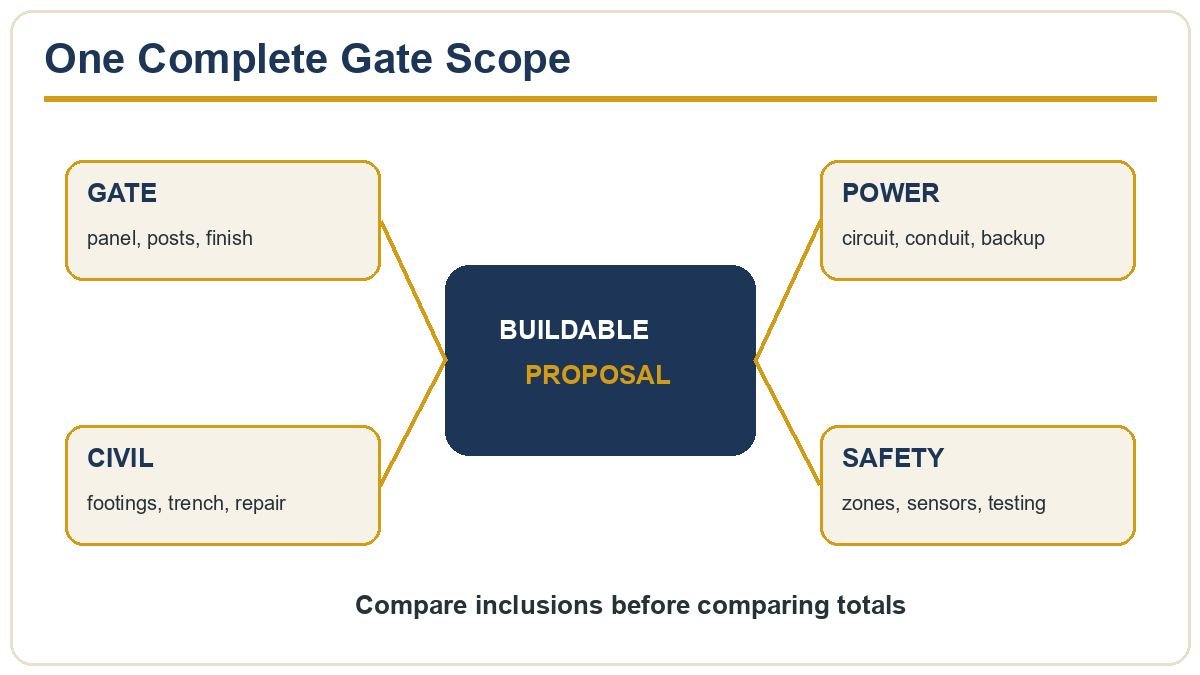
Two proposals can describe the same finished gate while including very different amounts of work. Normalize the scopes before deciding which installer is expensive.
The “so what” is simple: the lowest bid is not necessarily cheaper. If it omits the parts most likely to vary after excavation or fabrication, the homeowner is accepting the cost risk that the installer declined to price.
Eight Measurements That Change the Design
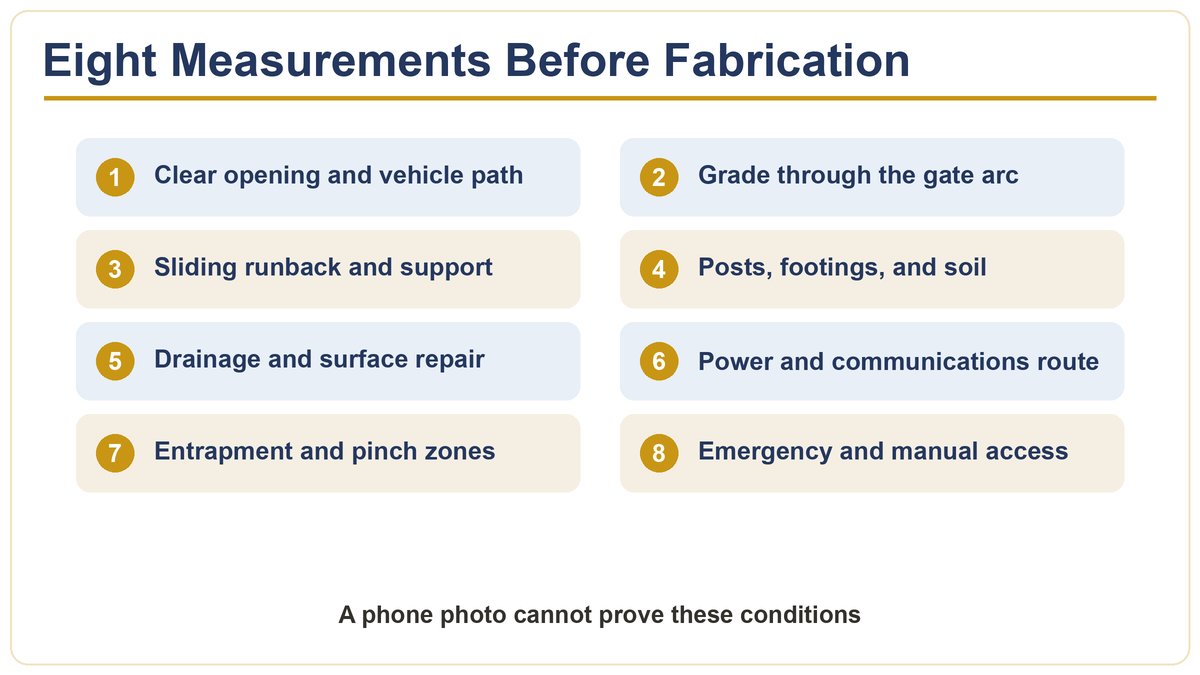
1. Clear Opening and Vehicle Path
Measure the Working Width
The installer should measure more than the distance between posts. The usable opening must work with the turning path of the vehicles that actually enter, including service vans, landscaping trailers, and delivery trucks. A wider gate may require stronger posts, a different operator, or more sliding runback.
2. Grade Through the Gate Arc
Map the Slope Precisely
A swing gate that rises into an uphill driveway can strike the pavement before it opens. Solving that after fabrication may mean excessive bottom clearance, special rising hinges, or a redesign. A level survey across the full movement path is more useful than a single slope estimate at the centerline.
3. Sliding Runback and Support
Confirm the Side Clearance
A sliding gate needs room beside the opening for the entire panel and hardware. The installer should also identify whether the system will be tracked or cantilevered, where rollers or posts land, and how the design avoids a travel path that collects gravel, leaves, or runoff.
4. Posts, Footings, and Soil
Design What Holds the Gate
The operator cannot correct a post that rotates or a footing that settles. Gate weight, wind load, soil conditions, and post spacing drive the support design. The proposal should distinguish existing supports that are verified for reuse from supports that are merely assumed adequate.
5. Drainage and Surface Repair
Follow Water Before Trenching
Conduit, loops, tracks, and footings can interrupt drainage or create low points. The site survey should trace where stormwater moves and state who restores asphalt, pavers, concrete, planting, and irrigation after underground work. Unassigned restoration is a predictable change order.
6. Power and Communications Route
Price the Entire Connection
The installer should identify the electrical source, circuit requirements, trench route, disconnect, grounding, and backup strategy. Intercoms may also need cellular service, Wi-Fi, Ethernet, or a dedicated line. A gate package is incomplete when the motor is priced but the route that powers and controls it is not.
7. Entrapment and Pinch Zones
Draw Every Hazardous Area
The closing edge is only one risk. Openings between a moving gate and a fixed post, wall, fence, roller, or guide can create additional entrapment zones. Each zone needs a protection strategy that fits the gate movement and the operator manufacturer’s instructions.
8. Emergency and Manual Access
Plan for Failure Deliberately
A power outage, dead battery, failed operator, or emergency response should not trap vehicles or block essential access. The installer should show the manual release location, how authorized users reach it from either side, and what happens to locks, access controls, and vehicle loops when power is unavailable.
Safety Belongs in the First Drawing
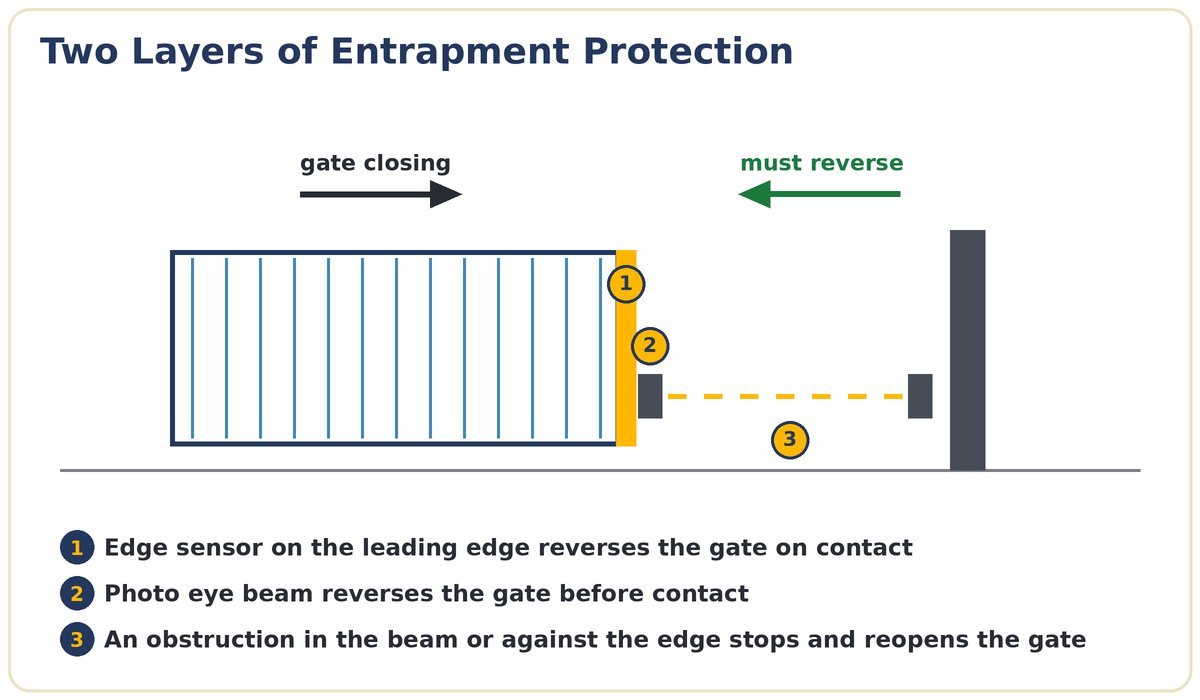
Automatic gate safety is a design problem, not an accessory list. UL explains that modern building and fire codes require installed gate operators to be listed to UL 325, a standard addressing operator safety and entrapment protection. The same UL guidance notes that the access-control equipment at the entrance — keypads, card readers, intercoms, and communication links — is certified under a separate standard, UL 294, so a listed operator says nothing on its own about the entry system wired to it.
The installer should identify the operator class, every entrapment zone, the compatible monitored protection devices, and the test procedure before fabrication. That sequence matters because a solid gate panel, a nearby column, or an exposed sliding tail can create hazards that cannot be solved cleanly with one photo eye.
UL’s guidance on gate operators describes two independent entrapment-protection devices for each protected zone and continuous monitoring of external devices. DASMA’s gate system safety guide also directs installers toward UL 325 and ASTM F2200 practices, and it is specific about dimensions. Under ASTM F2200 a gap wider than 2-1/4 inches (57 mm) between the gate and a fixed object has to be guarded or screened. Entrapment protection is required wherever the gap beneath the moving gate falls between 4 inches (102 mm) and 16 inches (406 mm). Access-control devices belong at least 6 feet (1.8 m) clear of moving parts, so nobody has to reach around a gate to open it. Numbers like these are what a hazard map is measured against.
California Paperwork Should Be Settled Early
California treats contractor verification as more than a formality. CSLB says a valid contractor license is required when work needs a permit, uses workers, or totals $1,000 or more in labor and materials. The agency identifies D-28 as the specialty classification for doors, gates, activating devices, and related access-control equipment; a general building contractor may also coordinate qualifying multi-trade work under state rules.
Before signing, verify the license through the official CSLB license lookup, confirm the business name matches the proposal, and check the active status and personnel. For home-improvement work, CSLB states that the down payment generally cannot exceed 10 percent of the contract price or $1,000, whichever is less. Run that check on every bidder, including us: Top Tier Building Services holds California contractor license CSLB #1146790, and a license number printed on any proposal is worth exactly what the lookup says it is.
Permit scope varies by jurisdiction and project. New electrical work, structural supports, work near the public right-of-way, fire-access implications, or substantial site work may trigger different reviews. A responsible proposal assigns who will confirm requirements, pull permits, schedule inspections, and correct plan-check comments.
A Complete Proposal Connects Every Trade
A useful quote reads like a small project plan. It identifies what exists, what will be demolished, what will be fabricated, and what must be completed by others. It also ties the gate design to electrical, concrete, access-control, and finish work.
The proposal should name allowances only where the condition truly cannot be known before work. For example, hidden underground conflicts may justify a defined allowance or unit price. Gate dimensions, operator model criteria, number of remotes, safety-device locations, concrete scope, finish, and closeout testing should not remain vague.
For a budget framework, see our Bay Area automatic gate cost guide. The useful comparison is not a national average against a local bid; it is one complete local scope against another complete local scope.
Red Flags Predict Change Orders
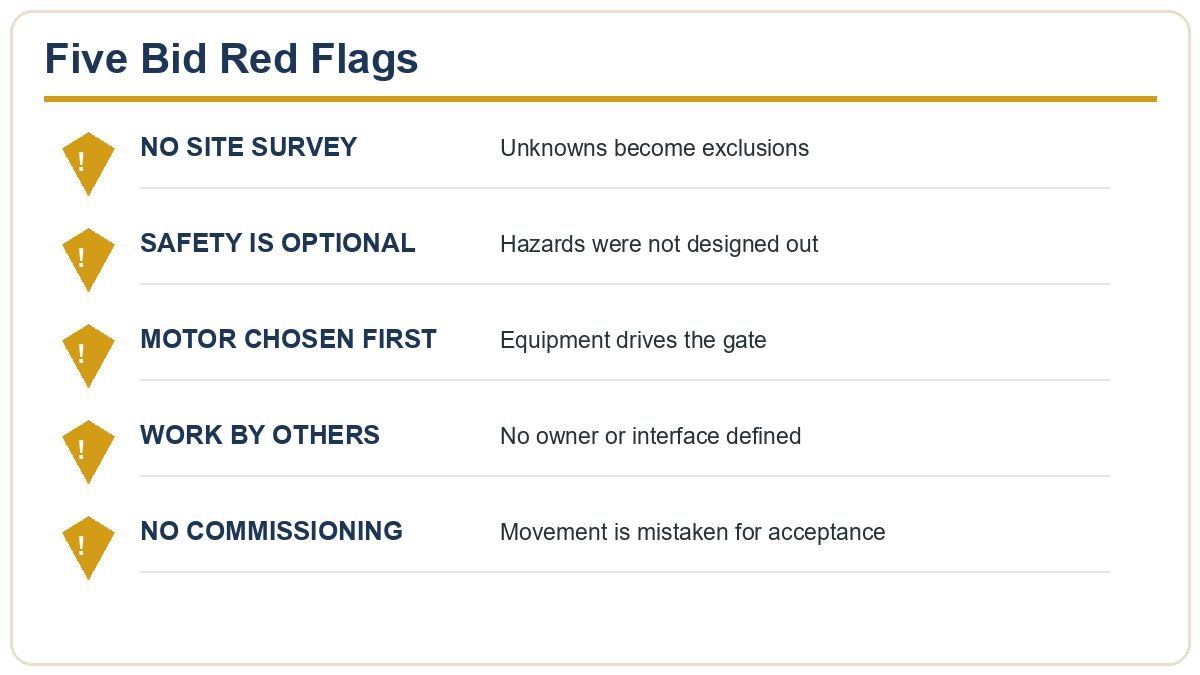
1. Pricing Without a Site Survey
A Photo Is Not a Survey
Photos help with initial screening, but they do not prove grade, runback, underground conditions, power availability, post capacity, or vehicle movement. A firm fixed price based only on photos usually contains broad exclusions or embeds assumptions that should have been tested before signing.
2. Safety Devices Listed as Options
Protection Is Not an Upgrade
If photo eyes or sensing edges appear beside decorative add-ons, ask the installer to map the entrapment zones and explain the compliant protection package. The number and type of devices should follow the hazards and the listed operator instructions, not a homeowner’s accessory budget.
3. An Operator Chosen Before the Gate
Motor Sizing Comes Later
Operator selection depends on gate weight, length, balance, movement type, duty cycle, wind exposure, and site geometry. Choosing a familiar motor first can force the gate design around the equipment or leave inadequate capacity when the fabricated panel is heavier than assumed.
4. Undefined Work by Others
Every Exclusion Needs an Owner
“Electrical by others” is only useful if it specifies the required circuit, conduit endpoint, controls, timing, and who coordinates the electrician. The same applies to concrete, masonry, paving, networking, and landscaping. Undefined interfaces are where schedules and budgets separate.
5. No Commissioning Checklist
Movement Alone Is Not Acceptance
Final testing should cover normal opening and closing, each safety device, obstruction response, access controls, vehicle detection, manual release, backup power, limits, locks, and emergency behavior. A gate that cycles once is not necessarily a commissioned system.
Plan the Handoff Before Installation Starts
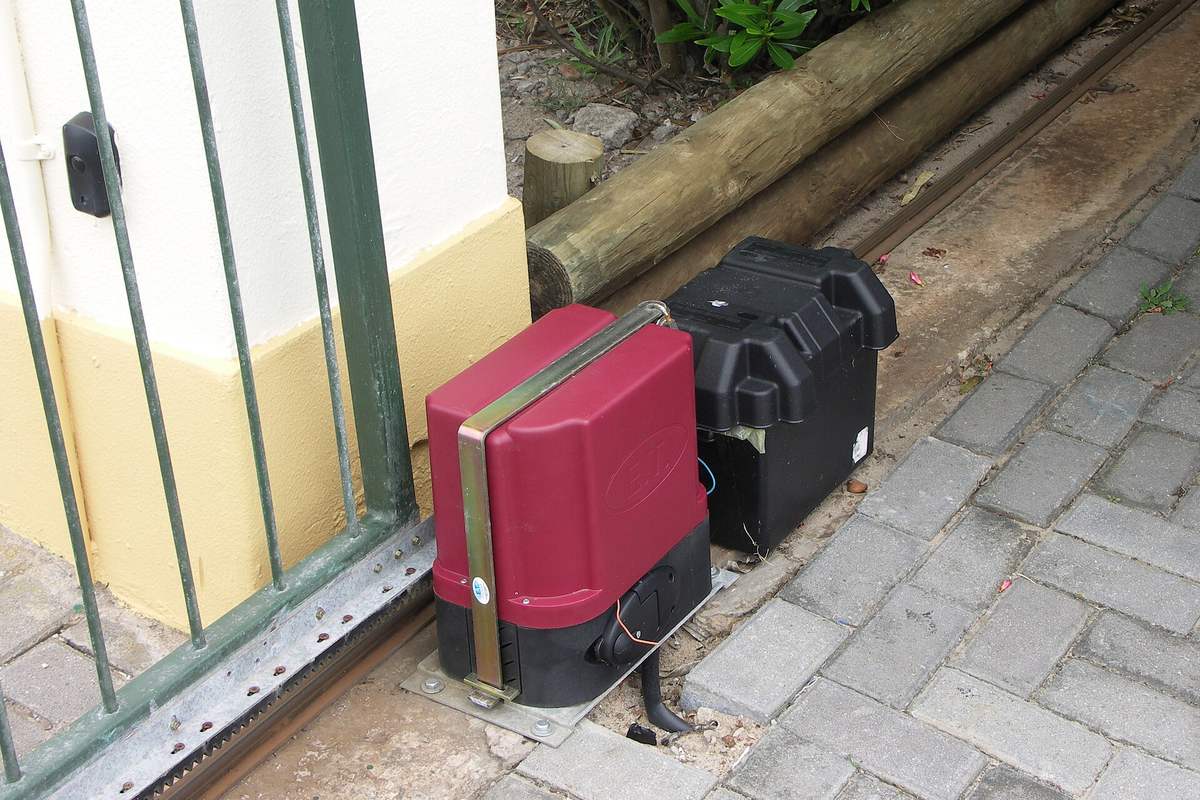
Closeout should be a contract deliverable. Ask for operator and accessory manuals, warranty terms, model and serial numbers, programming information, final permit approval when applicable, and a written maintenance schedule. The owner or property manager should receive hands-on training for the manual release and know whom to call when a safety device prevents normal operation.
Maintenance responsibilities should be specific. Cleaning a photo eye is different from adjusting force, limits, hinges, rollers, or sensing edges. The owner can perform simple observations and housekeeping, while qualified service personnel should handle adjustments that affect safe operation.
The best installer leaves the property with fewer mysteries than it had at the first visit. That is the real test behind a “near me” search: not distance alone, but whether the company can own the whole system from measurement through safe handoff.
Make the Site Visit Do Real Work
If you are comparing Bay Area driveway gate installers, bring the same checklist to every site visit and ask each company to define the whole scope. Top Tier Building Services can assess the entrance, coordinate the connected trades, and build a proposal around the property rather than a generic package. Request a site consultation when you are ready to turn the search results into a buildable plan.
FAQs
How many driveway gate quotes should I get
Get enough quotes to compare scope and approach, usually two or three after qualified site visits. More bids do not help if each company prices a different gate, excludes different trades, or has not measured the property. Normalize the inclusions before comparing totals.
Should I choose a swing gate or a sliding gate
The site should decide. Swing gates need a clear arc and compatible grade; sliding gates need runback and a stable support or track strategy. Vehicle path, wind, drainage, maintenance, and entrapment zones can outweigh appearance or initial equipment price.
Does a driveway gate installer need a California license
CSLB says licensing is required when the work needs a permit, uses workers, or totals $1,000 or more in labor and materials. Verify the specific company, classification, and active status with CSLB before signing; do not rely on a license number printed on a proposal alone.
What should an automatic gate quote include
It should define the gate, posts, footings, operator criteria, safety devices, access controls, electrical route, trenching, drainage, finish restoration, permits, testing, training, warranty, and maintenance. Every exclusion should identify who performs that work and when it must be complete.
Are photo eyes enough for an automatic gate
Not automatically. The protection plan follows the gate’s movement, entrapment zones, listed operator instructions, and applicable standards. Some installations require multiple devices or different device types. Ask the installer to show the hazard map and explain how each zone is protected.
What happens to an automatic gate during a power outage
That depends on the design. Battery backup may provide limited cycles, while a manual release allows authorized operation when the operator cannot run. The installer should demonstrate the procedure, show how locks and access controls behave, and account for emergency access.
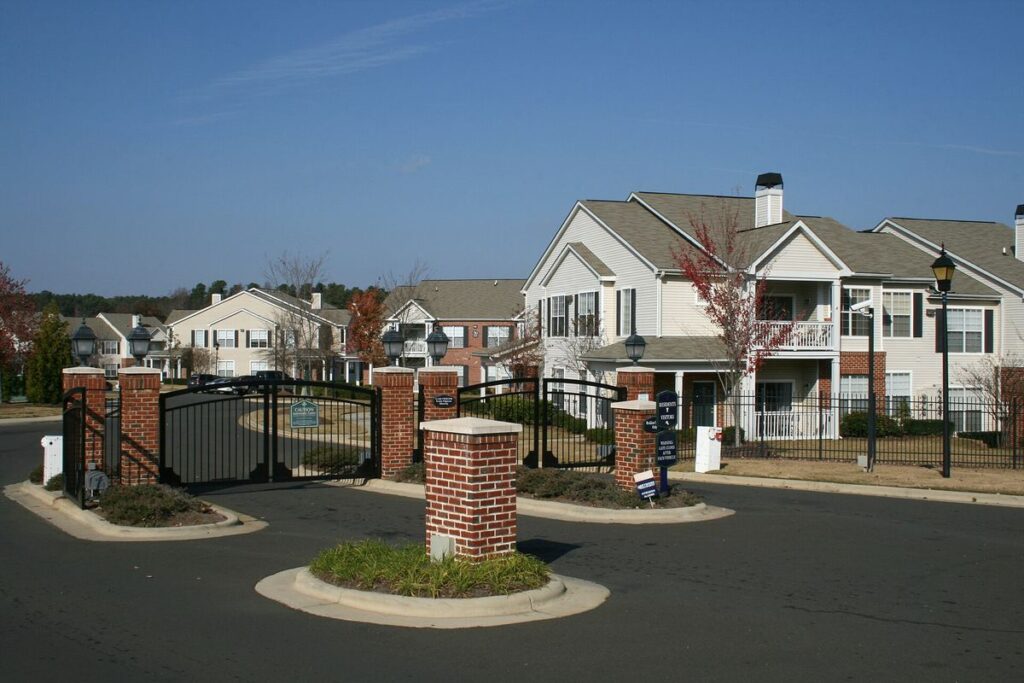
Featured photograph: Ildar Sagdejev (Specious), CC BY-SA 4.0, via Wikimedia Commons.