Picking the right gate and fence material in the Bay Area comes down to three questions: what’s the climate where you live, what does the house look like, and how much maintenance are you willing to do. For coastal homes from Pacifica to Half Moon Bay, aluminum or galvanized-then-powder-coated steel hold up best against salt air. For inland East Bay and South Bay properties, ornamental steel and wood both work well as long as the finish is UV-stable. When people ask about the best fence materials for California, the honest answer is that no single material wins everywhere — but a handful of pairings make sense for most properties. This guide walks through the real options, the tradeoffs, and how style usually shakes out once you factor in microclimate and budget.
For the full overview of driveway gates, perimeter fencing, and automation, see the complete Bay Area automatic gates and fencing guide.
Materials at a Glance
Here’s the short version before we get into detail:
- Wrought iron — classic, strong, ornate. Heavy, needs repainting, especially near the coast.
- Ornamental steel (galvanized + powder-coated) — the Bay Area workhorse for driveway gates. Iron’s look, modern durability.
- Aluminum — lighter, won’t rust. The default for coastal homes.
- Wood (cedar or redwood) — warm and natural for privacy fences and pedestrian gates. Not ideal for heavy driveway gates.
- Composite — wood-look without the upkeep. Higher upfront cost.
- Vinyl (PVC) — low-maintenance, practical, less premium aesthetic.
- Chain-link — utility-grade. Security, not curb appeal.
- Mixed (steel frame + wood infill) — structural durability with warmth.
The right pick depends on where the gate sits, how the house reads from the street, and what climate it has to survive year after year.
Wrought Iron and Ornamental Steel
Wrought iron is the look most people picture when they imagine an estate-style driveway gate — finials, scrollwork, the heft of forged metal. It’s still made today, but most of what gets sold as “wrought iron” in California is actually ornamental steel. The look is nearly identical; the durability is better.
The reason ornamental steel has taken over: when steel is hot-dip galvanized and then powder-coated, it resists corrosion for decades. Pure wrought iron lacks that protection and needs repainting every few years to keep rust at bay — sooner if you’re within a mile of the water.
For most Bay Area driveway gates, galvanized + powder-coated steel is the practical choice. It carries the iron aesthetic but works with modern gate operators without constant rework. The one tradeoff is weight: a 14-foot steel gate can easily weigh 400 pounds, so the operator has to be sized for it.
Aluminum
Aluminum is the answer to one specific Bay Area problem: salt air. If your home sits in Pacifica, Half Moon Bay, Bodega Bay, Bay Farm Island, or anywhere the marine layer rolls in regularly, aluminum gates and fences outperform steel by a wide margin because they don’t rust at all.
The other advantage is weight. Aluminum gates are roughly a third the weight of comparable steel gates, which means smaller operators and less wear on hinges. Powder-coat finishes are available in the same range of colors as steel, so the aesthetic doesn’t suffer.
The tradeoff is impact resistance. Aluminum is softer than steel, so a hard hit — a delivery truck backing into the gate, a falling branch — can dent it where steel might shrug it off. For most residential use, that’s a fair trade for not having to repaint every few years.
Wood: Cedar and Redwood
Wood is the warmest material on this list. For privacy fences and pedestrian gates, nothing else looks quite like a clear-finished cedar or redwood plank up against a Craftsman or ranch-style home. Western Red Cedar and California Redwood are the local favorites because both resist rot and bugs without pressure treatment.
For driveway gates, wood gets complicated. A large wood gate is heavy, warps with humidity changes, and needs more frequent finish maintenance than metal. Most Bay Area driveway gates that look like wood are actually steel frames with cedar infill — you get the look without the structural problems.
Wood needs sealing every two to four years, more often in foggy West Marin or wet North Bay winters. Skip the sealing for a few cycles and the boards gray out, then cup, then split. The wood vs vinyl fence debate usually comes down to this: wood looks better but asks for attention; vinyl asks for nothing but never quite looks like wood.
Composite and Vinyl
Composite fencing (Trex, TimberTech, and similar) is engineered to look like wood without the maintenance. The upfront cost is higher — often two to three times solid cedar — but you skip the staining and sealing for the life of the product. Composite resists fading, doesn’t splinter, and handles Bay Area moisture without warping. The aesthetic is close to wood but not identical; in side-by-side comparison, most people can tell.
Vinyl (PVC) is the budget-friendly low-maintenance option. It comes in white, tan, and wood-look prints, doesn’t need painting, and lasts 20-plus years in normal conditions. The downside is aesthetic: vinyl tends to read as suburban or institutional, and many design-conscious homeowners find it doesn’t match a custom home. UV-stable formulations help with fading, but inland heat in places like Livermore or San Ramon still takes a toll over time.
Chain-Link and Mixed Materials
Chain-link belongs on the list because it has a job — security, livestock containment, back-of-property fencing where curb appeal doesn’t matter. Black vinyl-coated chain-link looks significantly better than galvanized and disappears into landscaping. It’s not a front-yard material, but for utility runs it’s hard to beat on price and longevity.
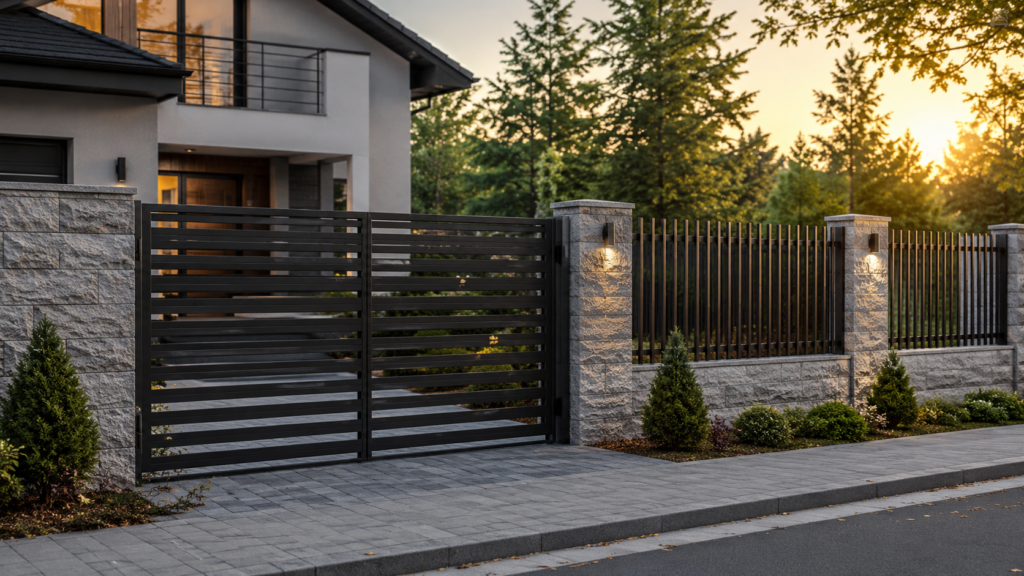
Mixed-material gates and fences solve the prettiest tradeoffs. A steel frame with horizontal cedar slats gives you the rigidity of metal and the warmth of wood. A masonry column with a wrought-iron infill panel anchors the entry without going full Spanish revival. Pairing materials thoughtfully is where good design happens.
Bay Area Microclimates and What They Mean for Materials
The Bay Area has more microclimates per square mile than almost anywhere in the country, and they directly affect material choice.
Matching Style to the House
The gate and fence should look like they were always meant to be there. A few patterns that consistently work:
The gate, the driveway, and the entry path read as one composition, so think about how the materials connect. Landscaping and outdoor design usually steers material choices for paving, planting beds, and lighting that frame the gate. Painting and surface finishes matter too: a fresh exterior repaint on the house can set the color that drives the gate’s powder-coat selection.
HOA Approval
In most planned communities and gated subdivisions, the architectural review committee has to approve any new gate or fence — material, color, height, and style. Submit a complete package up front: material samples, manufacturer cut sheets, a site plan showing setback, and a rendering or photo of a similar installation. Doing this on the front end takes a week or two; doing it after install means tearing out non-compliant work. For boards managing community-wide standards, our HOA and property management services include navigating these approvals as part of the project.
How Top Tier Handles This
In our experience, the conversations that lead to the best gate-and-fence outcomes start with a walk of the property — not a material catalog. We look at the architecture, the prevailing weather, the slope, the soil, and the neighbors before recommending materials. Top Tier (CA License #1146790) installs galvanized + powder-coated steel as the default for inland driveway gates and aluminum near the coast, but we’ll spec wood, composite, or mixed materials when the design calls for it. Footings get sized for actual soil conditions, and finishes get matched to your house — not pulled off a shelf. Our automatic gates and fencing service covers design, permitting, and install end-to-end.
Common Questions About Gate and Fence Materials
What Is the Best Fence Material for Coastal Bay Area Homes?
Aluminum and galvanized-then-powder-coated steel are the two strongest choices near the coast because both resist salt-air corrosion. Aluminum is lighter and never rusts; steel is more impact-resistant. For driveway gates within a mile of the water, aluminum is usually the safer long-term call.
Is Wrought Iron Better Than Aluminum for a Driveway Gate?
It depends on where the gate is. True wrought iron looks classic and resists impact, but it rusts unless repainted regularly — especially in coastal or foggy areas. Aluminum is lighter, won’t rust, and accepts the same powder-coat colors. For most Bay Area homes, ornamental steel (which mimics iron) or aluminum outperforms actual wrought iron on durability.
How Long Does a Wood Fence Last in the Bay Area?
A properly sealed cedar or redwood fence lasts 15 to 25 years in most Bay Area conditions. Skip the sealing and that drops to 10 to 12. Foggy and coastal areas shorten the life more than inland heat does because constant moisture is harder on wood than dry sun.
Do I Need HOA Approval for a New Gate or Fence?
In most HOAs and planned communities, yes — any visible exterior change requires architectural review. Submit material samples, a site plan, and a rendering before installation. Approvals usually take one to two weeks. Installing first and asking later is the most expensive way to do it.
Where to Go From Here
Material choice and style work hand-in-hand with budget, operator selection, and ongoing maintenance — none of these decisions live in isolation. If you’re working through what to spec for your property, we’d welcome a conversation that starts with a walk of the site and a look at how the gate will fit into the overall entry. The right material is whichever one you’ll be happy with in ten years.
By Top Tier Building Services Inc.
Licensed Bay Area General Contractor License #1146790 serving homeowners, HOAs, and property managers from Castro Valley. Top Tier delivers design-build, renovation, and maintenance services across 14 specialty trades.