
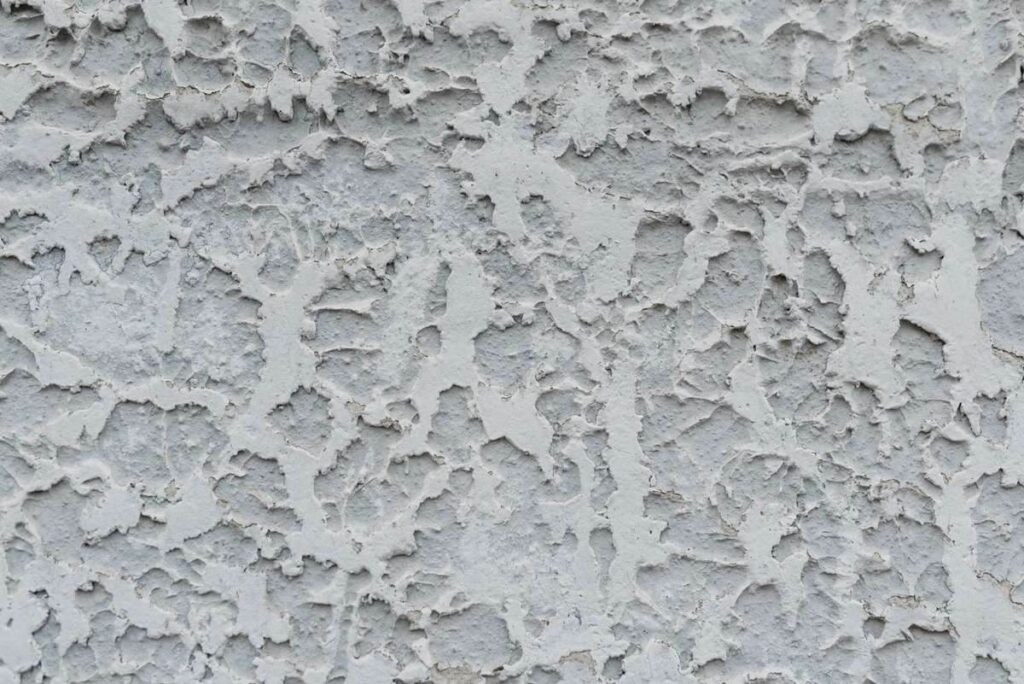
The reason you cannot get a straight answer on stucco repair cost is that the phrase covers two completely different jobs that happen to look similar from the curb. One is cosmetic: filling a hairline crack or patching a dinged corner, an afternoon of work and a modest bill. The other is remediation: tearing out a section of stucco because water has been getting behind it and rotting the sheathing and framing, a project that can run into five figures. Both get called “stucco repair,” and both get quoted per square foot, which is exactly why the numbers you find online swing from a couple hundred dollars to tens of thousands. The dangerous part is that the cheap-looking cracks are sometimes the expensive problem in disguise, and patching over them just hides the rot. This guide separates the two, so you can tell which repair you are actually looking at before you pay for the wrong one.
Key Takeaways
- Stucco repair cost ranges from a few hundred dollars for cosmetic crack filling to well over $10,000 for water-intrusion remediation, because those are fundamentally different jobs.
- Per-square-foot numbers only make sense once you know the type. Cosmetic patching is cheap; cutting out and rebuilding failed wall assemblies is not.
- The crack pattern is a diagnosis. Hairline and hairnet cracks are usually cosmetic, while staining, bulging, and cracks around windows and rooflines can signal water getting behind the stucco.
- Traditional cement stucco and synthetic EIFS repair very differently and cost very differently, so identifying which you have is the first real step.
- Matching texture and color on an old wall is a skilled craft, and a bad patch that stands out can look worse than the crack it replaced.
- In the Bay Area, most homes wear traditional three-coat cement stucco, and most cracks are cosmetic settling, but the ones near windows, roof edges, and grade deserve a closer look before you paint over them.
What This Guide Covers
- Why Stucco Repair Costs Range So Widely
- Stucco Repair Cost by Job Type
- Where the Money Goes in a Stucco Repair
- The Types of Stucco Damage and What Each Signals
- Traditional Cement Stucco Versus Synthetic EIFS
- Cosmetic Patch Versus Water-Intrusion Remediation
- What Stucco Repair Costs in the Bay Area
- Get an Honest Read on Your Stucco From Top Tier
- FAQs
Why Stucco Repair Costs Range So Widely
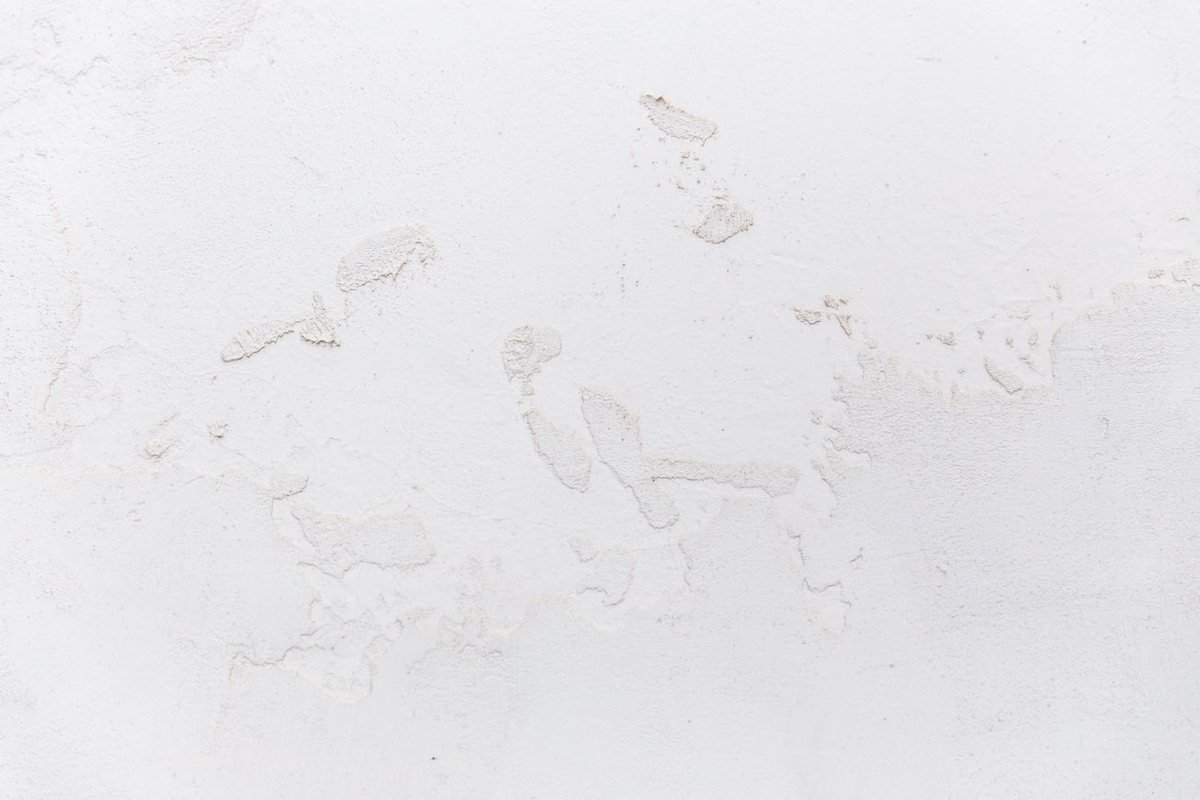
Stucco is not a coating, it is a system, and understanding that is the whole game. Traditional cement stucco is three coats, scratch, brown, and finish, applied over a lath and a weather-resistant barrier, and the barrier behind the stucco is what actually keeps water out of your walls. The stucco itself is porous and will crack; that is expected. As long as the barrier behind it is intact and the water that gets through the cracks can drain and dry, a cracked stucco wall is a cosmetic issue. The moment that barrier is compromised, at a bad window flashing, a roof-wall junction, or a penetration, water gets trapped against the sheathing and framing, and the repair stops being about stucco and starts being about the wet, sometimes rotten, structure behind it.
That is why one contractor quotes you a few hundred dollars and another quotes you fifteen thousand for what looks like the same wall. They are not disagreeing about the price of stucco; they are disagreeing about what is behind it. The cheap quote assumes the cracks are surface-only and patches them. The expensive quote assumes, or has found, water damage and prices the demolition, drying, structural repair, new barrier, new lath, and re-stucco that real remediation requires. The single most valuable thing you can do before hiring anyone is figure out which situation you are actually in.
Stucco Repair Cost by Job Type
Because the word “repair” spans everything from a tube of caulk to a wall rebuild, the most honest way to price it is by the type of job, not by a single per-foot figure. The table below shows the realistic tiers and roughly what drives each. Where a range shows per square foot, remember that small patches carry a minimum charge, so a tiny repair can still cost a few hundred dollars simply because a crew has to show up, mix, and match.
The jump from the third row to the fourth is the entire story of stucco pricing. A re-stucco is a surface job on a sound wall; remediation is a structural job that happens to end in stucco. If a bid for a cracked, stained wall comes in suspiciously low, it is almost always pricing the surface and ignoring the possibility of the fourth row.
Where the Money Goes in a Stucco Repair
On a straightforward cosmetic or section repair, the cost is dominated by skilled labor and the time it takes to blend the patch into the existing wall, not by materials. Cement, sand, lime, and lath are inexpensive; the craft of matching a decades-old texture and color so the repair disappears is what you are really paying for. On a remediation, the split flips entirely: the stucco is a small closing act after the expensive work of demolition, drying, and structural repair. Knowing which cost structure you are looking at helps you judge whether a bid is reasonable.
The Types of Stucco Damage and What Each Signals
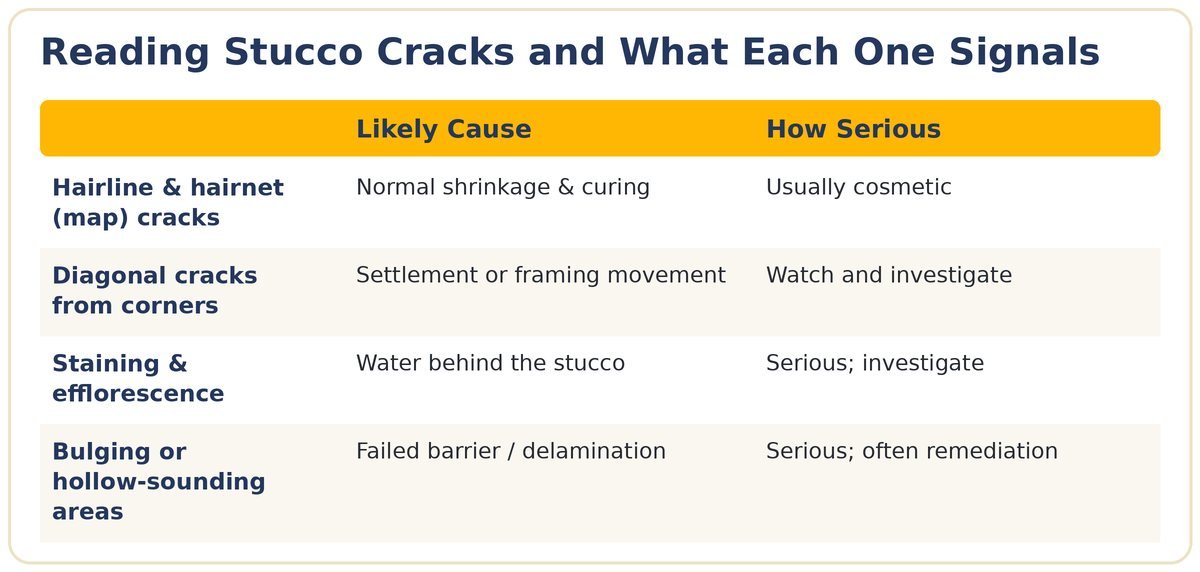
Not all cracks mean the same thing, and learning to read them is what keeps you from either overspending on a cosmetic issue or underspending on a structural one. These are the common patterns and what each typically indicates.
Hairline and Hairnet Cracks Are Usually Cosmetic
Surface Shrinkage, Not Structure
Fine cracks, and the web of tiny interconnected cracks called hairnet or map cracking, usually come from the normal shrinkage and curing of the stucco and from minor seasonal movement. On a wall with an intact barrier behind it, these are cosmetic and handled with sealant, patching, and re-coating. They are the most common stucco complaint and the least expensive to address, as long as they are truly surface-only.
Diagonal Cracks From Corners Suggest Movement
Settlement or Framing Movement
Cracks that run diagonally from the corners of windows and doors typically indicate structural movement, foundation settling, framing shrinkage, or seismic shifting, concentrating stress at those openings. They are not automatically an emergency, but they are worth watching and investigating, because they point to something moving behind the stucco rather than the stucco itself failing. Repairing the crack without addressing ongoing movement means it will simply return.
Staining, Efflorescence, and Bulging Signal Water
The Expensive Warning Signs
Brown or rust-colored staining, a white chalky mineral bloom called efflorescence, soft or bulging areas, and stucco that sounds hollow when tapped are the symptoms that turn a cheap repair expensive. They indicate water is getting behind the stucco and interacting with the lath, fasteners, and framing. These are the cases that need investigation and often remediation, and patching over them without addressing the water source is the classic costly mistake.
Traditional Cement Stucco Versus Synthetic EIFS
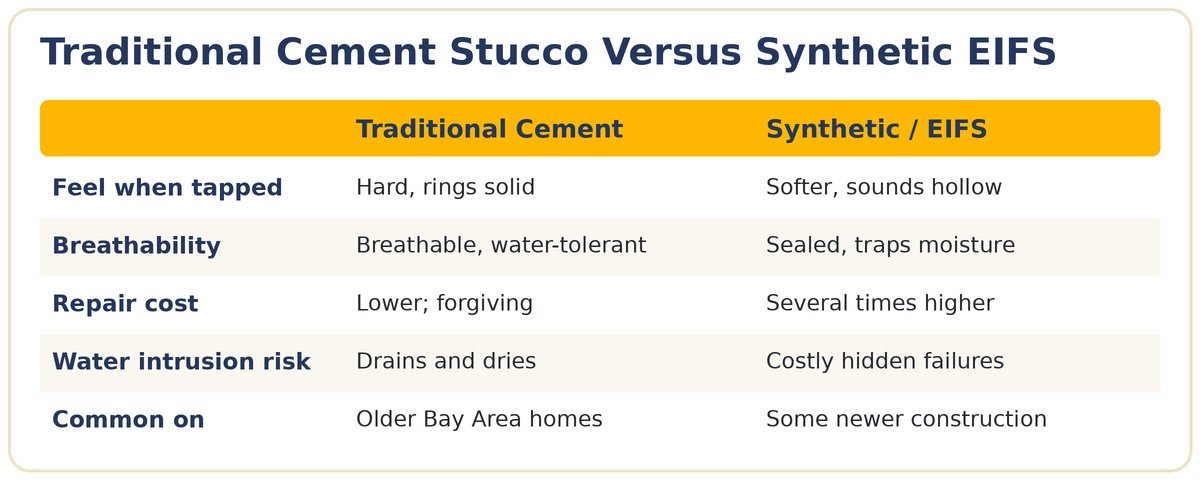
Before anyone prices a repair, they need to know which of the two very different stucco systems your home has, because they fail differently, repair differently, and cost differently. Getting this identification wrong leads to both bad repairs and wildly off estimates.
Traditional Three-Coat Cement Stucco
Hard, Breathable, and Forgiving
This is the cement-lime-sand system applied over lath that covers most older Bay Area homes. It is hard, durable, and relatively breathable, and it tolerates the small cracks that come with age. Repairs are comparatively straightforward and inexpensive when the substrate is sound, because you are patching a robust, water-tolerant material. Guidance from the Portland Cement Association covers how these three-coat systems are meant to be built and repaired.
Synthetic Stucco and EIFS
Softer, Sealed, and Less Forgiving
Exterior Insulation and Finish Systems are a foam-and-synthetic-coating assembly that looks like stucco but behaves very differently. It is softer, sealed rather than breathable, and far less tolerant of water that gets past its surface, because trapped moisture cannot easily dry. EIFS repairs run several times the cost of traditional stucco repairs, and water intrusion in an improperly detailed EIFS wall is a well-known and expensive failure mode. If you have synthetic stucco, treat any moisture sign seriously.
Cosmetic Patch Versus Water-Intrusion Remediation
Everything in this guide comes down to one fork in the road, and it is the fork that determines whether you spend hundreds or tens of thousands. A cosmetic repair addresses stucco that has cracked or chipped on a wall whose weather barrier and structure are sound. You clean, patch, texture, and re-coat, and the wall is done. Remediation addresses stucco that is failing because water has been getting behind it, and it requires removing the stucco, drying and repairing the wet sheathing and framing, installing a new weather-resistant barrier and lath, and only then re-stuccoing. The stucco work at the end is nearly identical in both cases; the difference in cost is entirely the wet, damaged structure the remediation has to fix first.
The reason this matters so much financially is that the two are easy to confuse from the outside and expensive to confuse in practice. A wall with staining and a few soft spots can be patched to look perfect for a few hundred dollars, and the homeowner feels like they got a bargain, right up until the trapped water finishes rotting the framing and the repair bill arrives with a demolition attached. The honest move on any wall showing water signs, stains, bulges, hollow sounds, cracks concentrated near windows, roofs, and grade, is to investigate before you patch. Sometimes the news is good and it is cosmetic. When it is not, finding out early is the difference between a manageable repair and a structural one.
What Stucco Repair Costs in the Bay Area

The Bay Area’s housing stock is heavy on traditional cement stucco, which is good news for repair costs, because the material is durable and forgiving and most of the cracks you will see on an older Oakland, San Jose, or Fremont home are cosmetic settling and shrinkage rather than structural failure. Those are the inexpensive end of the spectrum, patch, texture-match, and re-coat. The regional wrinkles are seismic and moisture-driven. Ground movement from settling and seismic activity concentrates cracking at window and door corners, so those diagonal cracks are common here and usually cosmetic but worth monitoring. And while the climate is milder than a freeze-thaw region, wind-driven rain during the wet season finds any gap in flashing at roof-wall junctions and around windows, which is where the water-intrusion cases tend to originate.
Labor rates across the region also sit above the national average, so even a straightforward stucco patch costs more here than a national calculator suggests, and the craft premium for a texture match that disappears is real. The practical guidance for a Bay Area homeowner is simple: do not panic over hairline and hairnet cracking on a sound wall, it is normal and cheap to address, but treat staining, bulging, and cracks clustered around openings and rooflines as a reason to have someone look behind the stucco before painting or patching. On this housing stock, that one habit is what keeps a cosmetic bill from becoming a structural one.
Get an Honest Read on Your Stucco From Top Tier
The most expensive stucco mistake is patching a water problem as if it were a cosmetic one, because the bill for that shows up later with rotted framing attached. If your stucco is cracking, staining, or bulging and you want to know which repair you are actually facing before you spend, reach out to Top Tier Building Services or explore our painting and surface finishes services. We check what is behind the wall before we price the front of it, and we match texture and color so the repair disappears, across Castro Valley, Oakland, and San Jose.
FAQs
How much does stucco repair cost per square foot?
Cosmetic and section repairs to traditional cement stucco typically run about $8 to $20 per square foot, while a full re-stucco of a sound wall runs roughly $7 to $12 per square foot. Small crack repairs are often priced as a flat job of a few hundred dollars because of minimum charges. Synthetic EIFS repairs cost several times more, and water-intrusion remediation is a different category entirely, often $10,000 or more.
Are cracks in stucco a serious problem?
It depends entirely on the crack. Hairline and hairnet cracks are usually cosmetic shrinkage and are inexpensive to address. Diagonal cracks from window and door corners suggest structural movement and are worth investigating. Staining, bulging, efflorescence, and hollow-sounding areas can signal water getting behind the stucco, which is the serious and expensive case. The pattern and location of the cracks, not their mere presence, determine how worried you should be.
Why are some stucco repair quotes so much higher than others?
Because they are pricing different jobs. A low quote usually assumes the cracks are surface-only and patches them, while a high quote assumes or has found water damage behind the stucco and prices the demolition, drying, structural repair, new barrier, and re-stucco that remediation requires. The gap between quotes often reflects a disagreement about what is behind the wall, which is why a moisture check before pricing is so valuable.
Can I paint over stucco cracks instead of repairing them?
You should not, at least not as a repair. Paint can bridge a hairline crack cosmetically, but it traps moisture that previously dried outward and hides cracks that may be symptoms of a deeper problem. If the cracks are cosmetic, they should be properly filled and textured before painting. If they signal water intrusion, painting over them makes the hidden problem harder to find and does nothing to stop the damage.
How do I know if I have traditional stucco or synthetic EIFS?
Traditional cement stucco is hard and rings solid when tapped, while EIFS is softer and sounds hollow because of the foam board behind it. Pressing on EIFS may give slightly. Age is a clue too, most older homes have traditional stucco, while EIFS became common on certain newer construction. Because they repair so differently and EIFS water damage is costly, it is worth having a professional confirm which system you have before any repair.
Does stucco repair need to match the existing texture?
Yes, and it is the hardest part of the job. Old stucco has a specific hand-applied texture and a weathered color, and a patch that does not match reads as an obvious scar. Skilled repair blends the texture and often re-coats or paints the entire wall or elevation so the repair disappears. Budgeting only for the patch and not for blending is why some technically sound repairs still look bad.