Ask a paving crew and a concrete crew, and you will get opposite answers. The honest version of asphalt vs concrete driveway is a money question with a clock on it. Asphalt wins the install quote almost every time. Concrete usually wins the next thirty years. And in the mild Bay Area, asphalt’s biggest advantage never gets to play.
Here is the short answer up front. Asphalt costs roughly $6 to $9 per square foot installed and lasts about 15 to 20 years with steady sealing. Plain concrete runs roughly $8 to $15 per square foot and lasts 30 to 40 years. One driveway gets replaced mid-race. The other finishes it. This guide walks the lifecycle math, the honest pros and cons, resale value, and the local permit wrinkles.
Key Takeaways
- Asphalt is cheaper on day one — roughly $6 to $9 per square foot installed, against $8 to $15 for plain concrete.
- Concrete usually wins the 30-year total. In our worked example it ends about $4,000 ahead, because asphalt needs a full mid-life replacement.
- Asphalt lasts 15 to 20 years. Concrete lasts 30 to 40. Mild local winters stretch concrete’s edge even further.
- Asphalt’s trump card is freeze-thaw country. The Bay Area barely freezes, so that card never gets played here.
- Every decorative finish — stamped, stained, exposed aggregate — lives on the concrete side. Asphalt comes in black.
- Your time horizon decides. Selling within eight years favors the cheap install. Staying twenty favors the surface that outlives the loan.
What This Guide Covers
- What Each Driveway Really Costs to Install
- The 30-Year Math That Actually Picks the Winner
- How Long Asphalt and Concrete Last in a Mild Climate
- Pros and Cons That Matter Once the Weather Is Mild
- Decorative Concrete Finishes That Asphalt Cannot Match
- What Your Driveway Does to Resale Value
- Run the Numbers on Your Own Driveway
- Permits and Runoff Rules Bay Area Cities Care About
- Get a Driveway Bid Built on the 30-Year Math
- FAQs
What Each Driveway Really Costs to Install
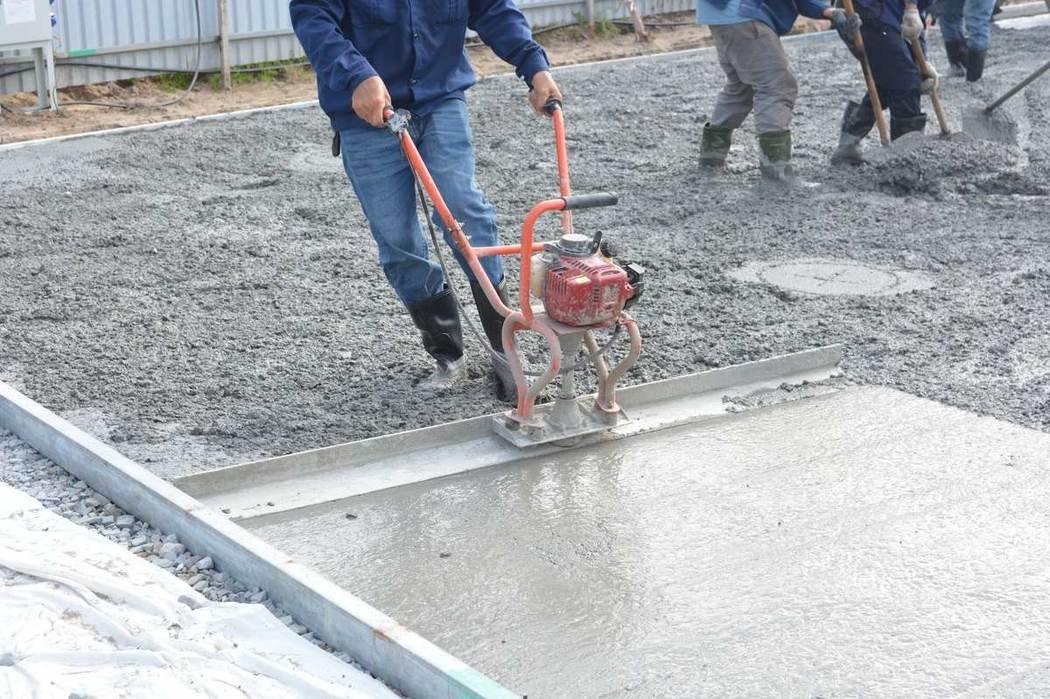
The national numbers sit close enough to mislead. Today’s Homeowner’s comparison puts asphalt at $6 to $9 per square foot installed and basic concrete at $8 to $15. Decorative finishes push concrete higher. Local bids usually land at or above the top of those bands. Tight lots, haul-off, and labor rates in Oakland or San Jose push them higher still. For the full slab-side line items — base prep, demolition, permits, and what the cheap bid omits — see our concrete driveway cost guide.
Replacement jobs also include demolition. Breaking out and hauling away the old surface is part of nearly every bid, so budget for it either way. And if your existing slab is sound but tired-looking, a tear-out may be the wrong project entirely. See our guide to concrete resurfacing costs and the questions to ask before you pay for demo.
The 30-Year Math That Actually Picks the Winner
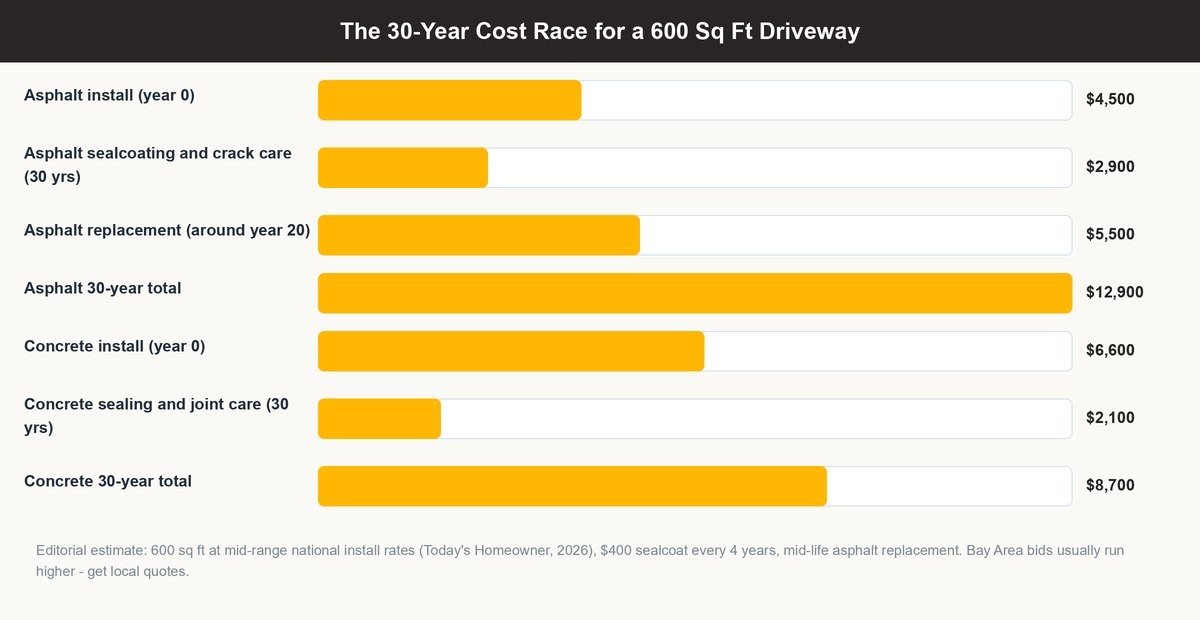
Run one honest example and the debate mostly ends. Take a 600 square foot driveway, a common two-car footprint. At mid-range national rates, asphalt goes in for about $4,500. Add a $400 sealcoat every four years plus crack filling — call it $2,900 over thirty years. Around year 18 to 20 the surface is simply done, so the plan includes a second install at about $5,500. The asphalt path totals about $12,900 — and you bought two driveways.
Concrete starts higher — about $6,600 for the same slab. Upkeep is lighter. Occasional sealer and joint care might run $2,100 across three decades. There is no replacement line, because a well-built slab is still under your tires at year 30. Total: about $8,700.
These are editorial estimates on stated assumptions, not quotes. Local pricing runs higher on both sides, and your bids will differ. But the ratio survives every adjustment, because it comes from structure, not price. Asphalt’s schedule contains a whole second driveway. Concrete’s does not.
One honest counterpoint: the asphalt path spends its money later. If cash is tight this year, $4,500 now with a replacement bill two decades out can be the rational pick. Just make that choice on purpose, with the whole schedule in view.
How Long Asphalt and Concrete Last in a Mild Climate
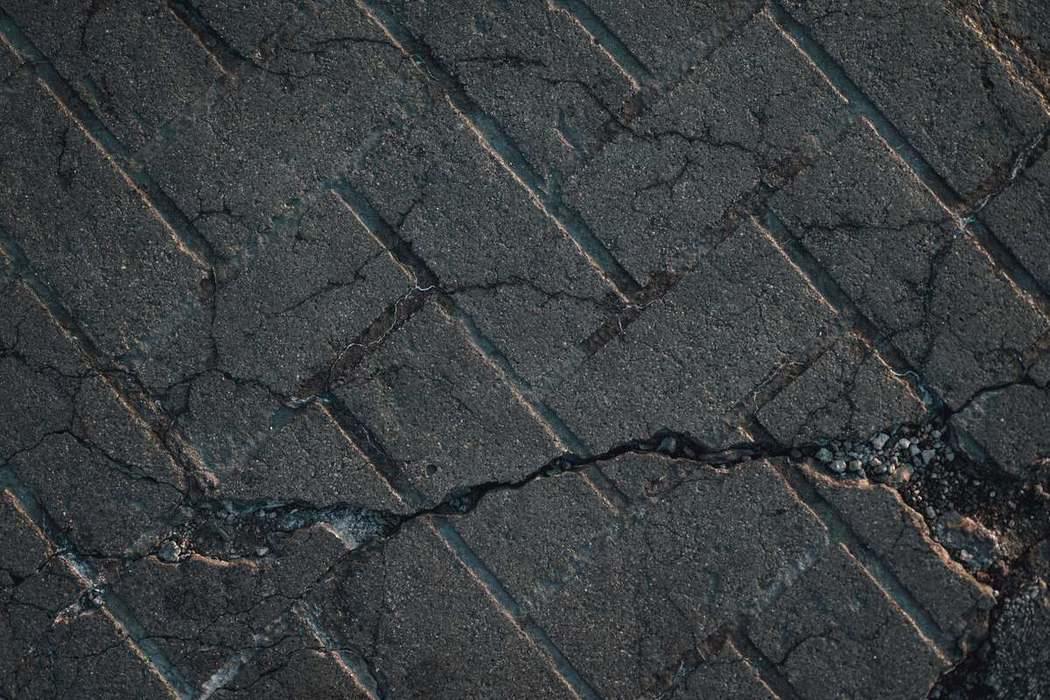
The stock figures — 15 to 20 years for asphalt, 30 to 40 for concrete — hide a climate asterisk. Asphalt is the flexible pavement. It bends instead of cracking when frozen ground heaves, which is why it rules driveways in snow country. Concrete is rigid, and freeze-thaw cycles plus road salt are the classic ways a slab spalls early.
Now look at where you live. Winter nights in Castro Valley, Oakland, or San Jose rarely dip below freezing, and nobody salts a residential driveway here. Concrete’s main enemy never shows up. Asphalt’s enemies work year-round instead. Sun oxidizes the binder until it turns brittle and gray. Inland summers — Concord and Livermore push into the 90s — soften the surface enough that a kickstand or trailer jack leaves a permanent dent. Mild winters plus hot summers quietly flip the durability argument toward concrete.
One shared enemy remains: mature tree roots lift both materials. If your driveway threads between established trees, raise it with your contractor at the design stage, not after the pour.
Pros and Cons That Matter Once the Weather Is Mild
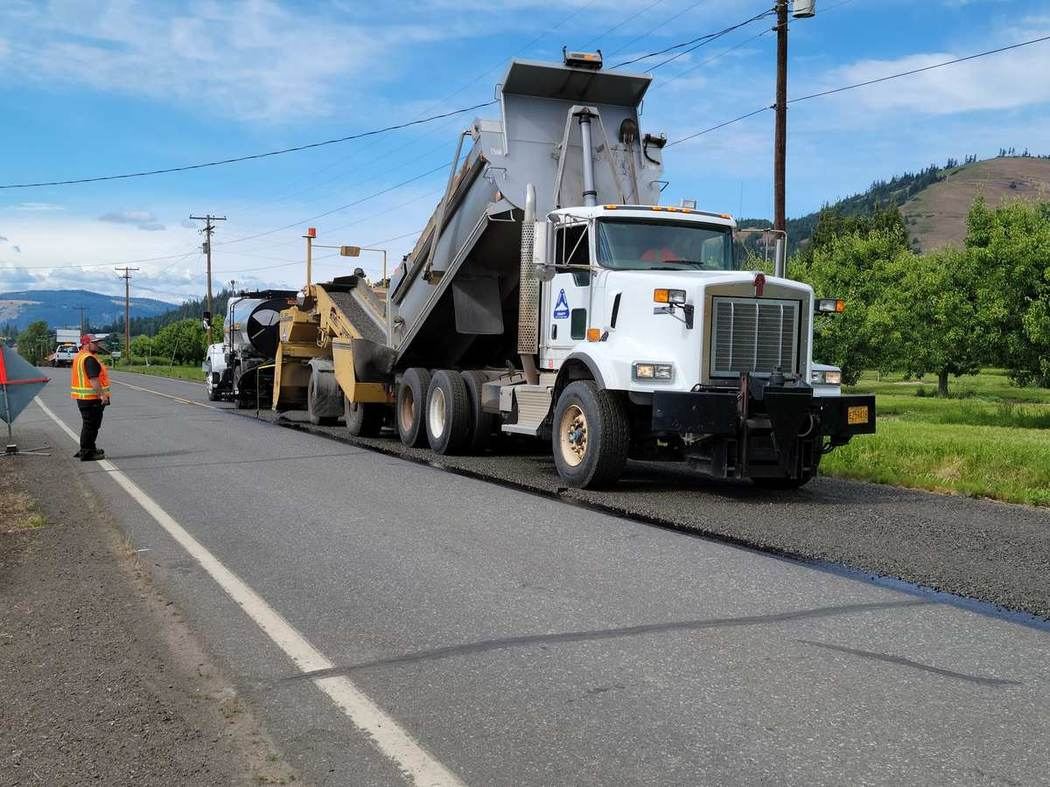
Most asphalt vs concrete driveway pros and cons lists are written for the whole country. Strip out the freeze-thaw items that do not apply here, and this is what genuinely remains.
Asphalt’s real advantages:
- Lowest entry price — usually the cheapest paved driveway you can buy, often by a couple thousand dollars.
- Fast to live with — paved in a day or two, parked on in about 2 to 3 days. New concrete needs roughly a week.
- Repairs disappear — patches and crack fills blend into the black surface, so an older driveway can still look uniform.
Asphalt’s real costs:
- A maintenance subscription — sealcoating every 3 to 5 years is the price of reaching the long end of its lifespan.
- Heat is its weakness — softening, oxidation, and sun fade are exactly the stresses a California driveway sees most.
- Half the service life — even well-kept asphalt is a 20-something-year surface. The replacement bill is built into the material.
Concrete’s real advantages:
- Lifespan with low upkeep — 30 to 40 years on occasional sealing and joint care, with no recurring resurfacing schedule.
- Composed in heat — the lighter surface reflects sun instead of absorbing it, and it never softens under tires.
- A design menu — stamping, staining, and exposed aggregate make the driveway part of the home’s architecture.
Concrete’s real costs:
- The bigger first check — on the national ranges above, expect roughly a third more. Decorative work adds beyond that.
- Repairs show — a patched slab rarely hides its history, and oil stains read loudly on light gray.
- Patience at the start — plan about seven days before parking on a new slab while it gains strength.
Decorative Concrete Finishes That Asphalt Cannot Match
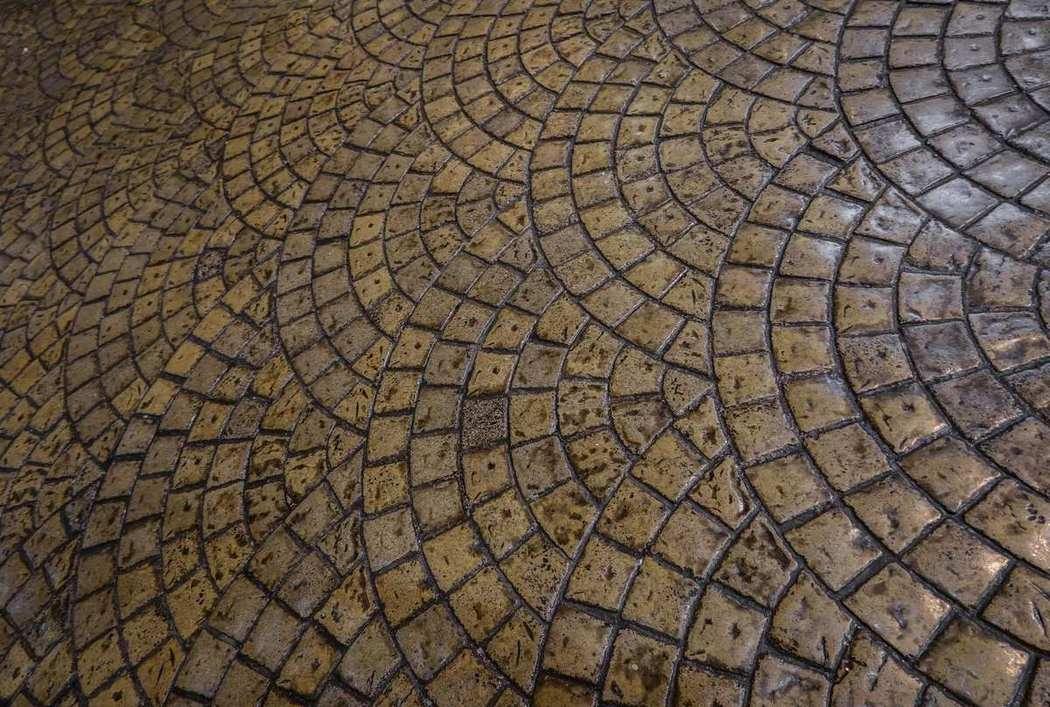
Asphalt is a fine surface that comes in exactly one look. If curb appeal is part of your math, the comparison stops being close, because every decorative technique in the driveway world belongs to concrete. These three finishes are all part of Top Tier’s concrete and entry finishes work, and they cover most of what local homeowners ask for.
1. Stamped Concrete That Mimics Stone
How the Pattern Gets Made
Freshly placed concrete is pressed with rigid molds before it cures, shaping the surface into cobblestone, slate, brick, or flagstone patterns. Color goes into the mix or gets dusted on as a hardener, then the finished surface is locked under sealer.
Why It Beats Hand-Set Pavers
You get the look of a hand-set stone driveway from a single structural pour. There are no thousands of joints to let weeds through or let pavers shift. The pattern runs the full driveway, so it reads as custom masonry from the street.
Where Stamping Makes Sense
Homeowners who want the driveway to carry the home’s first impression. Think entry courtyards, wide aprons, and street-facing driveways where plain gray would undersell the house. It pairs naturally with matching walkway and patio pours.
2. Stained Concrete in Custom Earth Tones
How Stain Colors the Slab
Acid-based or water-based stains soak into cured concrete and change its color permanently — warm tans, terracotta, charcoal, and mottled stone tones. The color becomes part of the slab surface itself, not a film sitting on top the way paint would.
Why Stain Outlasts Coatings
Because stain penetrates instead of filming over, it cannot peel or flake off under tires the way coatings eventually do. The varied, slightly uneven finish also hides everyday dust, leaf marks, and tire scuff far better than uniform plain gray.
Where Staining Fits Best
Tying the driveway into the rest of the exterior palette — matching stucco, roof tones, or landscape hardscape. It is also the natural upgrade when an existing slab is structurally sound and only its color and finish need a second life.
3. Exposed Aggregate With Built-In Grip
How the Texture Is Revealed
The thin layer of cement paste at the surface is washed away before the slab fully cures. That reveals the natural stones inside the mix. The result is a pebbled, textured finish whose color comes from the aggregate itself rather than any coating.
Why Grip Wins on Slopes
All that texture is traction. On sloped lots — and half the East Bay hills qualify — an exposed aggregate driveway grips shoes and tires on wet winter mornings. A smooth troweled slab gets slick in the same conditions. The busy surface also hides drips and stains well.
Which Homes Benefit Most
Sloped driveways in hill neighborhoods from the Oakland hills to Hayward, plus fog-belt homes where surfaces stay damp until noon. It also suits anyone who wants a stone-toned look that is practical first and decorative second.
What Your Driveway Does to Resale Value
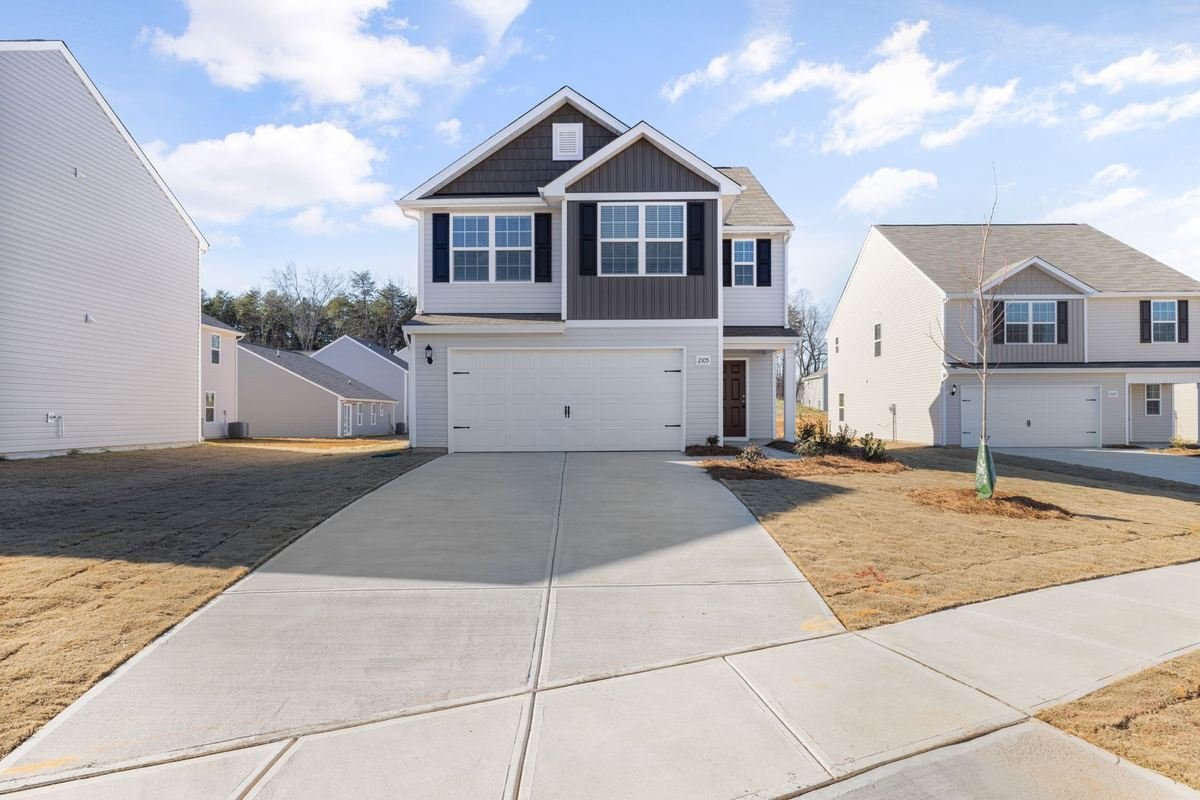
Be skeptical of anyone quoting an exact return on a driveway. No credible study pins a universal percentage on it, and we will not invent one. What is well documented is buyer behavior. The driveway sits in the first listing photo and is the first surface a visitor touches. Home inspectors flag cracking, heaving, and drainage problems in writing — which hands buyers a discount lever at the worst possible moment for you.
Remaining life is the quieter factor in the asphalt vs concrete driveway resale question. A five-year-old concrete driveway shows a buyer twenty-five years of service still ahead. A five-year-old asphalt driveway is already a third spent. In a market where buyers expect turnkey condition, a surface with no near-term bills quietly supports the asking price.
Run the Numbers on Your Own Driveway
Online asphalt vs concrete driveway cost calculators ship with national default prices, which is the one input you should not use in this market. The honest arithmetic takes four steps.
First, measure. Length times width — most two-car driveways land between 400 and 700 square feet. Second, multiply by an installed rate from real local quotes, using the top of the national bands as a sanity floor. Third, add the lifetime schedule. For asphalt, that means a sealcoat every 3 to 5 years while you own the home. Add one full replacement if your horizon passes year 20. For concrete, a modest sealing and joint-care budget. Fourth, compare totals over your horizon — not over the material’s.
That last step is the part most comparisons skip. Selling within about eight years? Asphalt’s replacement bill never lands on your watch, so the cheaper install is defensible — just weigh the listing-photo effect above. Staying twenty years or more? The mild-climate math points at concrete and rarely wavers. The calculator does not pick a material. It prices your timeline.
Permits and Runoff Rules Bay Area Cities Care About
Driveway permits come in two layers, and most homeowners only think about the first. On your own lot, a same-footprint replacement is often light-touch or over-the-counter. But every city runs its own counter, and Oakland, San Jose, and Fremont do not read from one script. Widening the driveway or cutting a new curb entry brings real review. A phone call before demo day is cheap insurance.
The second layer is the strip you do not own. The apron between the sidewalk and the street sits in the public right-of-way. Work there generally needs an encroachment permit issued to a licensed contractor. Most local public-works standards spec concrete for that apron, whatever you pave on your side of the line. That is worth knowing before an asphalt bid quietly excludes it.
Stormwater is the sleeper issue. Driveways count as impervious surface, and regional rules push cities to care when projects add more of it. Like-for-like replacement rarely triggers anything; enlarging a driveway during a bigger remodel can. Permeable options exist on both sides of this comparison. The EPA’s permeable pavement overview explains how these surfaces let rain soak through instead of running to the storm drain.
Get a Driveway Bid Built on the 30-Year Math
Top Tier Building Services pours and finishes concrete driveways, walkways, and patios across the East Bay as a licensed California general contractor, CSLB #1146790. We serve Castro Valley, Hayward, Oakland, Fremont, and nearby Alameda and Contra Costa County communities. If your math points to concrete, plain or decorative, we will price the job with the base prep, drainage, and permit questions answered up front. Request your free driveway estimate here.
And if your math genuinely points to asphalt — short horizon, tightest install budget — hire a dedicated asphalt paving contractor. Paving is its own specialty trade with its own equipment, and it deserves a specialist.
FAQs
Is an asphalt driveway cheaper than concrete?
Upfront, yes. Asphalt installs for roughly $6 to $9 per square foot nationally, and plain concrete for $8 to $15. Local bids sit at or above both bands. Over 30 years the order usually flips, because asphalt adds recurring sealcoating and a full mid-life replacement.
How long does an asphalt driveway last compared to concrete?
Asphalt typically serves 15 to 20 years, nearing 30 only with disciplined sealing. Concrete typically serves 30 to 40 years, sometimes 50 on a well-built base. Mild winters remove freeze-thaw, concrete’s main threat, while sun and heat keep working against asphalt year-round.
Do I need a permit to replace my driveway in the Bay Area?
Same-footprint replacement on your own lot is often light-touch, but every city sets its own rules, so call the counter first. Work on the apron in the public right-of-way generally needs an encroachment permit, and widening or adding a curb cut brings fuller review.
Can you pour concrete over an existing asphalt driveway?
Roads sometimes get that treatment, but most residential contractors remove the asphalt first. An overlay risks reflective cracking, uncertain thickness, and drainage problems, and it usually raises the finished surface too high against garages and walkways. Tear-out plus a proper base is the durable path.
Does a new concrete driveway increase home value?
No honest contractor promises a specific dollar return. What a sound new driveway reliably does is remove a negotiating lever. Inspectors write up cracking and heaving, and buyers discount for both. Long remaining life and clean curb appeal support your asking price instead.
Which driveway handles hot weather better?
Concrete, clearly. Its lighter surface reflects sunlight and stays rigid in any local summer. Asphalt absorbs heat and softens on days in the 90s, which are common inland around Concord and Livermore. A soft surface can scar under kickstands, jacks, and sharp turning tires.