
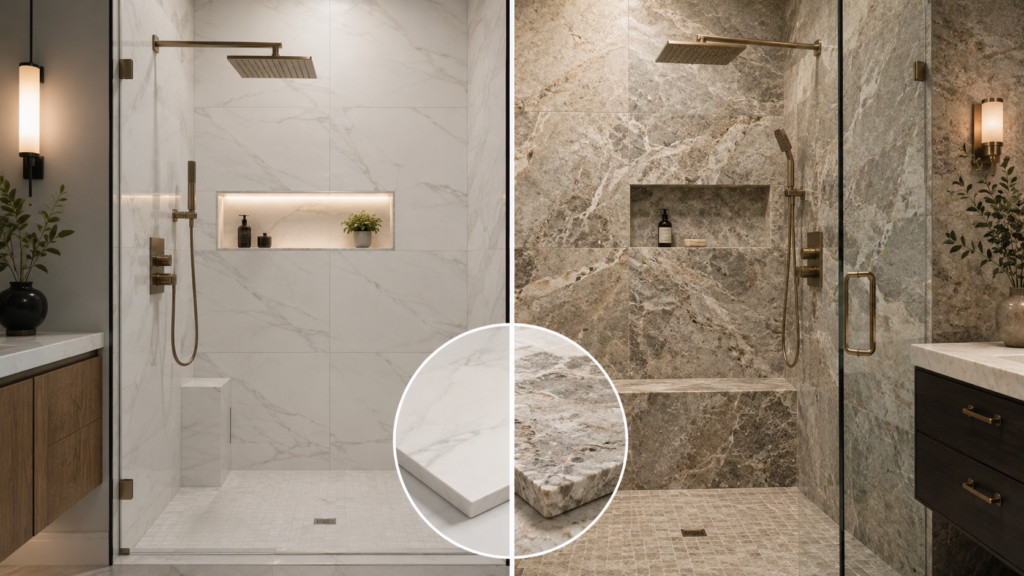
Selecting the surface material for a luxury shower surround is one of the most critical design decisions in a bathroom remodel. The choice isn’t merely aesthetic; it directly dictates the installation complexity, structural weight calculations, and long-term maintenance requirements of the space. In premium architectural builds, the debate almost always centers on two material classes: engineered porcelain and classic natural stone.
While both options deliver stunning visual impact, they behave completely differently when exposed to continuous moisture, mineral deposits, and thermal cycling. Before finalizing your material choices or establishing your plumbing fixture layout, ensuring your selections align with proper custom bathroom design and space planning principles is vital to account for structural loads and drain placement. This guide analyzes the structural physics, moisture performance, and care factors of porcelain versus natural stone to help you select the ideal medium for your high-end shower surround.
1. Porosity and Moisture Performance
The fundamental scientific difference between porcelain and natural stone lies in their water absorption rates. This characteristic determines how the material responds to daily moisture loads and the pooling conditions found in modern wet rooms:
• Porcelain Tile: Cooked at extreme temperatures exceeding 2,200°F, porcelain is an incredibly dense, vitrified material. According to industry standards, true porcelain must possess a water absorption rate of less than 0.5% (typically hovering around 0.05%). This makes it virtually impervious to water, chemical penetration, and staining.
• Natural Stone (Marble, Travertine, Slate): As a product of nature, natural stone is inherently porous and filled with microscopic capillaries. Carrara marble, for instance, has an absorption rate averaging 0.1% to 0.5%, while more porous stones like travertine can exceed 1.0%. Without ongoing topical sealant applications, water and body oils will penetrate the stone matrix, leading to subsurface discoloration, mineral iron blooming (rusting), and accelerated grout degradation.
2. Material Comparison: Structural & Maintenance Dynamics
Beyond moisture resistance, your choice impacts your home’s structural framing requirements and your daily lifestyle. The table below outlines how these materials compare across key engineering categories:
3. The Structural Prep and Deflection Factor
Many homeowners fail to realize that choosing a premium natural stone—such as a large-format slab of Calacatta marble—fundamentally changes the structural preparation required beneath the tile layer. Wood joist systems are flexible and bounce under load; this micro-flexing is measured as a deflection ratio.
Standard porcelain installations can safely tolerate a standard deflection ratio of L/360 (the span of the floor joist divided by 360). However, natural stone has zero elasticity and will crack under minor structural shifts. Consequently, stone requires a strict deflection rating of L/720—meaning the subfloor assembly must be twice as rigid. Achieving this standard requires framing crews to sister additional joists, apply thicker underlayment layers, or install high-performance uncoupling membranes, significantly increasing your large-format porcelain tile installation costs if switching to custom stone.
4. Maintenance and Longevity Protocol
Preserving the pristine, factory look of your custom shower surround comes down to understanding the chemical limitations and shower surround grout lines maintenance of your chosen material:
• Porcelain Care: Porcelain requires minimal maintenance. It can handle standard household disinfectants and mild acidic cleaners without damage, making it incredibly easy to remove hard water deposits and soap scum.
• Natural Stone Care: Natural stone is highly sensitive to chemical exposure. Mild acids—including common citrus soaps, vinegar, and heavy-duty bathroom sprays—will chemically dissolve marble, leaving dull, rough patches known as etching. To preserve stone, it must be cleaned strictly with pH-neutral stone soaps and mechanically sealed with a premium penetrating sealer every 6 to 12 months to block moisture pathways.
Conclusion
Both porcelain and natural stone can deliver a breathtaking, luxury finish to your custom shower layout, but they demand different structural and lifestyle commitments. (Weighing the spend? Our Bay Area flooring cost guide shows where porcelain and natural stone land per square foot.) If you want a timeless, artistic master suite and don’t mind routine sealing and structural floor reinforcement, natural stone is an unmatched premium medium. If you prioritize maximum moisture defense, effortless maintenance, and lower structural prep costs without sacrificing high-end aesthetics, advanced porcelain is the modern elite choice.