
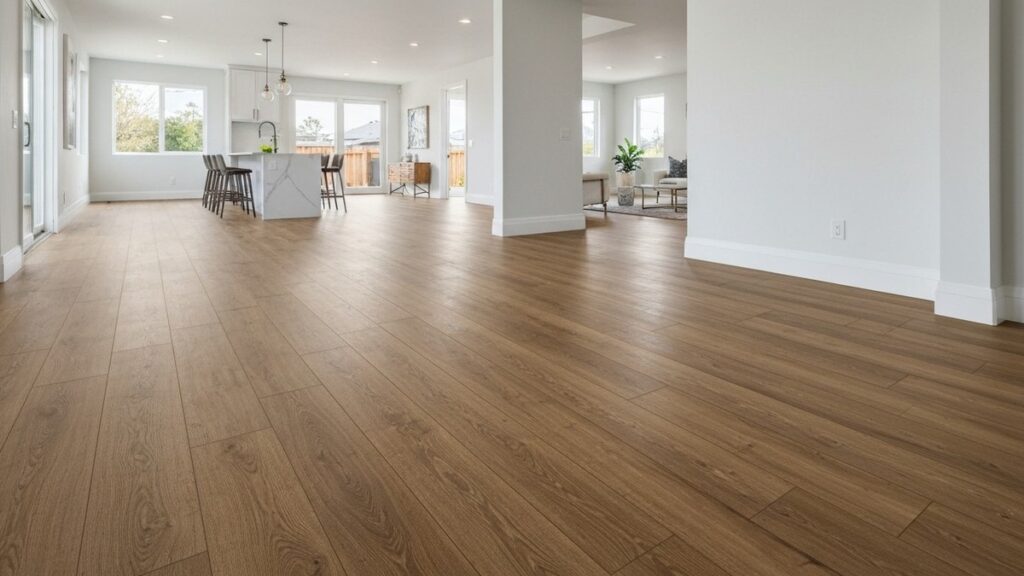
You have settled on a wood-look floor. Now you are stuck on the last decision that actually matters: vinyl plank vs laminate. The two look almost identical in a showroom. They sit within a few dollars of each other on the price tag. Every salesperson seems to have a favorite. But they are built from completely different materials. That difference shows up fast. It shows up the first time a dishwasher leaks, or a dog skids across the hallway. It also shows up when you install a basement floor in a Bay Area home that stays damp half the year.
Choosing wrong is a mistake you live with for a decade. Maybe you pull up a swollen laminate plank in a kitchen that took on water. Maybe you replace a vinyl floor that scratched badly under heavy furniture. Either way, you end up paying for the floor twice. Here is the good news: the right answer is usually clear once you know the few factors that decide it. This guide breaks down the vinyl plank vs laminate flooring question one factor at a time, fairly and in full. That way you can match the floor to the room, and to the way you actually live.
What Vinyl Plank and Laminate Actually Are
It helps to understand the difference at the material level before comparing performance. Nearly every practical trade-off below traces straight back to it.
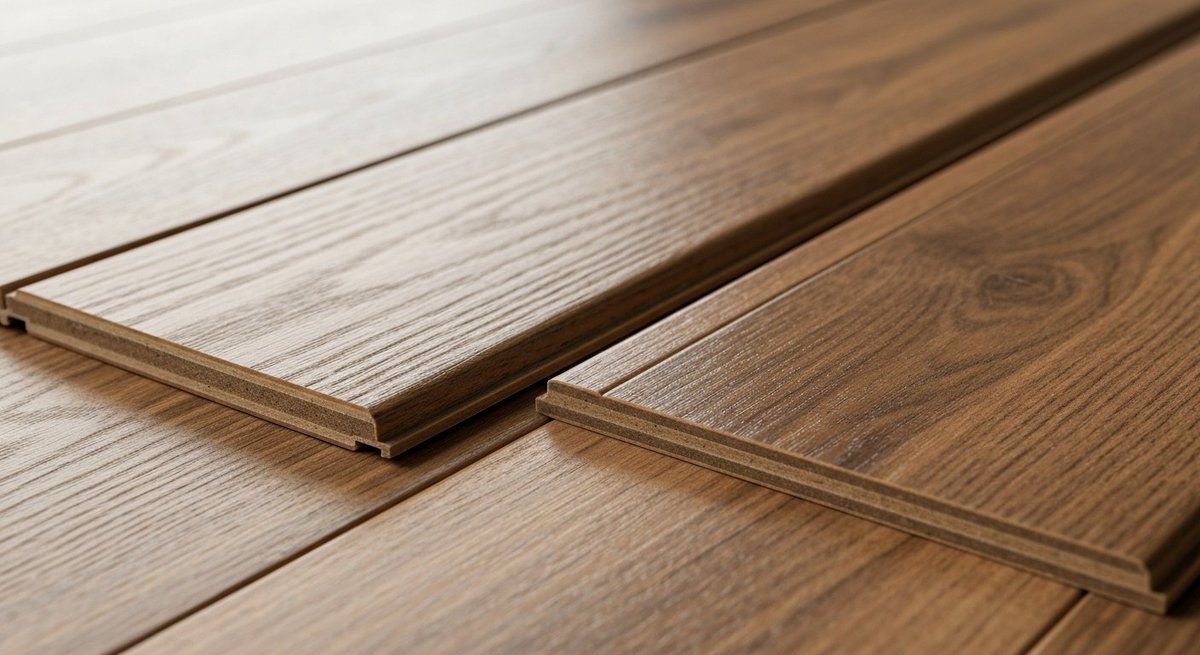
Luxury vinyl plank, usually shortened to LVP, is built almost entirely from synthetic PVC. A printed photo layer of real wood sits under a clear, tough wear layer. The whole plank is plastic through and through. There is no wood or paper anywhere in the construction. So water simply has nothing to damage. That one fact is the reason vinyl behaves the way it does.
Laminate is a wood-based product. Its core is high-density fiberboard, an engineered wood made from compressed wood fibers. That core is topped with a high-resolution printed image of wood and sealed under a hard melamine wear layer. The fiberboard core is dense and rigid. That gives laminate a famously hard, scratch-resistant surface. But it is still wood. Soak it and it swells, and once a plank swells it does not shrink back. Hold on to that contrast, plastic versus a wood-fiber core, and the rest of this comparison falls into place.
Vinyl Plank vs Laminate at a Glance
Here is the head-to-head comparison most people come looking for. The figures reflect typical installed pricing and real-world performance in 2026. Your exact numbers will shift with product grade, subfloor condition, and room complexity.
The table tells the short story. But the right call for your home usually rests on just two or three of these rows. The sections below unpack each one. That way you know exactly why the floors differ, and which difference should drive your decision.
How the Costs Compare

Cost is where most homeowners start. The honest answer to the vinyl plank vs laminate cost question is that they overlap almost completely. Both materials commonly run from about $3 to $7 per square foot installed in the Bay Area. Budget laminate occasionally dips a touch lower, and premium rigid-core vinyl reaches a touch higher. For a typical room, the material category is rarely what moves your final number.
What actually drives the price on either floor is the same short list of factors:
- Product grade and wear layer. A thicker vinyl wear layer (measured in mils), or a thicker laminate plank with a higher abrasion rating, costs more and lasts longer. Bargain versions of either floor wear through faster. That is where cheap floors get expensive.
- Subfloor preparation. Both floors need a flat, sound subfloor. Older homes in Oakland and Berkeley often have uneven slabs or board subfloors that need leveling first. That prep applies equally to vinyl and laminate.
- Underlayment and moisture barrier. Laminate almost always needs an underlayment, and over concrete it needs a vapor barrier too. Many vinyl products have padding built in, which can offset their slightly higher material cost.
- Room size and layout. Stairs, lots of doorways, and intricate cuts add labor to either installation.
Where the long-term math diverges is replacement risk. A laminate floor in the wrong room can swell from a single bad spill. It may need to be torn out years early, turning a cheaper floor into the more expensive one. Vinyl carries less of that hidden risk in wet areas. If you are weighing these against a wood floor too, our breakdown of the cost to install hardwood floors puts all three price tiers in context.
How Each Handles Water and Moisture

One dimension settles the vinyl plank vs laminate debate for most homes: water. Water resistance is the single biggest practical difference between the two floors, and it is not close.
Vinyl Plank Water Resistance
LVP is solid PVC with no organic material, so it is genuinely waterproof. Spills, mopping, pet accidents, and ambient humidity do nothing to the plank itself. Water can still reach the subfloor through the seams of a floating floor if it sits long enough. So vinyl is not a substitute for fixing a real leak. But the planks themselves will not swell, warp, or delaminate. This is why vinyl is the default recommendation for any room that meets water.
Laminate Water Resistance
Laminate is, at best, water-resistant. Its melamine top sheds a quickly wiped spill, and newer water-resistant lines buy you several more hours of protection. But the fiberboard core remains the weak point. Let water sit at a seam, around a dishwasher, or along a tub, and the core wicks it up. It swells and lifts at the edges, a condition that no amount of drying reverses. The vinyl plank vs laminate durability gap is really a water gap. In a dry room the two are close. Introduce moisture, and vinyl pulls decisively ahead.
Durability and Everyday Wear
Durability is not a single number. This is exactly where a fair comparison matters, because laminate wins some of these contests outright. The two floors trade blows depending on the stress you care about.
Scratch and Dent Resistance
In dry conditions, laminate is the tougher surface. Its hard melamine wear layer sits over a rigid fiberboard core. That combination resists scratches, scuffs, and dents from furniture and pet claws better than most vinyl. Vinyl is softer. A dragged refrigerator or a dropped cast-iron pan can gouge or dent it more easily, and a thin wear layer can scratch. For a busy hallway in a dry home full of dogs, laminate’s hard shell is a real advantage.
Moisture and Long-Term Wear
Reverse the conditions and vinyl wins. Laminate’s hardness means nothing once moisture reaches the core. Vinyl shrugs off the spills and humidity that destroy laminate. Both floors last roughly 10 to 25 years. Quality laminate can stretch toward 30 in a consistently dry room, and quality vinyl holds up in places laminate cannot survive. So is vinyl plank better than laminate on durability? It depends on the room: laminate for dry abuse, vinyl for moisture. Neither is universally tougher.
Installing Vinyl Plank vs Laminate
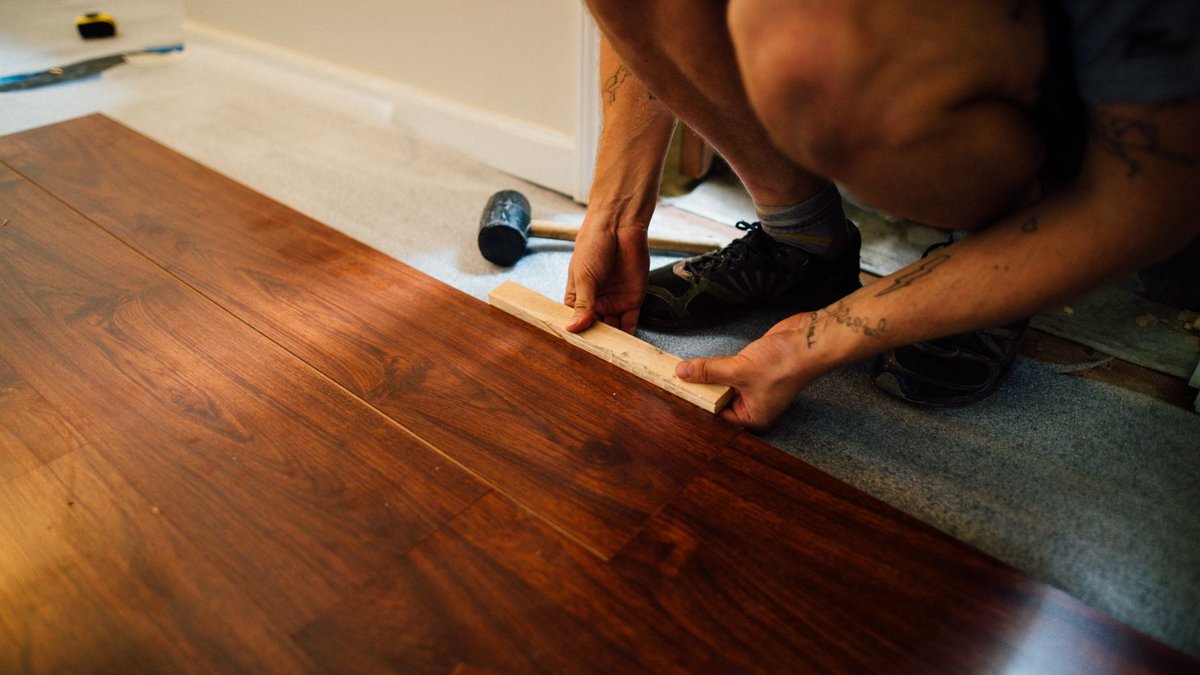
Both floors are designed for fast, modern installation. Both are realistic do-it-yourself projects for a confident homeowner. That is part of why they have overtaken older flooring types.
Most laminate and most vinyl plank install as a floating floor. The planks click together edge to edge and rest over the subfloor without glue or nails, expanding and contracting as a single sheet. Laminate almost always requires a separate foam underlayment, and over concrete it needs a moisture barrier beneath it too. Many vinyl products, especially rigid-core SPC lines, arrive with an attached pad. That means they can go straight over a clean, flat subfloor. Vinyl is also more forgiving of minor subfloor imperfections, because the planks are slightly flexible. A rigid laminate plank, by contrast, can telegraph or even crack over a dip.
Glue-down vinyl is a second option. It adds stability for very large rooms or commercial settings, at the cost of more labor. For most Bay Area homeowners, though, the floating click-lock method is the norm for both. The trickiest part of either job is not snapping planks together. It is the prep: leveling the subfloor and planning expansion gaps. That is where professional installation earns its keep.
Appearance and Style
Visually, the two floors have converged. Most people cannot tell a quality vinyl plank from a quality laminate by sight. Both use high-resolution printed images of real wood. Both come in embossed textures that follow the grain. Both span every species and tone, from pale white oak to dark walnut.
Where they differ slightly is feel. Laminate’s thick, rigid core gives it a solid, hardwood-like sound and firmness underfoot that some people prefer. Thinner flexible vinyl can feel a bit hollow or soft by comparison, though premium rigid-core vinyl has largely closed that gap. Vinyl, on the other hand, tends to be warmer and quieter to walk on, a small daily comfort in bedrooms and on stairs. The difference between vinyl plank and laminate in appearance comes down to grade far more than category. A premium version of either looks and feels convincingly like wood. A bargain version of either looks like plastic or paper.
Choosing the Best Floor by Room
This is where the comparison gets practical, because the right floor genuinely changes from one room to the next. Rather than crowning a single winner, match the floor to the demands of the space.
Vinyl Plank vs Laminate in a Kitchen
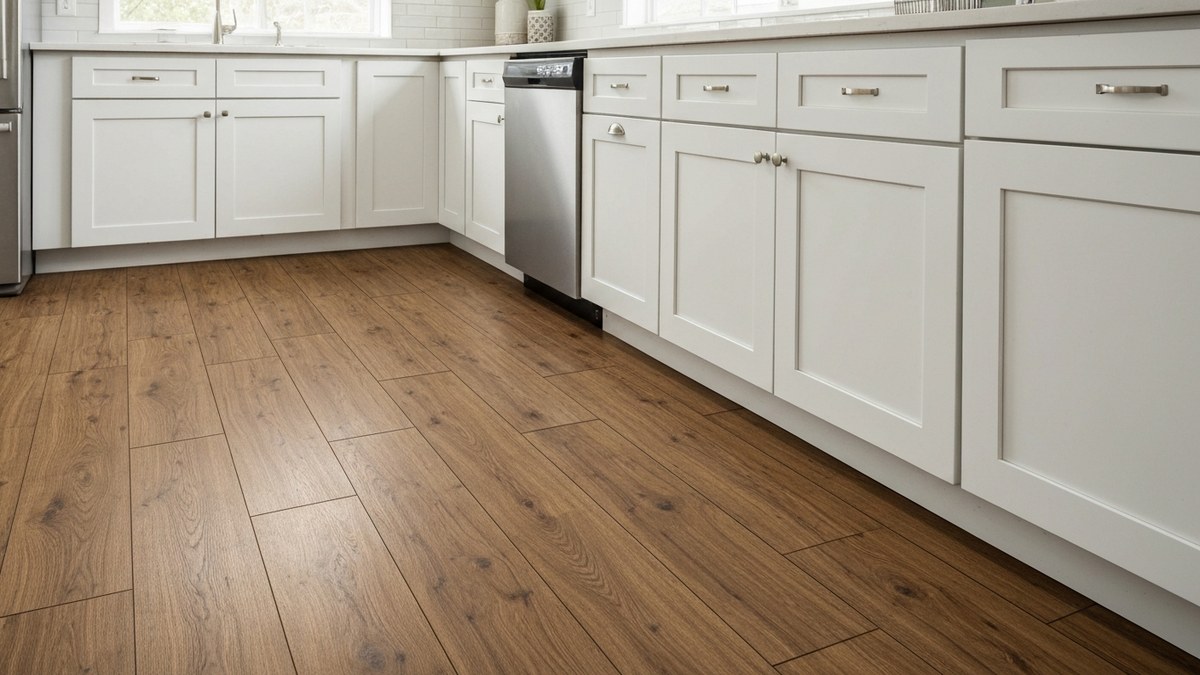
The kitchen is the room where the choice matters most. A kitchen sees dropped glasses of water, a dishwasher or refrigerator line that can fail, and frequent mopping. For vinyl plank vs laminate in a kitchen, waterproof vinyl is the safer choice for most homes. A single overnight leak that would swell a laminate floor leaves vinyl untouched. Laminate can work in a kitchen if you choose a water-resistant line, seal the perimeter, and wipe spills promptly. But you are accepting a risk vinyl simply removes.
Which Works Better in a Basement
Basements raise the stakes further. The threat is not just spills but ground moisture rising through a concrete slab. For vinyl plank vs laminate for basement installations, vinyl is the clear recommendation. Its waterproof, dimensionally stable core tolerates the humidity swings and occasional dampness common in below-grade and hillside Bay Area homes. Laminate belongs in a basement only when the slab is proven dry, a vapor barrier is installed, and humidity is controlled. Even then, one plumbing mishap can end it. When in doubt below grade, choose vinyl.
The basement floors we get called back to fix almost always tell the same story. A laminate floor went down over a slab everyone assumed was dry. In the older East Bay homes we work in, those slabs tend to wick more moisture than a quick moisture reading suggests. A year or two later, we are pulling up planks that have swelled at the seams. When homeowners ask us, we steer them to vinyl below grade nearly every time. We still test the slab and lay a vapor barrier before anything goes down.
In Living Areas and Bedrooms
In dry, above-grade spaces, laminate comes into its own. Living rooms, bedrooms, and hallways rarely meet standing water, so laminate’s main weakness never gets tested. Its harder, more scratch-resistant surface and solid, wood-like feel underfoot become genuine advantages instead. This is the scenario where the honest answer is that laminate can legitimately be the better pick, especially in a busy home with pets, where scratch resistance matters more than waterproofing.
How Vinyl Plank and Laminate Compare to Engineered Hardwood

Many homeowners who start with two finalists eventually add a third. So it is worth widening the lens to vinyl plank vs laminate vs engineered hardwood. Engineered hardwood is a real wood floor: a genuine hardwood veneer bonded to a plywood core. It looks and feels like solid wood because the top layer is wood. Unlike either vinyl or laminate, it can usually be sanded and refinished once or twice over its life. That is why a quality engineered floor can last 30 to 50 years.
The trade-offs are cost and water. Engineered hardwood typically runs $8 to $15 per square foot installed, often double the price of vinyl or laminate. It tolerates humidity better than solid wood, but it is still wood, and it is not waterproof. So the three-way decision usually sorts itself out. Choose engineered hardwood when you want authentic wood, refinishability, and the strongest resale story, and your budget allows it. Choose laminate for the look of wood at the lowest cost in dry rooms. Choose vinyl when waterproof performance is the priority. If real wood is calling to you, our guide to how to maintain hardwood floors explains the upkeep that comes with it.
The Pros and Cons of Each
Stepping back from the individual dimensions, here is the balanced summary of where each floor shines, and where it asks something of you. A fair read of the vinyl plank vs laminate pros and cons is what separates a confident decision from buyer’s remorse.
Resale Value and Home Appeal
If you are renovating with an eye on a future sale, both floors read to buyers as a clean, move-in-ready upgrade over worn carpet or dated tile. Neither will hurt a sale. The nuance is in buyer perception. Modern waterproof rigid-core vinyl has earned a strong reputation, and listings that advertise waterproof floors tend to reassure buyers with kids and pets. Laminate is widely accepted and attractive, though some buyers still file it mentally as the more budget-friendly option.
In most Bay Area price tiers, the practical takeaway is simple: a quality version of either floor supports value, while a visibly cheap or already-swollen floor undercuts it. For a near-term sale, a neutral, on-trend wood tone in a durable waterproof vinyl is often the safest bet for the broadest appeal. For a home you plan to keep, choose the floor that fits how each room is used. You can see our full range of flooring services for the options we install most often.
One last note on doing your homework: both floors are sold under a blizzard of brand names and spec sheets. Lean on independent standards rather than marketing claims. The National Wood Flooring Association and other consumer flooring resources publish guidance on wear ratings, installation, and what the durability numbers actually mean. That makes comparing two products far easier than trusting a showroom pitch.
Making the Right Choice for Your Home
The cleanest way to decide between vinyl plank vs laminate is to answer two questions and let the rest fall away. First, will this room ever meet water, from spills, humidity, or a slab below grade? If yes, choose vinyl. Second, in a reliably dry room, do you most value a harder, more scratch-resistant surface and a solid wood-like feel? If yes, laminate has the edge. Almost every confident flooring decision comes down to those two answers, room by room, rather than a single floor for the whole house.
Whichever you choose, the quality of the subfloor prep and installation matters as much as the plank itself. A level subfloor, the right underlayment and moisture barrier, and properly planned expansion gaps are what separate a floor that looks flawless for fifteen years from one that gaps, peaks, or fails early. At Top Tier Building Services (CSLB #1146790), we help Bay Area homeowners match the right floor to each room and install it to last. If you are weighing vinyl plank vs laminate for your project and want a clear recommendation, contact us for a consultation and an honest, no-pressure quote.
FAQs
Is vinyl plank better than laminate?
Neither is universally better; the right one depends on the room. Vinyl plank is better for any space that meets water, like kitchens, baths, and basements, because it is fully waterproof. Laminate is better in dry rooms, where its harder, more scratch-resistant surface and solid feel underfoot shine.
What is the main difference between vinyl plank and laminate?
The core material. Vinyl plank is solid PVC plastic, so it is waterproof. Laminate has a wood-fiber (fiberboard) core under a printed image, so it is only water-resistant and can swell if soaked. That single difference drives most of how the two floors perform.
Which is cheaper, vinyl plank or laminate?
Their installed prices overlap, typically about $3 to $7 per square foot. Budget laminate can be slightly cheaper, while premium rigid-core vinyl can cost a bit more. Product grade, subfloor prep, and room layout affect your total far more than the material category.
Is vinyl plank or laminate better for a basement?
Vinyl plank, in almost every case. Basements face ground moisture and humidity that can swell a laminate floor, while waterproof vinyl tolerates damp conditions. Use laminate below grade only with a proven-dry slab, a vapor barrier, and controlled humidity.
Is laminate or vinyl plank more durable?
It depends on the stress. In dry rooms, laminate resists scratches and dents better thanks to its hard surface. In moist areas, vinyl is far more durable, because it will not swell or warp. Both typically last 10 to 25 years, and quality laminate can reach 30 in dry rooms.
How do vinyl plank and laminate compare to engineered hardwood?
Engineered hardwood is real wood. It can be refinished, and it offers the strongest resale appeal, but it costs about $8 to $15 per square foot and is not waterproof. Vinyl and laminate cost roughly $3 to $7 and mimic wood. Choose vinyl for waterproofing, laminate for low-cost dry rooms, and engineered wood for authentic wood you can refinish.