
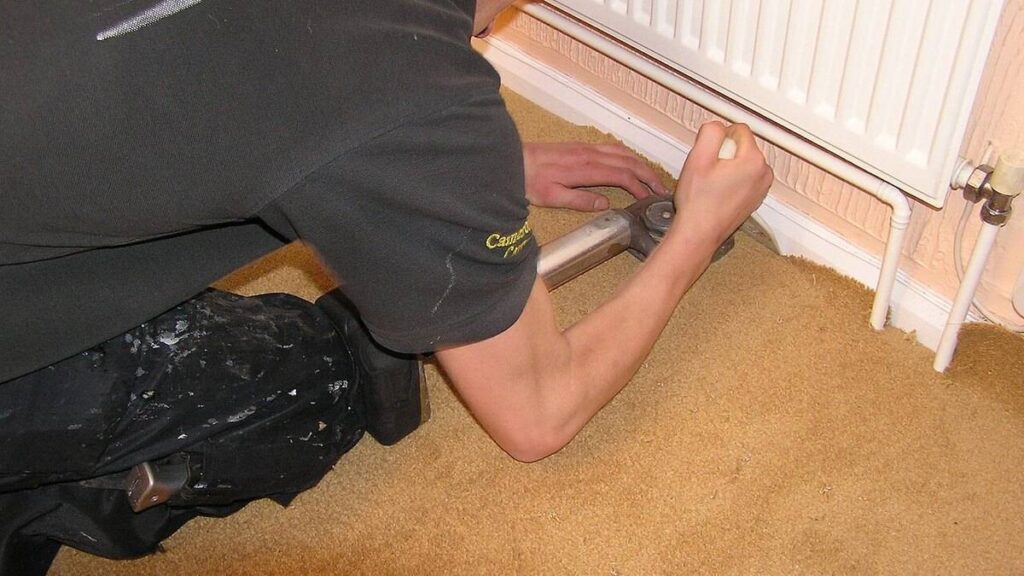
Walk into any flooring showroom and the first number you see is the one that matters least. That $2.99-per-square-foot tag on the roll is the carpet, and only the carpet. Add the pad, the labor to stretch and seam it, and the cost to haul away whatever is on your floor now, and the real carpet installation cost is usually two to three times that sticker. Carpet is sold as a material and installed as a system, and the showroom prices only the material.
This guide prices the whole system: what each line item costs, why the same 300 square feet can quote at $1,100 in one house and $2,400 in another, why stairs are billed by the step, and which rooms are genuinely better off with carpet. The numbers lean toward Bay Area reality, where labor runs above the national average, but the structure of a carpet bid is the same in Fremont or Fresno. For the bigger picture, our Bay Area new flooring cost guide and flooring installation guide put carpet next to the alternatives.
Key Takeaways
- Installed carpet typically runs about $3.50 to $11 per square foot all-in, with most Bay Area homeowners landing between $5 and $8 for a mid-grade carpet on a decent pad.
- The face-weight sticker in the showroom is only the material. Pad ($0.30 to $0.75), labor ($0.50 to $2), and tear-out and haul ($0.30 to $1) all stack on top per square foot.
- Per room, expect roughly $400 to $1,200 for a bedroom, $900 to $2,200 for a large living room, and $4,500 to $9,500 to carpet a whole average home.
- Carpet on stairs is billed per step, not per square foot, typically $8 to $25 a stair depending on whether it is a simple box wrap or a wrapped waterfall over an open side.
- What moves a bid is almost never the carpet itself. It is the subfloor condition, the tack strip and transitions, stairs, and how many seams the room shape forces.
What This Guide Covers
- What Carpet Installation Cost Actually Includes
- Carpet Installation Cost per Square Foot Explained
- What Carpeting a Room Actually Costs
- Why Carpeted Stairs Are Priced per Step
- What Actually Moves a Carpet Bid
- When Carpet Beats Hard Surface Flooring Room by Room
- How Bay Area Costs and Permits Change the Number
- How to Read a Carpet Quote and Avoid Surprise Charges
- Where Top Tier Fits on a Flooring Job
- FAQs
What Carpet Installation Cost Actually Includes
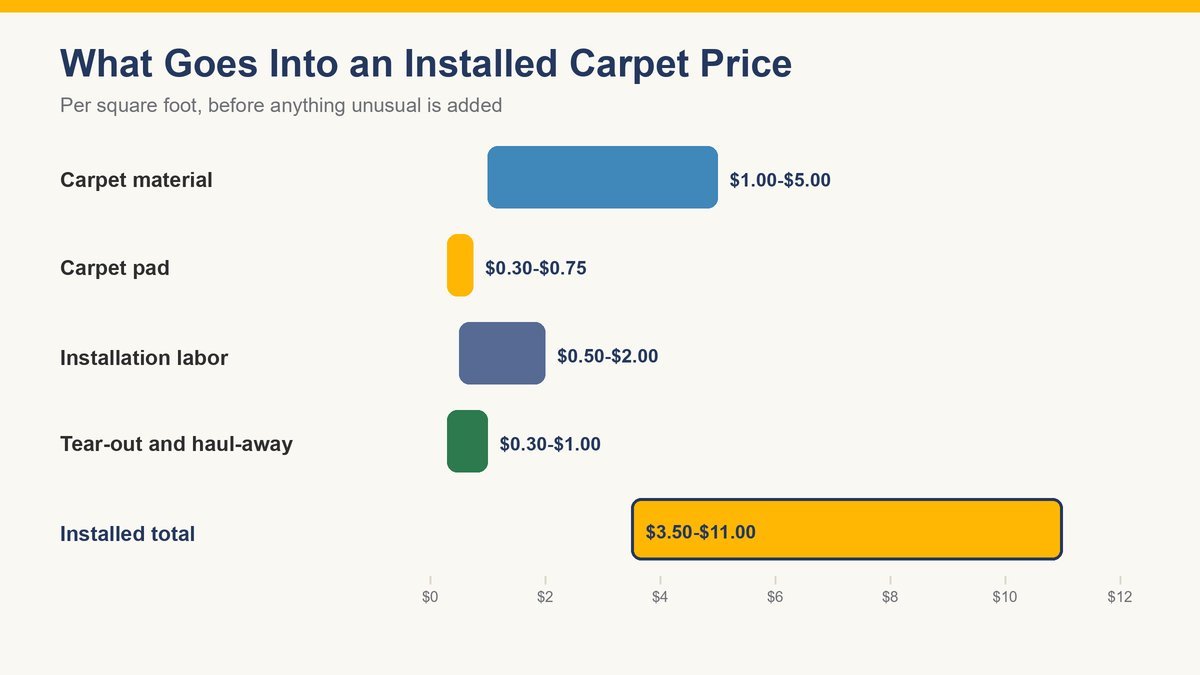
A carpet quote is four line items wearing one price. Knowing the split is the difference between comparing bids honestly and being talked into an upgrade you did not need.
Those ranges are per line item, and the installed total reflects the combinations that actually occur on real jobs, not the sum of the cheapest option in every row. The material is what homeowners fixate on and what matters least to how the floor performs: a dense pad and a clean installation make a mid-priced carpet last better than a premium carpet over a thin cushion. That is the most common mistake in a carpet budget, spending it all on face weight and letting the builder-grade pad ride to save forty dollars.
Carpet Installation Cost per Square Foot Explained
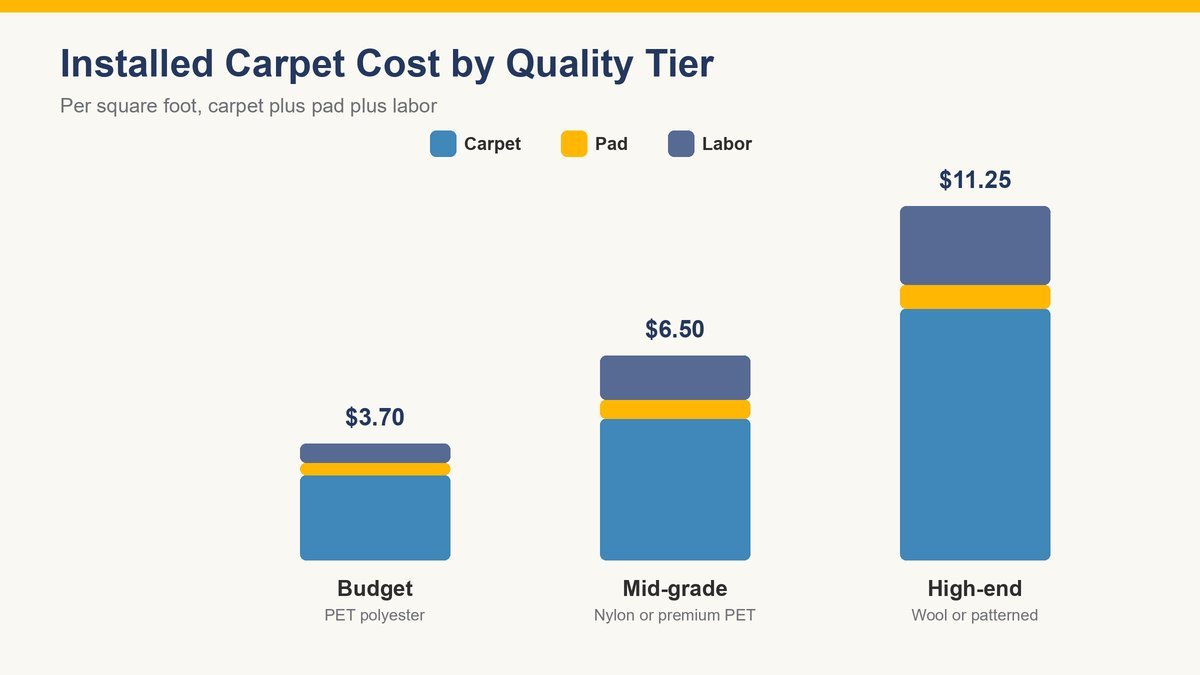
The cleanest way to compare carpet is the fully installed price per square foot, because it folds pad and labor into one honest number. It sorts into three practical tiers, and where you land depends far more on fiber and pad than on brand. The top tier is the one that runs past the $11 headline figure.
Polyester is soft, stain-resistant and cheap, but it crushes and mats faster in hallways and on stairs. Nylon costs more and holds its shape under traffic, which is why it earns its keep in the rooms you walk through. Wool is the premium end and prices like it. For a family home, mid-tier nylon on a proper pad beats a thicker budget carpet.
What Carpeting a Room Actually Costs
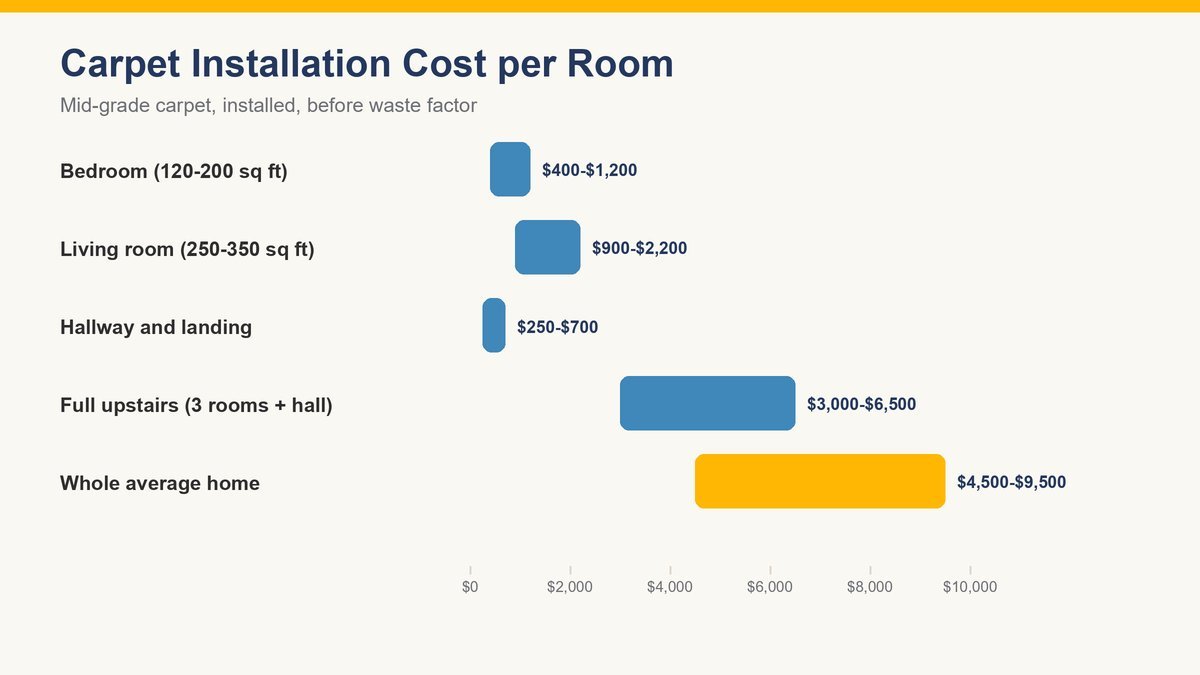
Per-square-foot math is useful, but most people think in rooms. What a room costs depends on its area and on how much cutting and seaming its shape forces. The ranges below span budget through mid-grade carpet installed; odd shapes, closets and stairs push each one toward its top.
Two things bend these numbers. Small rooms cost more per square foot, because the crew still moves furniture, sets tack strip around the whole perimeter and makes its cuts regardless of how little carpet the room takes. And closets, bay windows and L-shaped rooms create seams and offcuts a plain rectangle avoids, so a 150-square-foot bedroom with two closets and a bay can cost what a clean 200-square-foot room does.
Why Carpeted Stairs Are Priced per Step
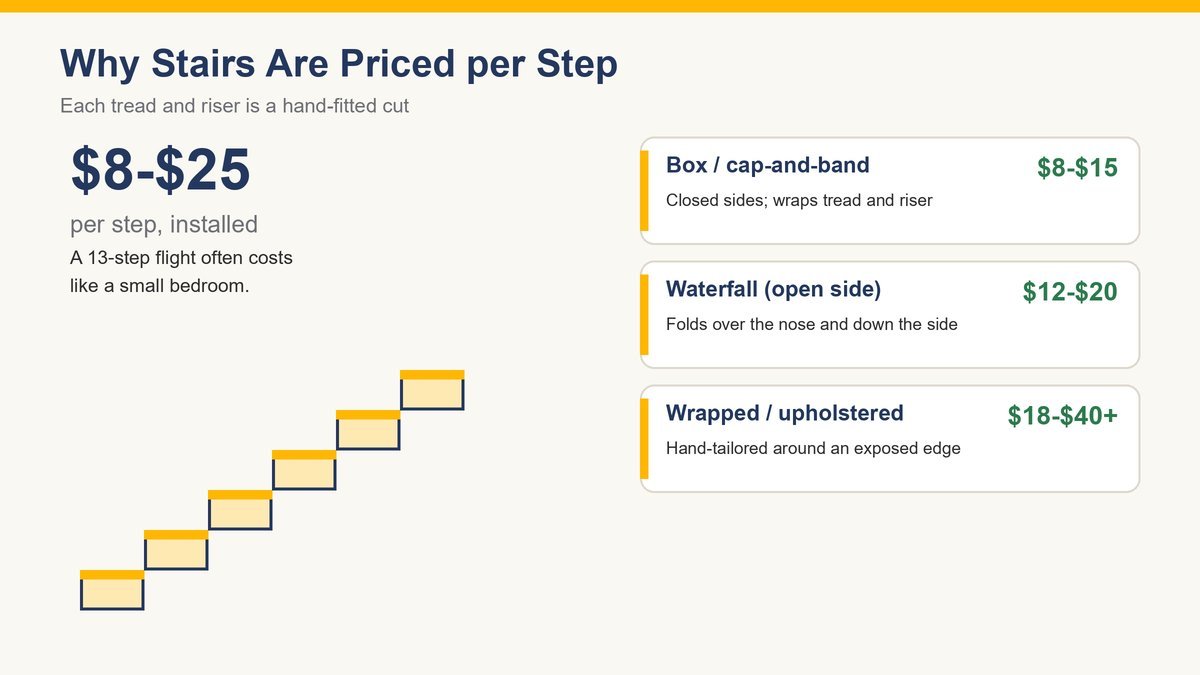
Stairs are where carpet quotes surprise people, because the pricing switches units and a single flight can cost as much as a small bedroom. The reason is labor: every tread and riser is a hand-fitted cut, made on an angle with a knee kicker instead of stretched across flat, open floor.
A standard 13-step flight of closed-in stairs runs roughly $110 to $200 in labor plus carpet and pad; the same flight with open sides and a decorative wrap can climb past $400. Curved treads, winders and landings each count as extra steps. That is why stairs are quoted separately from rooms.
What Actually Moves a Carpet Bid
If two estimates for the same house come back hundreds of dollars apart, the carpet is rarely the reason. The spread lives in the conditions below the surface and around the edges. These are the six line items to ask about by name.
Subfloor Damage Hiding Under the Old Carpet
Where the Money Actually Hides
Nobody knows what the subfloor looks like until the old carpet comes up. Soft spots, water stains, popped nails or a squeaky plywood deck all get addressed while the floor is open, and repairs run from about $100 for refastening to over $1,000 if a section has to be replaced. That work, subfloor preparation and leveling, is far cheaper while the floor is open than as a callback later.
Tack Strip and Pad Replaced on Almost Every Job
Consumables Replaced on Every Job
The wood tack strip around the perimeter and the pad underneath are consumables, replaced rather than reused. New tack strip is cheap material but real labor to cut and nail, and a proper pad is not optional. Most installers will not warranty a carpet laid over a worn-out or wrong-density pad, so budget for both as standard, not as an upsell.
Transitions Thresholds and Metal Edging
Every Doorway Needs a Custom Fit
Everywhere carpet meets a different floor, a tile entry, a hardwood hall, a bathroom doorway, it needs a transition strip or a tucked edge. Each is a small custom fit, so a home with many doorways racks up more of them than one open room. Metal or hardwood transitions cost more than a basic tack-in bar and look far cleaner underfoot.
Furniture Moving and Room Prep Time
Labor a Lived-In House Adds
A price that assumes empty rooms is not the price for a lived-in house. Moving beds, dressers and entertainment centers and putting them back is labor, and some installers charge $25 to $75 a room while others fold it in. Clearing rooms yourself is the easiest way to shave a real-world carpet bid.
Tear-Out and Haul-Away of the Old Flooring
Disposal Is Cheap Until It Is Demolition
Pulling up old carpet and pad and hauling it to disposal typically runs $0.30 to $1.00 per square foot. California runs a manufacturer-funded carpet stewardship program run by CARE and overseen by CalRecycle, paid for by a small state assessment added to new carpet at the point of sale. Ripping out tile or glued-down flooring costs sharply more, because it becomes demolition.
Seam Layout and Carpet Roll Width
Why a 12-Foot Roll Dictates Seams
Because carpet comes off a 12-foot-wide roll, any room wider than 12 feet needs a seam, and where it falls is a craftsmanship decision. A good installer plans seams away from doorways and traffic paths and toward the light, which uses a bit more carpet but hides the joint. Complex floor plans force more seams and more waste, and that shows up in the material line.
When Carpet Beats Hard Surface Flooring Room by Room
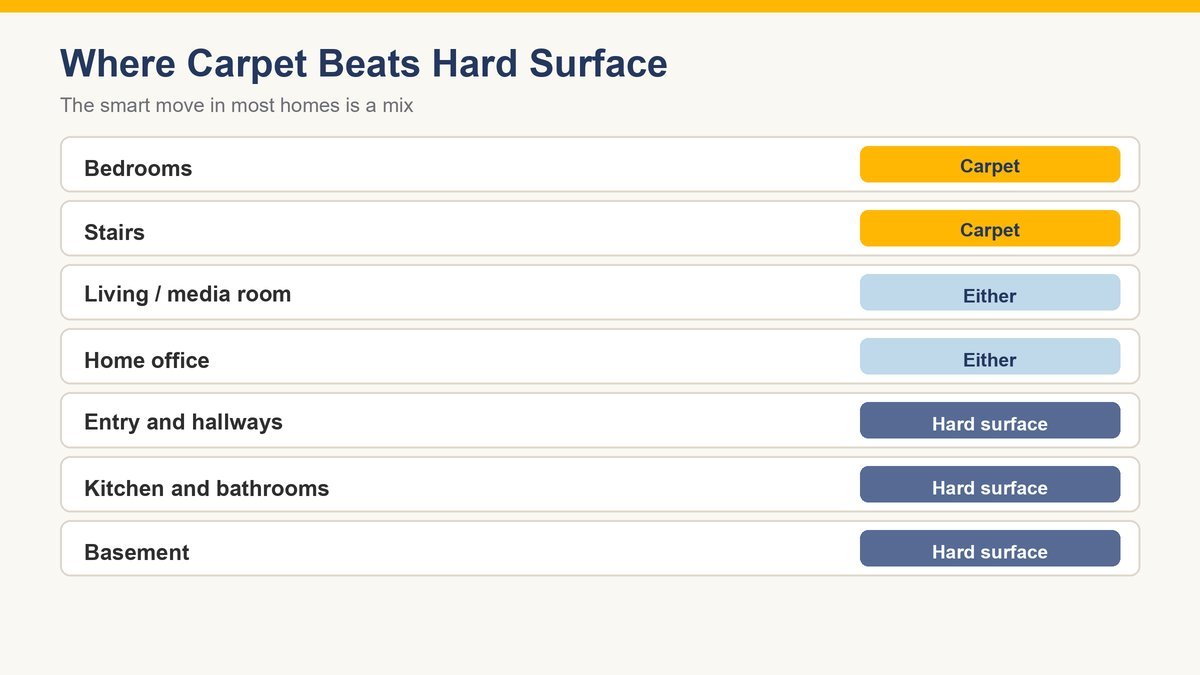
Carpet versus hard surface depends on the room, not on which is objectively better. Carpet is warmer, quieter, softer underfoot and cheaper to install than most hardwood or tile, but it holds moisture and stains and wears out faster. The smart move in most homes is a mix.
Carpet’s advantage is cost and comfort in the private, dry, low-traffic half of the house, where hardwood is both expensive and loud. Hard surface earns its higher price in the wet, gritty, public half. Our guide to hardwood, LVP, tile and stone flooring materials covers the other side of that math.
How Bay Area Costs and Permits Change the Number
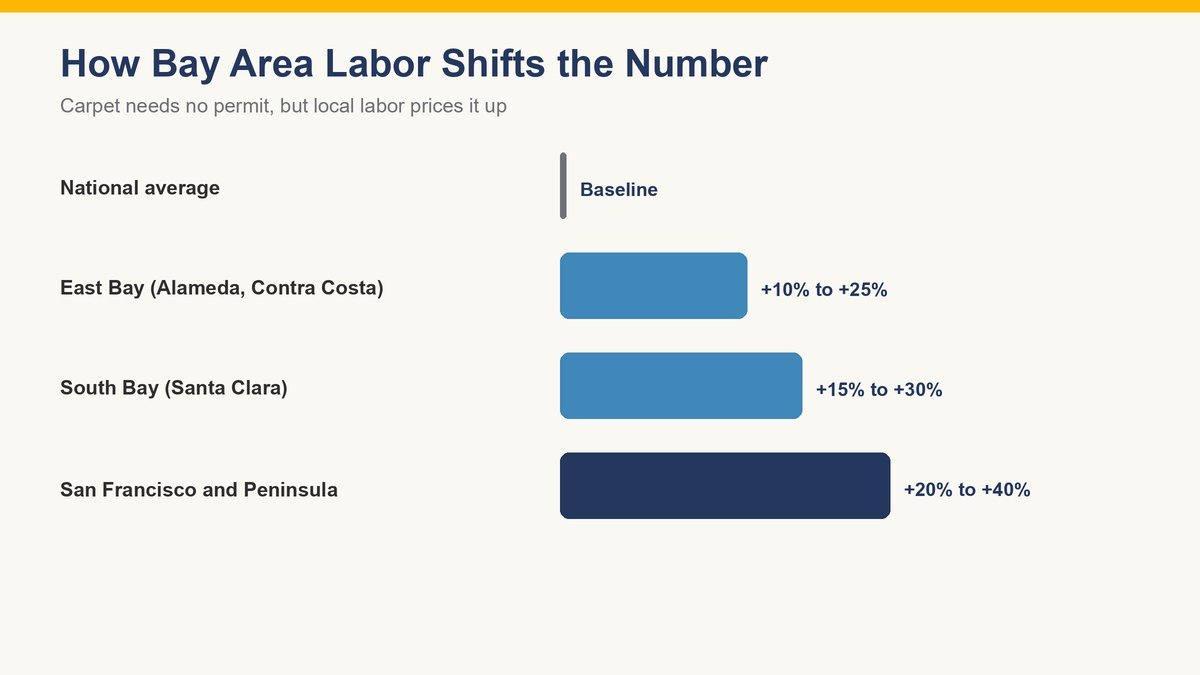
Carpet by itself does not require a building permit in California, which keeps it simpler than most flooring, but Bay Area labor rates still push the installed number toward the top of every range in this guide. Installation is hands-on, local work, and it prices like it.
Three local wrinkles still add cost. Condo and HOA buildings often require sound-attenuation underlayment and set installation-hour rules, which adds pad cost and can stretch a one-day job across a restricted window. Older Bay Area homes hide the surprises: sloped subfloors, layers of old flooring, and the occasional asbestos-containing sheet vinyl under the carpet that must legally be tested and abated before tear-out. And street parking and walk-ups in San Francisco add labor hours a suburban driveway never would.
How to Read a Carpet Quote and Avoid Surprise Charges
Two bids are only comparable when both cover the same job. Ask every bidder to put six things in writing: the carpet by name and face weight, the pad by density in pounds, tear-out and haul-away, whether furniture moving is included, the stair count and how stairs are priced, and the count of transitions and seams.
Then measure your rooms yourself before the estimator arrives. If a quote’s carpet quantity is not meaningfully more than your bare floor area, the waste factor is missing and the number is wrong.
Where Top Tier Fits on a Flooring Job
Nobody can quote carpet accurately from a square-foot table, because the bill lives in the pad you choose, the stairs you have, and whatever is under the old floor. Top Tier Building Services does not install carpet. The work underneath and around it is ours: subfloor preparation and leveling, moisture testing, transitions and trim. So if you are pulling carpet up for good and going to hardwood, tile, LVP, laminate or stone, contact Top Tier Building Services and we will price that floor and the prep it needs.
FAQs
How much does carpet installation cost per square foot?
Fully installed, carpet typically runs about $3.50 to $11 per square foot, including carpet, pad, labor and tear-out. A mid-grade nylon on a good pad lands between $5 and $8, with Bay Area labor pushing toward the upper end.
How much does it cost to carpet a 12×12 room?
A 12-by-12 bedroom is about 144 square feet, so at a mid-grade rate of roughly $6 per square foot it runs around $850 to $1,100 plus a waste allowance for cutting. With tear-out and furniture moving, a realistic all-in figure is $900 to $1,300.
Why is carpet installation on stairs so expensive?
Stairs are priced per step because each tread and riser is an individual hand-fitted cut, made on an angle instead of stretched across open floor. A closed-side box wrap runs about $8 to $15 a step; an open-sided waterfall or upholstered stair can reach $18 to $40 or more.
Does new carpet need a building permit in California?
No. Installing carpet by itself does not require a building permit in California. Permit questions appear only if the job grows, such as replacing damaged subfloor structure or abating asbestos-containing old flooring found during tear-out.
Should I replace the carpet pad or keep the old one?
Replace it. Pad is a consumable, and most manufacturers void the carpet warranty if new carpet goes over a worn-out or wrong-density pad. A fresh 6-to-8-pound rebond pad is inexpensive relative to the carpet and is what makes a mid-priced carpet last like a better one.
How long does carpet last before it needs replacing?
A mid-grade nylon carpet typically lasts 8 to 15 years; budget polyester in a busy household can look tired in 5 to 7. Stairs and hallways wear first, which is why a denser carpet there extends the life of the whole installation.