
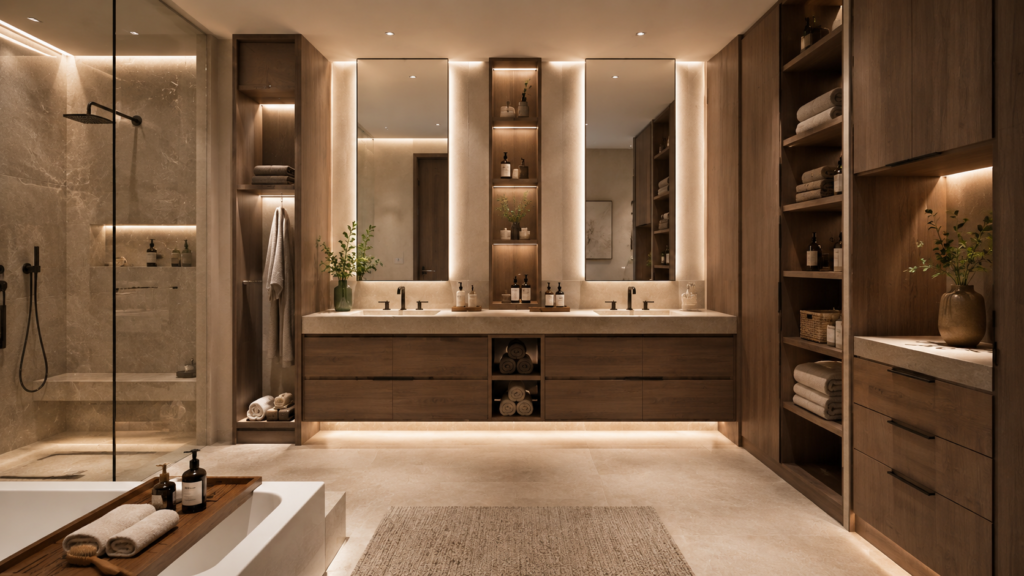
In high-end interior architecture, an exceptional master suite must balance aesthetic minimalist elegance with uncompromised, functional utility. While a flawless shower enclosure and premium tile selections define the room’s visual character, the daily livability of the space hinges on its structural organization. Without strategic planning, even the most spacious master bathroom will quickly succumb to surface clutter, disrupting the sanctuary-like atmosphere.
Achieving a clutter-free environment requires moving past standard retail configurations and investing in a tailored millwork strategy. Before diving into cabinet door styles or hardware finishes, ensuring your cabinetry blueprint coordinates directly with your underlying architectural framework—specifically your plumbing, electrical, and structural wall constraints—is essential. Integrating your storage layout with comprehensive custom bathroom design and space planning ensures a flawless flow between the dry vanity stations and wet zones. This guide analyzes structural engineering configurations, ergonomic dimensional standards, and innovative storage features to maximize your layout’s potential.
1. Selecting the Structural Foundation: Floating vs. Freestanding Vanities
The choice of vanity chassis fundamentally dictates the visual weight, cleaning mechanics, and structural framing requirements of the room. Design-build teams evaluate two primary configurations:
• Floating (Wall-Mounted) Vanities: Suspended off the finished floor, floating cabinetry offers a sleek, modern aesthetic that maximizes visible floor space, making smaller rooms feel significantly larger. However, they demand intensive structural preparation. Because the entire weight of the cabinet and heavy stone countertop rests on the wall, framing crews must install solid 2×6 or 2×8 horizontal wood blocking between the wall studs prior to drywall installation. Additionally, plumbing waste lines must be precisely rerouted through the wall rather than up through the floor.
• Freestanding (Floor-Mounted) Vanities: Sitting directly on the floor, freestanding cabinets easily support massive weight loads, such as double-thick natural quartzite slabs, without requiring specialized structural wall reinforcement. They inherently maximize the vertical storage envelope down to the floor, though they create a larger physical and visual footprint.
2. Material Dynamics and Engineering Specifications
Because bathroom cabinetry is exposed to fluctuating temperatures and high humidity levels, material selection is critical to prevent warping, binding, and structural degradation over time. The table below analyzes how professional cabinet construction materials perform under environmental stress:
3. Ergonomic Standards and Space Optimization
A high-performance bathroom layout respects precise architectural clearances to maximize comfort and functionality. When engineering your custom vanity zone, prioritize these critical dimensional standards:
4. Custom Interior Storage and Appliance Engineering
True luxury lies within the hidden details of custom millwork. To entirely eliminate countertop clutter, advanced cabinetry plans incorporate dedicated interior organizational accessories:
• Integrated Styling Drawers: Dedicated deep pull-out drawers equipped with heat-resistant stainless steel canisters to safely store hot styling tools like curling irons and hair dryers. These drawers feature built-in, code-compliant GFCI electrical outlets wired through a flexible, heavy-duty arm mechanism that safely folds away behind the drawer box when closed.
• Motorized Push-to-Open Slide Systems: For ultra-minimalist, handle-free designs, touch-activated electronic drawer slides allow users to tap the drawer front with a knee or elbow to open it seamlessly when their hands are full or wet.
• Vertical Pull-Out Grooming Towers: Utilizing narrow, underutilized vertical slots next to mirrors, pull-out columns feature adjustable acrylic shelving, integrated magnifying mirrors, and dedicated charging stations for electric toothbrushes and shavers.
Conclusion
Maximizing storage in a modern master bath requires an intentional blend of structural preparation, material science, and ergonomic engineering. By opting for robust marine-grade plywood foundations, planning around precise plumbing lines, and integrating custom electrical styling drawers, you ensure your space functions as flawlessly as it looks. Your custom vanity layout shouldn’t just hold your essentials—it should streamline your daily routines and preserve your bathroom’s serene architectural aesthetic for decades to come.